




OEM Poultry Scissors: Practical Sourcing Guide for Kitchenware Buyers
OEM poultry scissors are a focused product category within kitchen shears: they must cut cleanly, feel safe in the hand, and handle heavier food-prep tasks than ordinary household scissors. For importers, retailers, promotional distributors, and private-label kitchenware brands, the question is not only whether a sample looks good. The real sourcing decision involves blade geometry, handle comfort, packaging, repeatability, and the supplier’s ability to answer practical production questions.
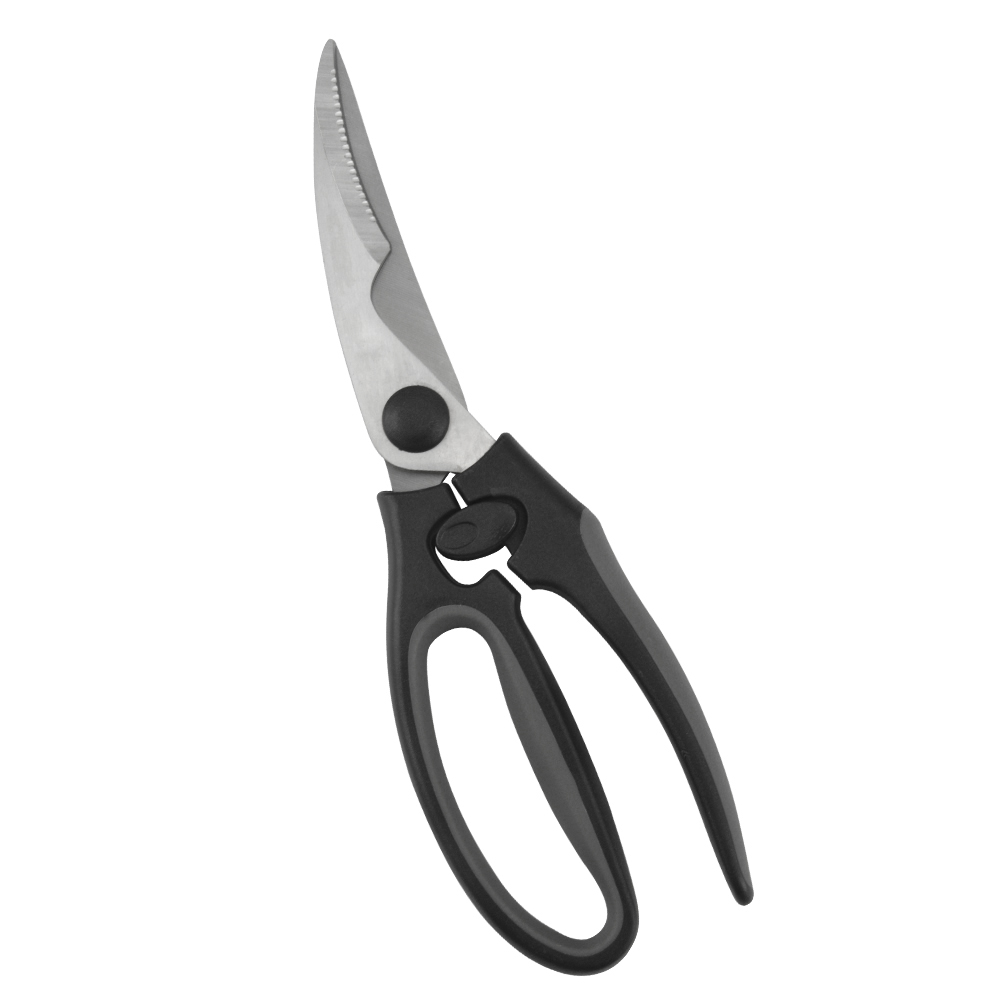
The original product presentation highlights several useful details: a black handle, serrated stainless steel blades, a bone notch, and multi-purpose use for poultry, herbs, meat trimming, and vegetables. Those are good starting points. This rewritten guide explains how buyers can evaluate similar OEM poultry scissors without relying on vague claims or assuming specifications that have not been confirmed.

Key Takeaways
- Confirm blade material, hardness, edge type, and corrosion-resistance expectations directly with the supplier.
- For poultry use, evaluate the bone notch, blade thickness, pivot strength, and grip stability with real cutting tests.
- Ask OEM suppliers about logo methods, packaging options, inspection standards, lead times, and sample approval steps.
- A strong product brief should define intended users, retail positioning, target price range, and required documentation.
What Makes Poultry Scissors Different?
General kitchen scissors are often used for opening food packaging, cutting parchment, trimming herbs, or snipping vegetables. Poultry scissors need to do more. They should provide better leverage when cutting through skin, joints, and small bones, while remaining controllable when hands are wet or greasy.
The visible design features described in the source article are relevant to this purpose. Serrated stainless steel blades can help grip slippery food surfaces during cutting. A bone notch can help position poultry bones or joints so the blades do not slide away under pressure. A black handle may support a clean, modern product appearance, but buyers should still verify the handle material, texture, heat tolerance, and cleaning recommendations before placing an OEM order.
Core Features to Review Before Ordering
When evaluating OEM poultry scissors, buyers should move beyond catalog photos and request measurable or testable details. The goal is to reduce ambiguity before tooling, decoration, packaging, or mass production begins.
| Feature to Check | Why It Matters | Questions to Ask the Supplier |
|---|---|---|
| Blade material | Affects cutting feel, maintenance, and market positioning. | What stainless steel type is used? Can it be stated on packaging? |
| Serrated edge | Helps grip meat, skin, herbs, and other slippery ingredients. | Is one blade serrated or both? Can the serration pattern be customized? |
| Bone notch | Improves control when cutting poultry joints or small bones. | What cutting tasks is the notch designed for? Are test samples available? |
| Handle design | Impacts comfort, safety, and fatigue during repeated use. | What is the handle material? Is the surface textured or smooth? |
| Pivot construction | Controls blade alignment and long-term cutting consistency. | Is the pivot adjustable or fixed? How is looseness checked during inspection? |
| Packaging | Protects the product and communicates retail value. | What OEM packaging formats are available? Can barcodes or labels be added? |
Common Applications for Multi-Purpose Kitchen Shears
Poultry scissors are often sold as multi-purpose kitchen shears because buyers and end users want one practical tool for several preparation tasks. In retail listings or wholesale catalogs, it is reasonable to describe applications that match the product’s actual cutting performance after testing.
- Breaking down a whole chicken into smaller pieces for cooking.
- Trimming excess fat from meat before marinating or roasting.
- Snipping herbs directly into a bowl or pan.
- Cutting vegetables, greens, or thin food items during meal preparation.
- Opening food-safe packaging when the scissors are kept for kitchen use.
For B2B buyers, it is important to separate marketing language from confirmed performance. If the item will be promoted for poultry bones, frozen food, dishwasher cleaning, or professional kitchen use, request written confirmation and perform your own sample tests before making those claims in sales materials.
OEM and Private-Label Sourcing Questions
An OEM poultry scissors project usually involves more than selecting a shape. Buyers may need a logo, color adjustment, retail card, clamshell, carton label, instruction insert, or marketplace-ready packaging. Because the original article does not provide manufacturing capacity, MOQ, pricing, or certification details, buyers should treat those items as supplier questions rather than assumptions.
- What is the available customization scope for handle color, logo placement, and packaging?
- What MOQ applies to standard stock, logo customization, and fully customized packaging?
- What sample cost, sample lead time, and approval process are required?
- What inspection criteria are used for sharpness, blade alignment, handle finish, and packaging?
- Can the supplier provide product photos, neutral packaging, or private-label artwork support?
- Which documents can be provided for the destination market, if required by the buyer?
These questions help purchasing teams compare suppliers more fairly. A lower unit price may not be the best value if packaging is weak, blade consistency is poor, or communication is slow during sample revision.
How to Evaluate Samples
Sample testing should reflect real user behavior. A buyer can prepare a simple checklist and test several pairs side by side. Cut poultry joints, meat, herbs, and packaging materials. Check whether the blades twist, whether the grip feels secure, and whether the scissors remain comfortable after repeated cuts. Wash and dry the sample according to the supplier’s care instructions, then inspect the pivot and blade surface.
Also test the retail experience. Is the product easy to remove from its package? Is the blade protected during shipping? Are warnings, care notes, and product claims clear? For online sales, confirm whether the product photos show the serrated blades, bone notch, handle shape, and scale of the item accurately.
Care and Use Guidance for End Users
Even when the main audience is B2B, clear consumer guidance reduces complaints and returns. Unless the supplier confirms dishwasher suitability, advise users to hand wash and dry the scissors promptly after cutting meat or poultry. Users should avoid cutting hard non-food materials if the product is marketed as kitchen shears. If the scissors are used on raw poultry, they should be cleaned carefully before touching ready-to-eat foods.
For packaging or product inserts, keep instructions plain and realistic. Explain intended uses, safe handling, cleaning guidance, and storage advice. If the scissors include a bone notch, show how it is meant to help position poultry joints rather than suggesting unlimited cutting power.
Practical FAQ
Are OEM poultry scissors the same as regular kitchen scissors?
Not always. Poultry scissors are typically evaluated for heavier food-prep tasks, especially cutting poultry joints and skin. Buyers should confirm blade thickness, pivot strength, and cutting performance through samples.
Can the black handle be customized?
Possibly, but customization depends on the supplier’s available materials, tooling, MOQ, and production schedule. Ask whether color matching, logo printing, or molded branding is available.
What product claims should buyers avoid unless confirmed?
Avoid unverified claims about material grade, dishwasher safety, rust resistance, certifications, professional testing, or cutting capacity. Request documentation or test results before using those claims.
What is the best way to compare suppliers?
Use the same sample checklist for each supplier: cutting performance, grip comfort, blade alignment, packaging quality, communication, customization options, lead time, and inspection standards.
Should poultry scissors include retail instructions?
Yes. Clear instructions for safe use, cleaning, and storage help end users understand the product and can reduce misuse, especially when the scissors are sold as multi-purpose kitchen shears.
Final Sourcing Recommendation
OEM poultry scissors can be a strong addition to a kitchenware range when the product is selected with clear performance expectations. The visible combination of serrated stainless steel blades, a bone notch, and a black handle gives buyers a useful foundation, but final sourcing decisions should be based on confirmed specifications and sample testing. Before ordering, define the target market, required packaging, acceptable product claims, and inspection criteria. A structured approach helps buyers choose poultry shears that are practical for end users and manageable for private-label supply.
