




OEM Poultry Scissors: A Practical Sourcing Guide for Kitchenware Buyers
OEM poultry scissors are a small kitchen tool with a large impact on food preparation. For retailers, distributors, promotional buyers and private label kitchenware brands, the right pair can support a more complete product range for home cooks and professional users. The challenge is not simply finding scissors that look strong in a product photo. Buyers need to understand blade design, handle comfort, safety features, cleaning requirements, packaging options and the questions to ask before placing an OEM or wholesale order.

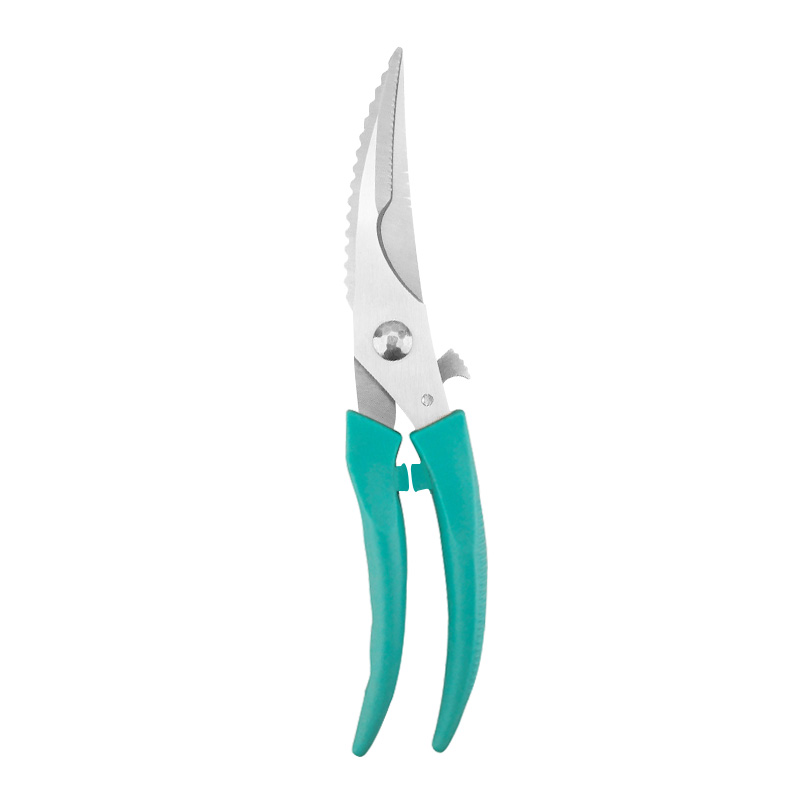
The original product description highlights an 8-inch pair of kitchen shears with stainless steel blades, a micro-serrated edge, a strong pivot, a safety locking mechanism and ergonomic teal handles. It also notes use cases beyond poultry, including shellfish, herbs and general kitchen tasks. Those details are useful, but sourcing teams should still verify every commercial and technical point with the supplier before approving a purchase order.
Key Takeaways
- OEM poultry scissors should be evaluated as functional cutting tools, not only as kitchen accessories.
- Important features to review include stainless steel blades, micro-serrated edges, pivot strength, safety lock design and handle comfort.
- Buyers should request clear answers on materials, packaging, branding options, inspection process and care instructions.
- Claims such as dishwasher safety, cutting performance or compliance should be supported by supplier documentation or agreed testing.
- A good sourcing decision balances performance, repeatable quality, user safety and after-sales expectations.
What OEM Poultry Scissors Are Designed to Do
Poultry scissors, often called poultry shears or heavy-duty kitchen shears, are designed to cut through food items that ordinary scissors cannot handle comfortably. Typical tasks include trimming raw chicken, cutting smaller bones, dividing cooked poultry, preparing shellfish and snipping herbs or packaging. For B2B buyers, this broad usage is helpful because the product can appeal to several sales channels, including kitchenware stores, online marketplaces, food service suppliers and gift sets.
The original article describes the product as an 8-inch tool. That size can be familiar to many consumers because it is large enough for a secure grip while still fitting into a standard kitchen drawer. However, buyers should confirm the finished dimensions, product weight and handle opening with the supplier. Small differences in geometry can affect how comfortable the scissors feel in different hands.
Blade Design and Cutting Performance
The source material states that the blades are made from stainless steel and include a micro-serrated edge. A micro-serrated edge can help grip slippery surfaces, which is useful when cutting poultry skin, raw meat or shellfish. For an OEM project, buyers should not stop at the phrase "stainless steel." Ask the supplier what material is used, how it is processed and what maintenance instructions should be printed on the packaging or user insert.
The pivot is another important part of the product. A weak or loose pivot can make cutting uneven and can reduce user confidence. During sample review, open and close the scissors repeatedly, check whether the blades meet cleanly and test the tool on realistic food preparation tasks. If the product is intended for higher-volume retail, request pre-shipment inspection criteria that include blade alignment, lock operation, handle finish and visible surface defects.
Handle Comfort, Safety Lock and Daily Use
The original description mentions ergonomic teal handles with a non-slip grip and a safety locking mechanism. These are meaningful features because poultry scissors are often used with wet hands or while handling slippery food. A comfortable grip can reduce strain during repeated cuts, while a safety lock helps keep the blades closed when stored.
For private label programs, handle color and shape can also influence shelf appeal and brand consistency. Still, function should come first. Buyers should ask whether color matching is available, what tolerance applies to the selected color, and whether the handle material is appropriate for the intended temperature and cleaning conditions. If the sales copy will describe the tool as dishwasher-safe, confirm that claim with the supplier and decide whether dishwashing or hand washing should be recommended in the final instructions.
Comparison Checklist for Buyer Evaluation
| Evaluation Point | Why It Matters | Questions to Ask the Supplier |
|---|---|---|
| Blade material | Affects durability, corrosion resistance and maintenance guidance. | What stainless steel is used, and what care instructions are recommended? |
| Micro-serrated edge | Helps grip poultry skin, meat and shellfish during cutting. | Is the serration on one blade or both, and can samples be tested? |
| Pivot strength | Supports smooth cutting and long-term usability. | What inspection standard is used for blade alignment and pivot tightness? |
| Safety lock | Helps keep sharp blades closed during storage. | How is lock function checked before shipment? |
| Handle design | Influences comfort, grip and brand appearance. | Are color, logo or packaging customization options available? |
| Cleaning claim | Impacts consumer instructions and after-sales expectations. | Can dishwasher-safe claims be supported, or should hand washing be advised? |
OEM, Wholesale and Private Label Considerations
When sourcing OEM poultry scissors, commercial details matter as much as product design. Buyers should clarify what is included in the quotation: product unit, packaging, logo application, carton packing, inspection, sample cost and shipping terms. Do not assume that a product photo includes the final retail package, printed care guide or barcode label.
For a private label program, prepare a clear specification sheet before requesting a final quote. Include target product size, color, logo position, packaging format, warning text, care instructions and any market-specific requirements that your company must meet. If the supplier offers several versions of kitchen shears, compare them side by side instead of selecting only by price. A cheaper model may have a different blade thickness, handle construction or lock design.
How to Review Samples Before Ordering
A sample review should be practical and repeatable. Start with appearance: check the blade finish, handle molding, logo placement, color consistency and packaging condition. Then test function: open and close the scissors, check the lock, cut poultry skin or similar food materials, and note whether the handle remains comfortable. After cleaning, inspect whether water collects around the pivot or handle joint.
- Record the sample code, date received and supplier contact.
- Photograph the product, package and any visible defects.
- Test cutting on realistic kitchen tasks rather than paper only.
- Confirm whether the delivered sample matches the quoted specification.
- List all changes in writing before approving bulk production.
Product Positioning for Retail and Online Sales
For consumer-facing listings, keep the message specific and truthful. Instead of broad claims, explain the use cases: trimming poultry, preparing shellfish, snipping herbs and handling everyday kitchen cutting jobs. Mention the explicit features from the source, such as stainless steel blades, micro-serrated edge, safety lock and ergonomic teal handles, if they apply to the final approved product.
Good product content should also set care expectations. If the approved item is dishwasher-safe and the supplier supports that statement, include it clearly. If not, provide simple hand-washing guidance. Clear instructions can reduce returns and help customers use the product safely.
FAQ
What makes poultry scissors different from regular kitchen scissors?
Poultry scissors are generally designed for tougher food preparation tasks such as trimming chicken, cutting joints and handling shellfish. They often have stronger blades, a more secure pivot and a grip designed for wet kitchen use.
Can OEM poultry scissors be used for tasks beyond poultry?
Yes, the original article notes that the tool can be used for more than poultry, including shellfish and herbs. Buyers should still test the exact sample for the tasks they plan to promote.
What should buyers confirm before making dishwasher-safe claims?
Ask the supplier whether the product is intended for dishwasher cleaning and request supporting information. If the claim cannot be verified, use conservative care instructions such as washing and drying by hand.
Which features should be checked during sample approval?
Check blade alignment, cutting feel, pivot strength, safety lock operation, handle comfort, surface finish, logo quality and packaging. These checks help prevent problems before bulk production.
How should a buyer compare poultry scissors suppliers?
Compare samples, written specifications, customization options, packaging support, inspection process, communication speed and the supplier's ability to answer technical questions. Avoid choosing only by unit price.
