




OEM Poultry Scissors: Practical Sourcing Guide for Kitchen Shears
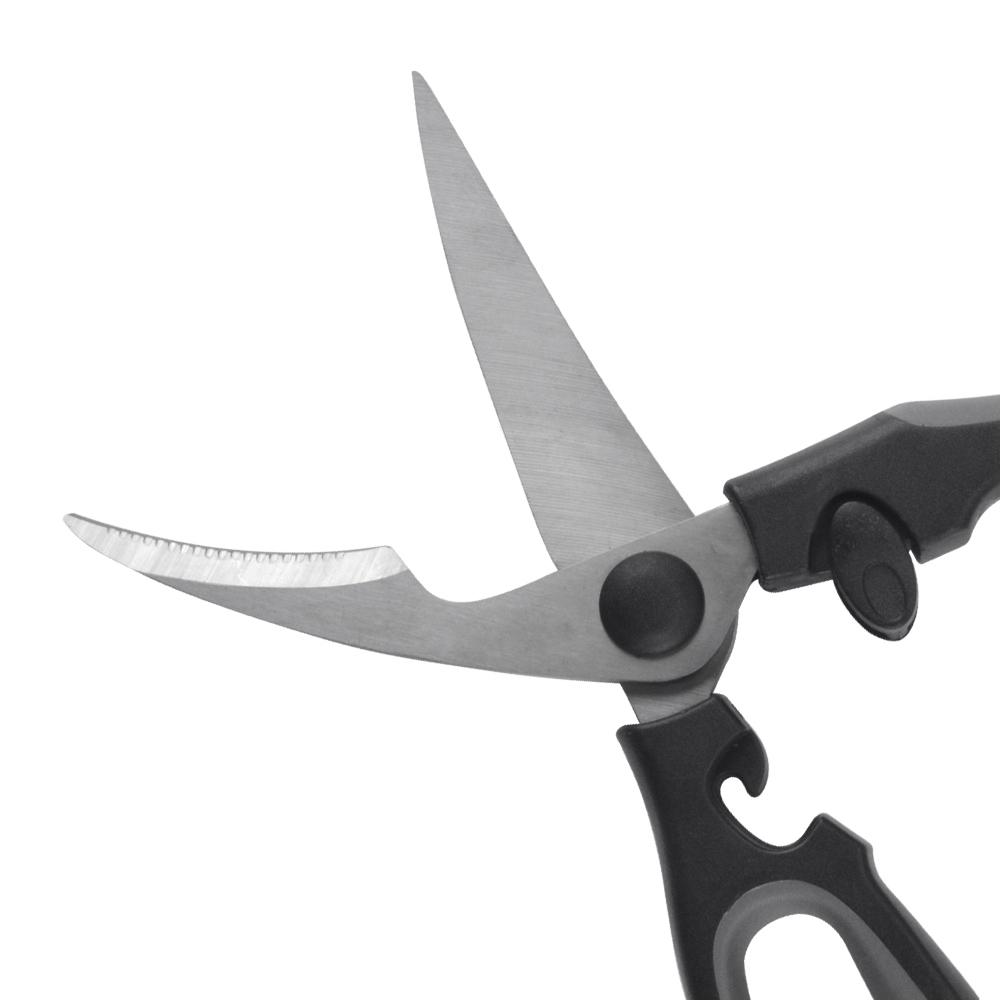
OEM poultry scissors are not only a consumer kitchen tool; they are also a product category that requires careful sourcing decisions. Buyers evaluating multi-functional kitchen shears need to look beyond appearance and check blade performance, handle comfort, cleaning design, packaging options, and supplier communication. The original product description highlights a pair of kitchen shears with stainless steel serrated blades, non-slip rubber-coated handles, an integrated bottle opener and nutcracker, a matte black finish, and a dismantling design for cleaning. Those are useful starting points, but a responsible OEM buyer should still verify details before placing an order.

What OEM Poultry Scissors Are Used For
Poultry scissors are designed for cutting tasks that ordinary paper or office scissors cannot handle. In kitchen use, they may be used to cut poultry skin, trim fat, snip herbs, cut twine, and prepare chicken for methods such as spatchcocking. The original article describes these shears as a kitchen multi-tool, which is accurate when additional functions such as a bottle opener and nutcracker are included in the handle area.
For wholesale, private-label, and OEM programs, the key question is not simply whether the tool has many functions. The more important question is whether those functions match the target customer. A restaurant supply distributor, supermarket kitchenware line, promotional gift buyer, and e-commerce brand may each need a different balance of durability, appearance, packaging, and price position.
Key Takeaways
- Confirm the blade material, serration style, hardness, and corrosion-resistance expectations with the supplier before ordering.
- Evaluate handle comfort with real cutting tasks, especially if the shears are marketed for poultry preparation.
- Ask whether the shears can be dismantled for cleaning and how the joint should be maintained.
- Check whether added tools such as a bottle opener or nutcracker improve the product or create unnecessary complexity.
- Request packaging, branding, inspection, and compliance details instead of assuming standard OEM options are included.
Core Product Features to Review
The original product copy states that the blades are made from stainless steel and include fine serration. Serrated edges can help grip slippery poultry skin and fibrous vegetable stems, but buyers should ask how the serration is formed, how sharpness is checked, and whether the cutting edge is suitable for the intended market. Avoid assuming a specific steel grade unless the supplier confirms it in writing.
The handles are described as non-slip rubber coated. That can be valuable for comfort and control, especially during repetitive preparation tasks. However, handle feel is subjective. If possible, buyers should test samples with wet hands, gloved hands, and different hand sizes. A handle that looks substantial in photos may still cause pressure points during heavy cutting.
The matte black finish may suit modern kitchenware assortments, but surface appearance should be checked for consistency. Ask whether the color is part of the handle material, a coating, or another finish process. Also ask how the product should be cleaned, because care instructions affect customer satisfaction and return rates.
Comparison Checklist for OEM Buyers
| Review Area | What to Check | Questions to Ask the Supplier |
|---|---|---|
| Blade performance | Cutting ability on poultry skin, herbs, fat, and twine | What blade material is used, and how is sharpness inspected? |
| Serration | Grip on slippery or fibrous foods | Is the serration fine, coarse, or customized for a target use? |
| Handle comfort | Non-slip feel, grip size, fatigue during repeated cuts | Can samples be tested with wet hands or gloves? |
| Multi-tool functions | Bottle opener and nutcracker usability | Are these functions tested for practical use and durability? |
| Cleaning design | Dismantling, joint access, hygiene concerns | How should the shears be separated, cleaned, dried, and reassembled? |
| OEM readiness | Logo, packaging, instructions, inspection | What branding options, lead times, and quality checks are available? |
Cleaning and Hygiene Considerations
Kitchen scissors used for poultry need careful cleaning because raw meat residue can collect around the hinge, serrations, and handle gaps. The original article notes that the shears can be dismantled for thorough cleaning. This is a useful feature, but buyers should verify the mechanism. A detachable design should feel secure during use and should not separate unexpectedly.
For consumer-facing instructions, include clear care guidance. Users should wash the shears after contact with raw poultry, clean around the joint, dry the blades fully, and store them safely. If the supplier recommends hand washing or has restrictions on dishwasher use, that information should be printed in the instruction sheet or packaging. Do not assume dishwasher safety unless the supplier confirms it and provides appropriate support.
How to Evaluate a Kitchen Shears Factory or Supplier
When sourcing from a kitchen shears factory, start with documentation and samples. Product photos can show shape, color, and apparent finish, but they cannot prove cutting performance or long-term reliability. Ask for a pre-production sample that matches the proposed material, finish, handle color, logo method, and packaging. If you are comparing multiple suppliers, use the same test tasks for each sample.
Useful supplier questions include:
- What stainless steel is used for the blades, and can the grade be confirmed in the quotation or specification sheet?
- What handle material is used under and over the rubber-coated grip?
- Can the poultry scissors be customized with logo, color, packaging, or instruction inserts?
- What inspection steps are used for blade sharpness, alignment, hinge strength, and appearance?
- What are the available packing methods for wholesale, retail, and e-commerce distribution?
- Are samples available before mass production, and what differences might exist between samples and bulk goods?
Buyers should also ask about applicable market requirements for their destination country. The supplier may be able to provide information, but responsibility for import compliance, labeling, and claims review should be handled carefully by the buyer and their compliance partners.
Balancing Features With Real Customer Needs
Multi-functional kitchen shears can be attractive because they combine cutting, opening, and cracking functions in one tool. However, extra features only add value when they are easy to use and do not weaken the main cutting function. For a poultry scissors product, blade alignment, grip security, and cleanability should come before decorative features.
If the product will be sold through retail stores, packaging should explain the practical uses without overpromising. If it will be sold online, product pages should show the hinge, blade serration, handle shape, and cleaning method. If it will be used in a promotional or private-label program, the branding area and packaging format should be confirmed early so the final design does not interfere with function or safety instructions.
Practical FAQ
Are OEM poultry scissors different from regular kitchen scissors?
They are typically designed for heavier food-preparation tasks such as poultry cutting, trimming fat, and cutting twine. The exact difference depends on blade design, handle structure, and supplier specifications.
Can buyers assume the blade steel grade from the product description?
No. The original description mentions stainless steel, but buyers should ask the supplier to confirm the exact grade, finish, and any supporting documentation.
Is a detachable design important?
It can be important for cleaning, especially after cutting raw poultry. Buyers should test whether the shears separate and reassemble easily while remaining secure during cutting.
Do bottle opener and nutcracker functions matter?
They can help position the product as a multi-tool, but they should not compromise cutting comfort, handle strength, or hygiene. Test these functions before using them as selling points.
What should an OEM buyer request before ordering?
Request samples, a written specification sheet, packaging details, branding options, inspection criteria, care instructions, and confirmation of any claims that will appear on the product page or packaging.
Final Sourcing Advice
OEM poultry scissors can be a useful product for kitchenware lines when the design is matched to real cutting tasks and supported by clear supplier information. The shears described in the original article offer several practical elements: serrated stainless steel blades, non-slip rubber-coated handles, integrated opener and nutcracker functions, a matte black appearance, and a dismantling design for cleaning. For serious sourcing, treat those points as a checklist to verify through samples, specifications, and inspection standards. That approach helps buyers choose multi-functional kitchen shears that are practical, understandable, and easier to support after sale.
