





OEM Poultry Scissors: Practical Sourcing Guide for Kitchen Shears
OEM poultry scissors are a focused kitchen tool for cutting poultry skin, trimming fat, portioning smaller bones, and handling everyday food preparation tasks. For distributors, cookware brands, supermarket buyers, and promotional product companies, the main challenge is not simply finding a pair of scissors that looks strong. The more important task is selecting a product that matches the target user, price position, packaging plan, and after-sales expectations.
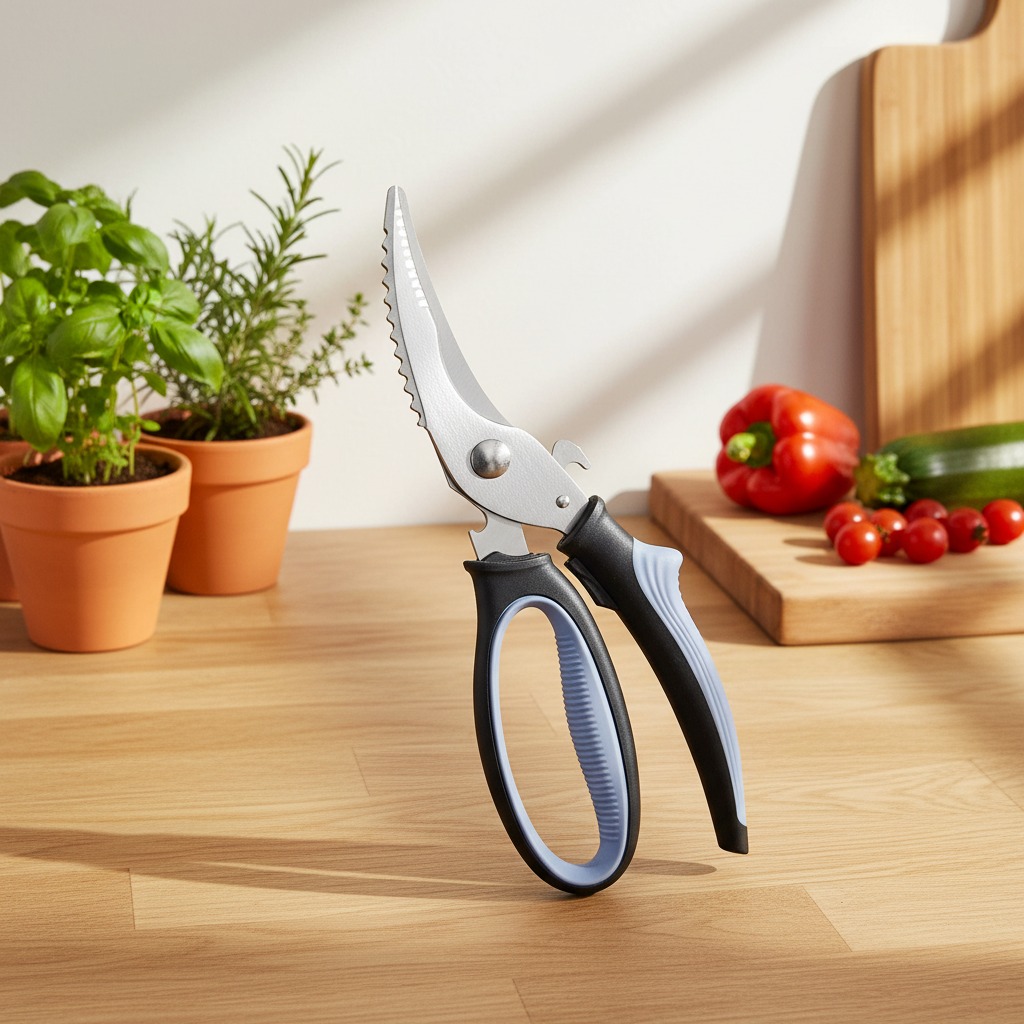
The original product concept highlights multi-functional kitchen shears with serrated stainless steel blades, ergonomic handles, and additional functions such as a bottle opener and nutcracker. Those features can be valuable, but buyers should still verify exact material, finish, assembly, packaging, and compliance details with the supplier before placing a wholesale or private-label order.
What OEM Poultry Scissors Are Designed to Do
Poultry scissors are built to provide more control than a general kitchen knife when working around joints, cartilage, skin, and smaller bones. They are commonly used for spatchcocking chicken, trimming wings, cutting cooked poultry, snipping herbs, opening food packaging, and preparing meat for restaurants or home kitchens.
For OEM projects, the same basic tool can be adapted for different markets. A retail kitchenware brand may want attractive packaging and a comfortable handle color. A foodservice distributor may care more about durability, easy cleaning, and replacement consistency. A gift or promotional buyer may focus on logo placement, appearance, and carton configuration.
Core Product Features to Review Before Ordering
When evaluating OEM poultry scissors, avoid relying only on product photos. Ask for samples and inspect how the shears perform during real cutting tasks. The source article mentions stainless steel blades, a serrated edge, ergonomic handles, and a black-and-blue appearance. These are useful points to review, but they should be confirmed in the final quotation and sample approval.
- Blade design: Check whether the blade shape supports poultry cutting, trimming, and general kitchen use.
- Serrated edge: A serrated section can help grip slippery skin or meat, but the tooth pattern and sharpness should be tested.
- Handle comfort: Confirm that the handle is suitable for the intended user group and does not create pressure points.
- Multi-function elements: Bottle opener and nutcracker features may add value, but only if they do not weaken the main cutting function.
- Cleaning access: Food-contact tools should be easy for users to clean thoroughly after handling raw poultry.
Comparison Checklist for B2B Buyers
The following checklist can help purchasing teams compare samples from different kitchen scissors suppliers in a consistent way.
| Evaluation Area | What to Check | Questions to Ask the Supplier |
|---|---|---|
| Blade material | Material description, finish, edge consistency | What is the confirmed blade material and how is it stated on documents? |
| Cutting performance | Poultry skin, cartilage, herbs, packaging | Can samples be tested before order confirmation? |
| Handle design | Grip comfort, slip resistance, hand fit | Are handle colors or materials customizable for OEM orders? |
| Added functions | Bottle opener, nutcracker, other integrated features | Are these functions included in the quoted model or optional? |
| Branding | Logo area, engraving, printing, packaging artwork | What branding methods are available and what artwork files are needed? |
| Quality control | Sharpness, assembly, appearance, carton condition | What inspection steps are used before shipment? |
| Commercial terms | MOQ, lead time, sample cost, payment terms | What are the current terms for this exact model and packaging? |
OEM Customization: What Can Usually Be Discussed
OEM poultry scissors often involve more than putting a logo on an existing product. Buyers may need to align the product with a retail series, a cookware bundle, or a food-preparation category. Customization may involve handle color, surface appearance, logo position, packaging format, instruction wording, barcode label, and carton marks.
Because customization options vary by supplier and by model, buyers should not assume that every feature can be changed without affecting cost, tooling, lead time, or minimum order quantity. A practical request for quotation should include the target market, estimated order quantity, packaging requirement, branding method, and any preferred inspection criteria. If the product will be sold through a retailer or online platform, also ask what product photos, package dimensions, and labeling information can be provided.
Quality and Safety Questions to Ask a Kitchen Scissors Supplier
Poultry preparation involves raw meat, so buyers should treat quality control seriously. A poor pair of scissors can loosen, become uncomfortable, rust if the material or finish is unsuitable, or fail to cut cleanly. Before approving production, ask suppliers for clear answers instead of broad claims.
- What is the exact material used for the blades and handles?
- Is the serrated edge standard on this model, and how is sharpness checked?
- Can the scissors be disassembled for cleaning, or are they fixed?
- What packaging options are available for retail, wholesale, or e-commerce?
- What inspections are performed for appearance, function, and carton packing?
- Are any market-specific documents required by the buyer, and can the supplier support them?
Do not rely on assumptions about certifications, food-contact compliance, or test results. If your market requires documentation, request current, product-specific records and review them before shipment.
How to Test Samples Before Bulk Purchase
Sample testing should reflect real use. Cut raw poultry skin, joints where appropriate, cooked poultry, herbs, parchment, and common food packaging. Check whether the blades separate cleanly after cutting or if fibers become trapped. Open and close the shears repeatedly to feel for looseness, rough movement, or hand fatigue.
For a wholesale program, test several samples rather than one perfect piece. Compare weight, handle finish, edge alignment, screw or rivet tightness, and packaging consistency. If the product includes a bottle opener or nutcracker, test those functions separately. Added features should be practical, not just decorative.
Key Takeaways
- OEM poultry scissors should be evaluated by cutting performance, cleaning convenience, comfort, and consistency.
- Multi-functional kitchen shears can add retail value, but the main poultry-cutting function should remain the priority.
- Confirm all product details, including material, packaging, logo method, MOQ, and lead time, directly with the supplier.
- For regulated or retailer-controlled markets, request product-specific documentation instead of relying on general claims.
FAQ: OEM Poultry Scissors Sourcing
What makes poultry scissors different from ordinary kitchen scissors?
Poultry scissors are shaped and built for meat preparation tasks such as cutting skin, trimming fat, and working around joints. Ordinary kitchen scissors may not provide the same grip, leverage, or blade geometry.
Are multi-functional kitchen shears better for wholesale buyers?
They can be, especially for retail channels where added features are easy to explain on packaging. However, buyers should test whether bottle opener or nutcracker functions are genuinely useful and do not compromise cutting comfort.
Can OEM poultry scissors be customized with a private label?
Many OEM sourcing projects include logo and packaging customization, but available methods depend on the exact supplier and model. Ask about logo position, artwork requirements, sample approval, and any additional cost.
What should I request before confirming an order?
Request samples, a written specification, packaging details, quotation terms, lead time, inspection standards, and any documents required for your sales market.
How should end users care for poultry scissors?
Users should clean the scissors promptly after contact with raw poultry, dry them thoroughly, and store them safely. If the supplier provides care instructions, include them in the retail package or user guide.
