





OEM Poultry Shears: Practical Sourcing Guide for B2B Buyers
OEM poultry shears are a focused kitchen tool category for brands, importers, distributors and retailers that need reliable cutting products for poultry preparation and general kitchen use. Unlike ordinary household scissors, poultry shears are expected to cut through skin, cartilage and small bones while still feeling controlled in the hand. For a buyer, the challenge is not simply finding a low unit price. It is confirming whether the product design, materials, assembly, packaging and quality controls match the market you serve.
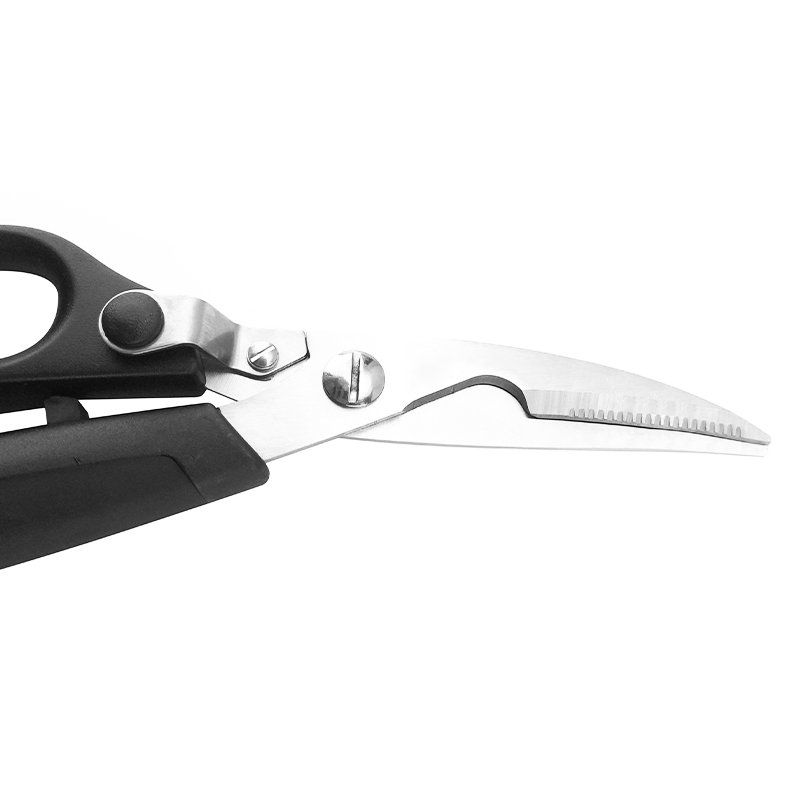
The original product description highlights stainless-steel blades, a serrated section, an ergonomic handle with a non-slip black coating, and a fortified pivot point with a stainless-steel nut. These are useful starting points, but B2B buyers should verify the details before placing an order. The following guide explains what to check when sourcing OEM poultry shears from a factory or supplier.
Key Takeaways
- Confirm the blade material, hardness, edge finish and corrosion-resistance expectations instead of relying on generic stainless-steel wording.
- Evaluate the pivot structure because cutting performance depends on blade alignment as much as blade sharpness.
- Request samples and test them on realistic poultry-preparation tasks before approving mass production.
- Clarify branding, packaging, inspection standards, lead time, MOQ and after-sales handling with the supplier in writing.
What OEM Poultry Shears Are Designed to Do
Poultry shears are used for tasks such as cutting chicken skin, trimming fat, separating joints, spatchcocking poultry and handling small bones. In commercial product lines, they may also be positioned as multifunctional kitchen shears for herbs, food packaging and general prep work. The difference between a good product and a weak one often appears after repeated use: loose pivots, hand fatigue, blade staining or poor cutting alignment can lead to returns and negative reviews.
For an OEM project, define the intended buyer first. A value retail line, a professional kitchen range and a private-label gift set may all need different levels of finish, packaging and durability. The product does not need unnecessary features, but every feature should support the target use case.
Blade Design and Cutting Performance
The source article notes stainless-steel blades and a serrated section. Stainless steel is widely used for kitchen shears because it can offer practical corrosion resistance, but the exact grade, heat treatment and edge geometry matter. Buyers should ask the supplier what stainless-steel grade is used, whether the blades are hardened, and how cutting sharpness is checked during production.
A serrated section can help grip tougher textures, especially slippery poultry skin or cartilage. However, serration depth and placement should be evaluated. Too aggressive a serration can make cleaning harder or create a rough cutting feel; too shallow a serration may not add much value. During sample review, test whether the shears cut cleanly without crushing or twisting the food.
Handle Comfort and Grip Control
The original description refers to an ergonomic handle with a non-slip black coating. This is important because poultry preparation often involves wet or oily hands. A secure grip helps reduce slipping and improves control, especially when cutting around joints. Still, buyers should not assume all coated handles perform the same.
When reviewing a sample, check the handle opening size, pressure points, coating texture and comfort for both short and extended use. If your customer base includes commercial kitchens, consider whether the handle can tolerate frequent washing. If the product is aimed at home cooks, comfort, safety and easy storage may be stronger selling points.
Pivot Strength and Assembly Quality
The pivot is one of the most important parts of poultry shears. The original article mentions a fortified pivot point and stainless-steel nut. A strong pivot helps keep the blades aligned and reduces wobble. If the pivot loosens too quickly, cutting performance declines even if the blades are sharp.
Ask the supplier how the pivot is assembled and whether tension can be adjusted. Inspect samples for side-to-side blade movement, uneven gaps and rough opening or closing. Also ask how the factory checks pivot tightness during production. These questions are especially important for OEM buyers because small assembly differences can become large quality problems across a shipment.
OEM Customization Options to Discuss
OEM poultry shears may be customized in several ways, depending on the supplier’s capability. Avoid assuming that every factory can support every option at the same cost or lead time. Instead, prepare a clear specification sheet and ask what is feasible.
- Logo method: laser marking, stamping, printing or branded packaging.
- Handle color or coating: confirm available colors, finish consistency and durability expectations.
- Packaging: blister card, paper box, hang tag, instruction insert or retail-ready carton.
- Product set: single shears or inclusion in a kitchen tool bundle.
- Market documents: ask what documents, test reports or declarations are available for your destination market.
Do not treat customization as only a visual decision. A new coating, logo position or packaging format can affect production handling, inspection and cost. Always approve final pre-production samples before bulk manufacturing.
Supplier Evaluation Checklist
Before selecting a poultry scissors factory or kitchen scissors supplier, compare more than price. A structured checklist helps buyers avoid vague promises and identify gaps early.
| Evaluation Area | What to Check | Questions to Ask |
|---|---|---|
| Blade material | Stainless-steel type, edge finish, serration quality | Which grade is used and how is sharpness inspected? |
| Pivot assembly | Blade alignment, nut stability, opening and closing feel | What tolerance or inspection method is used for pivot tightness? |
| Handle grip | Coating texture, comfort, slip resistance in wet use | Can you provide handle material details and sample options? |
| OEM branding | Logo placement, packaging artwork, color matching | What files, approvals and lead times are required? |
| Quality control | Incoming materials, in-process checks, final inspection | Can inspection criteria be agreed before production? |
| Commercial terms | MOQ, lead time, sample cost, payment and defect handling | What terms apply to trial orders and repeat orders? |
Sample Testing Before Purchase Orders
Samples should be tested in realistic conditions, not only viewed in photos. Cut raw poultry skin, trim fat, cut through joints where appropriate, and check whether the shears remain comfortable. Wash and dry the sample several times to observe staining, coating changes and pivot performance. If your market expects dishwasher-safe products, ask the supplier directly whether the product is intended for that use and what evidence is available.
Record the results with photos, measurements and written comments. If changes are needed, confirm the revised sample before approving packaging or mass production. Clear sample feedback reduces disputes later.
Packaging and Retail Presentation
Packaging should protect the blades, communicate safe use and match the sales channel. For e-commerce, protection during parcel shipment may matter more than shelf display. For supermarkets or hardware-style retail, hanging packaging and clear product visibility may be important. For professional kitchen channels, simple durable packaging with clear product information may be sufficient.
Ask whether the supplier can provide dielines, barcode placement, warning text space and carton packing details. Buyers should also verify any required labeling for their market with their own compliance advisor or importer of record.
FAQ: Buying OEM Poultry Shears
What information should I include in an OEM inquiry?
Include target market, order quantity estimate, required packaging, logo needs, preferred handle color, expected price level, inspection requirements and any destination-market labeling needs. A complete inquiry helps the supplier quote more accurately.
Are stainless-steel poultry shears always rust-proof?
No. Stainless steel can resist corrosion, but performance depends on the grade, surface finish, cleaning habits and storage conditions. Ask the supplier for material details and care instructions suitable for your market.
How many samples should a buyer test?
Test more than one sample if possible, especially when comparing suppliers. Multiple samples help reveal consistency in blade alignment, pivot tension, handle finish and packaging quality.
What should be confirmed before mass production?
Confirm the final sample, artwork, packaging, carton marks, inspection criteria, lead time, payment terms, defect handling process and any required documents. Put approvals in writing to avoid misunderstandings.
Is the lowest quote the best choice?
Not necessarily. Poultry shears are judged by cutting feel, durability, safety perception and repeat-use satisfaction. A slightly higher quote may be better if the supplier offers stronger consistency, clearer communication and better quality control.
Final Sourcing Advice
OEM poultry shears can be a practical addition to a kitchenware line when the product is specified and tested carefully. Focus on blade performance, grip comfort, pivot stability, packaging fit and supplier transparency. If a factory cannot clearly answer questions about materials, assembly, inspection and customization, continue the evaluation before committing to a large order. Good sourcing decisions begin with detailed questions and verified samples.
