




OEM Poultry Shears: Practical Sourcing Guide for Kitchenware Buyers
OEM poultry shears are a focused kitchen tool for cutting poultry, trimming meat, and handling smaller food-preparation tasks where a knife may be less convenient. For importers, wholesalers, private-label brands, and retail buyers, the challenge is not only finding a product that looks good in a catalog. The more important task is to evaluate whether the shears are suitable for the intended market, price position, packaging format, and after-sales expectations.
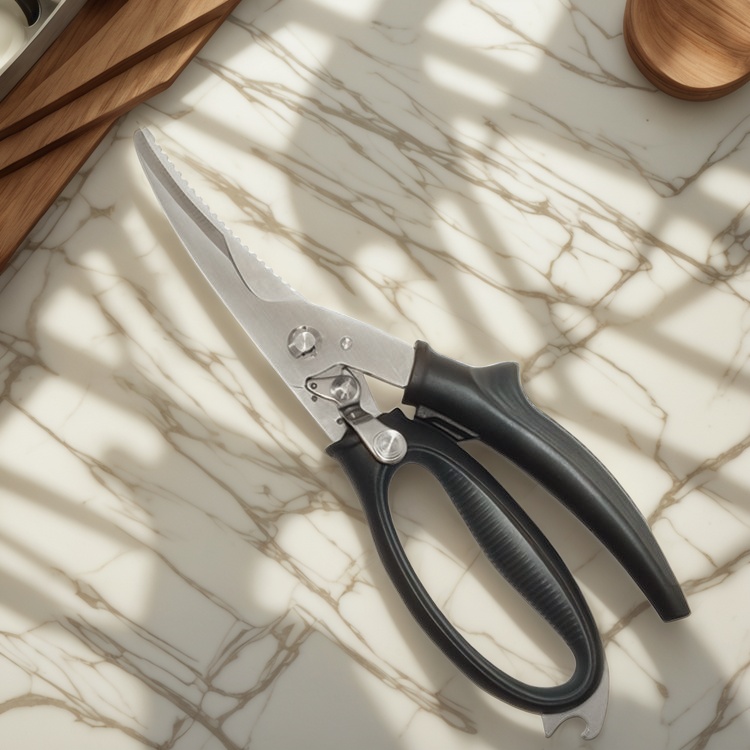
The original product description highlights several useful features: stainless steel blades, a serrated edge, an ergonomic non-slip handle, an integrated safety lock, and a built-in bottle opener. These details are a good starting point, but a serious sourcing process should go further. Buyers should confirm materials, construction, packaging, testing expectations, and production terms directly with the supplier before placing an OEM or wholesale order.
What OEM Poultry Shears Are Used For
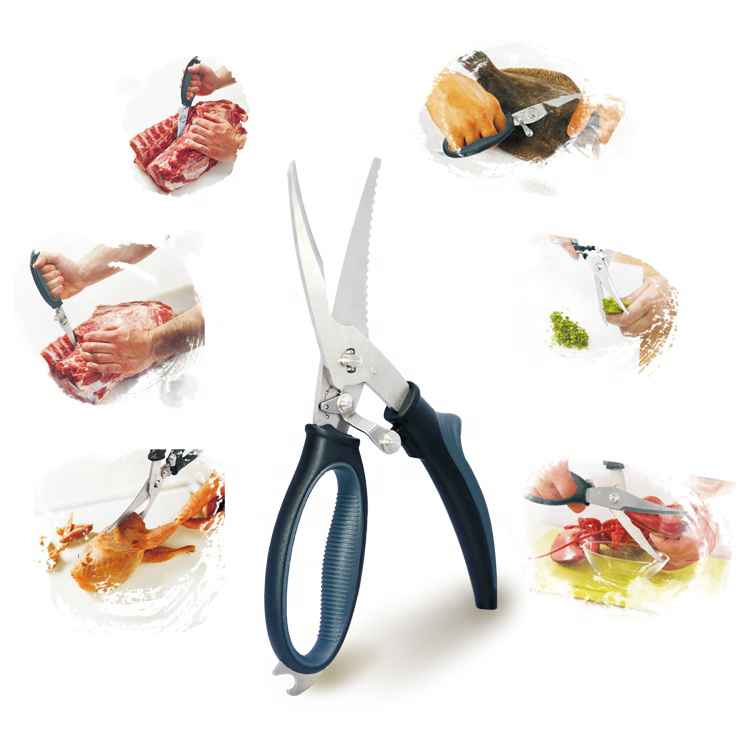
Poultry shears are designed for cutting tasks that require more leverage than ordinary household scissors. In a kitchen setting, they may be used to cut through poultry joints, trim fat, portion meat, snip herbs, open food packaging, or complete other preparation tasks. A serrated edge can help grip slippery food surfaces while cutting, which is especially relevant when handling raw poultry or meat.
For B2B buyers, the target user matters. A retail consumer may care most about comfort, cleaning, and safe storage. A restaurant supply buyer may focus on durability and repeat use. A promotional or giftware buyer may give more weight to appearance and packaging. An OEM project should define the use case before confirming the specification, because the same product shape may not suit every sales channel.
Key Product Features to Review
The source article mentions several features that buyers should review carefully during sample evaluation. Stainless steel blades are important for kitchen scissors, but buyers should ask the supplier to identify the exact steel type if that information is needed for marketing, compliance, or internal purchasing standards. Do not assume a grade unless it is confirmed in writing.
- Blade design: Check sharpness, cutting alignment, serration quality, and whether the blades separate or stay fixed for cleaning.
- Handle comfort: Test the non-slip handle with both dry and slightly wet hands to understand grip control.
- Safety lock: Open and close the lock repeatedly to confirm it holds the blades securely during storage.
- Bottle opener: If promoted as a secondary function, test whether it works without interfering with normal cutting.
- Overall balance: Compare weight, hand fit, and leverage for different users, including left- and right-handed testers where relevant.
These checks are simple, but they can prevent mismatches between catalog claims and real user experience. For OEM orders, request pre-production samples and compare them with approved reference samples before mass production.
Comparison Checklist for Buyer Evaluation
A structured checklist helps purchasing teams compare suppliers consistently. The table below can be adapted for internal sourcing notes, sample reviews, or factory discussions.
| Evaluation Area | What to Check | Questions to Ask the Supplier |
|---|---|---|
| Blades | Cutting performance, serrated edge, alignment, visible finish | What stainless steel is used, and can the material be documented? |
| Handle | Grip comfort, non-slip feel, size suitability | Can handle color, texture, or branding be customized for OEM orders? |
| Safety Lock | Ease of use, stability when closed, repeated operation | How is the lock checked during quality inspection? |
| Packaging | Retail display, protection in transit, barcode or label area | What packaging options are available, and can buyer artwork be used? |
| Quality Control | Sample consistency, finishing, function checks | What inspection steps are performed before shipment? |
| Commercial Terms | Lead time, order quantity, payment terms, shipping support | What are the current MOQ, production time, and export document options? |
OEM Customization Points to Confirm
OEM poultry shears may involve more than adding a logo. Buyers should clarify which parts of the product can be customized and which are fixed by existing tooling. Common discussion points include handle color, logo position, packaging artwork, instruction inserts, barcode labels, carton markings, and product naming. If the buyer needs a specific blade finish, handle material, or structural change, the supplier should confirm feasibility, tooling cost, and development time.
It is also important to separate confirmed specifications from marketing language. Phrases such as “professional” or “heavy duty” can mean different things to different buyers. Instead of relying on broad terms, define measurable expectations where possible: cutting tests to be performed, acceptable visual defects, packaging drop-test requirements, or the number of safety-lock cycles to check during inspection. If testing or certification is required by the destination market, ask the supplier what documentation can be provided and whether third-party testing is needed.
Supplier Questions Before Placing an Order
Before approving an OEM poultry shears order, buyers should prepare a short but detailed question list. This reduces confusion and creates a written record for negotiation, sampling, and production follow-up.
- What is the confirmed blade material, handle material, and available finish?
- Can the supplier provide samples that match the intended mass-production version?
- What customization options are available for logo, handle color, packaging, and carton labels?
- What are the current MOQ, sample cost, production lead time, and payment terms?
- What quality checks are performed for blade sharpness, lock function, appearance, and packaging?
- What export documents, product labels, or market-specific requirements can the supplier support?
These questions do not replace a contract, purchase order, or inspection plan, but they help buyers identify whether a supplier is prepared for OEM work. Clear answers are especially important when the product will be sold under a private label.
Quality Control and Inspection Tips
Poultry shears are handled close to food, sharp edges, and user hands, so quality control should cover both function and safety. During inspection, buyers or third-party inspectors can review whether the blades open and close smoothly, whether the cutting edge is consistent, whether screws or pivots feel secure, and whether the safety lock keeps the shears closed during storage. Any rough edges, loose parts, or inconsistent finishing should be recorded before shipment approval.
Packaging should also be checked. A product may pass functional testing but still arrive damaged if the packaging is too weak for transport. Confirm inner packing, master carton strength, labeling, and the way the shears are secured inside the retail pack. If the product includes a sharp blade, packaging should protect both the item and the person handling it.
Key Takeaways
- OEM poultry shears should be evaluated by use case, not only by appearance or catalog wording.
- Confirmed features from the source include stainless steel blades, a serrated edge, a non-slip handle, a safety lock, and a bottle opener.
- Buyers should ask suppliers to document material details, customization options, packaging choices, MOQ, lead time, and inspection steps.
- Sample testing should include cutting performance, grip comfort, lock function, finishing quality, and packaging durability.
- Clear written specifications reduce risk when producing wholesale or private-label kitchen scissors.
FAQ: OEM Poultry Shears Sourcing
What should buyers check first when sourcing OEM poultry shears?
Start with blade performance, handle comfort, and safety-lock function. These directly affect user experience and product safety. After that, review customization, packaging, and commercial terms.
Can poultry shears be customized for private-label orders?
Many OEM projects may include logo, handle color, packaging, and label customization, but availability depends on the supplier’s tooling and production setup. Buyers should confirm options before sampling.
Is stainless steel enough information for blade material?
No. Stainless steel is a broad category. If the exact grade matters for your market or marketing claims, ask the supplier to confirm the material and provide supporting documentation where available.
Should buyers inspect packaging as well as the shears?
Yes. Packaging affects shelf presentation, shipping protection, barcode placement, and safe handling. It should be included in sample approval and pre-shipment inspection.
What should not be assumed from a product description?
Do not assume manufacturing capacity, certifications, MOQ, test results, steel grade, or compliance claims unless the supplier provides clear written confirmation. Treat missing details as questions for the supplier.
