





OEM Poultry Shears: Practical Sourcing Guide for Kitchen Scissors Buyers
OEM poultry shears are a focused kitchen tool for cutting poultry, trimming meat, snipping herbs, opening food packaging and handling small utility tasks around food preparation. For importers, kitchenware brands, wholesalers and private-label buyers, the goal is not simply to find a pair of scissors that looks strong. The goal is to confirm whether the product design, cleaning method, packaging options and supplier communication fit the target market.
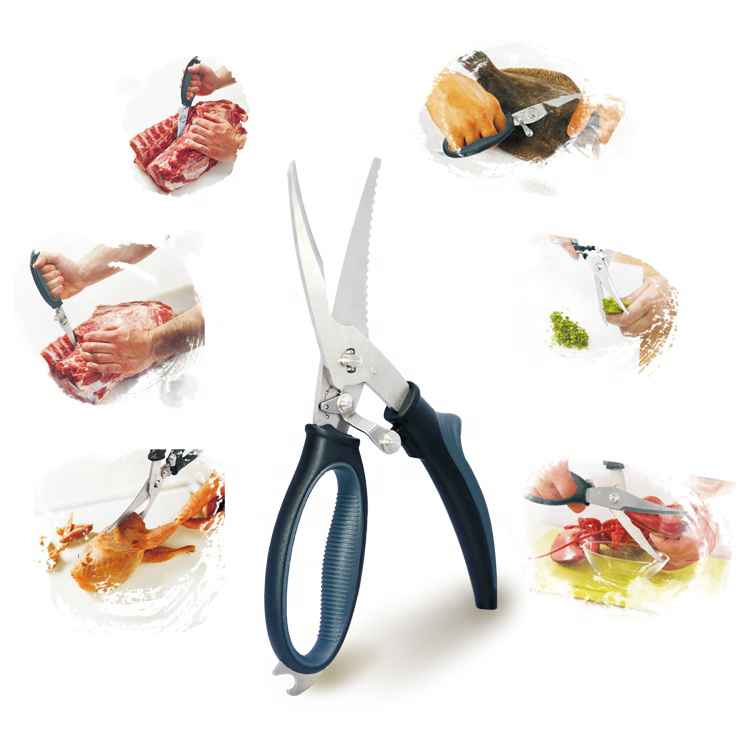
The original product information highlights several useful features: stainless steel construction, micro-serrated blade edges, ergonomic non-slip black handles, suitability for left- and right-handed users, a built-in bottle opener and nutcracker, a pivot screw mechanism, and a separable two-part design for cleaning. Buyers should treat these points as a starting specification and then ask the supplier to confirm details that affect quality, compliance and customer satisfaction.
What OEM Poultry Shears Are Designed to Do
Poultry shears differ from general household scissors because they are expected to cut through slippery, fibrous and sometimes tough food items. A buyer may position them for home cooks, restaurant prep areas, food service suppliers or retail kitchenware ranges. In each channel, the product must feel stable in the hand and perform consistently on the tasks the packaging promises.
Common use cases include cutting chicken joints, trimming fat, portioning cooked poultry, snipping herbs, cutting parchment, opening sealed food bags and dealing with light packaging. If the shears also include handle functions such as a bottle opener or nutcracker, the buyer should decide whether those features add practical value for the target customer or make the product harder to explain on shelf.
Blade Features to Review Before Ordering
The source article states that the shears use stainless steel and micro-serrated blade edges. These are important points, but a professional buyer should not stop there. Ask the supplier what stainless steel type is used, how the blades are hardened, how sharpness is checked, and whether the same specification will be used in mass production as in the approved sample.
Micro-serrated edges can help grip slippery food, which is useful when cutting poultry skin, herbs or packaging. However, serrations also affect sharpening, cleaning and user expectations. If the product will be sold as heavy duty kitchen scissors, buyers should request samples and test them on realistic materials rather than relying only on appearance. A blade may look strong but still feel uncomfortable if the pivot is loose, the edge alignment is poor or the handle shape creates pressure during repeated cuts.
Handle, Pivot and Cleaning Considerations
The existing description mentions ergonomic non-slip black handles that suit both left- and right-handed users. That is useful for broad retail appeal, but buyers should still check the handle size, grip texture and balance. A comfortable handle for one market may feel too large, too small or too stiff in another. If the product is intended for frequent food preparation, comfort during repeated squeezing matters as much as the first impression.
The pivot screw mechanism is another key area. The original article notes that it supports smooth, precise cuts and helps prevent blade divergence. In sourcing terms, buyers should examine whether the pivot remains stable after repeated opening, washing and cutting tests. A separable two-part design can make cleaning easier, especially when raw poultry is involved, but it must also reassemble securely. Buyers should ask for care instructions and confirm whether the cleaning method fits local customer habits.
Comparison Checklist for OEM Buyers
The following checklist can help buyers compare samples from different kitchen scissors manufacturers or suppliers. It focuses on practical confirmation points rather than assumptions.
| Item to Check | Why It Matters | Question to Ask the Supplier |
|---|---|---|
| Blade material | Influences durability, corrosion resistance and customer perception | What stainless steel specification is used, and can it be documented? |
| Micro-serrated edge | Helps grip slippery food during cutting | Is the serration consistent on production pieces, not only samples? |
| Pivot screw | Affects cutting smoothness and blade alignment | How is pivot tightness checked during production? |
| Separable design | Supports easier cleaning after food contact | How should users separate, wash and reassemble the shears? |
| Handle comfort | Reduces hand fatigue during repeated use | Can samples be tested by left- and right-handed users? |
| Extra functions | Bottle opener or nutcracker may add utility | Are these functions tested, and how are they described on packaging? |
| Packaging | Impacts retail presentation, shipping and instructions | What OEM packaging options are available for private-label orders? |
OEM Customization and Supplier Questions
For OEM poultry shears, customization may involve logo placement, handle color, packaging artwork, instruction wording or retail bundle design. Do not assume every supplier offers the same options or that every option is suitable for every order size. Commercial details such as minimum order quantity, lead time, sample cost, tooling cost and packaging charges should be confirmed directly with the supplier.
Before approving an order, prepare a written specification sheet. It should include product name, blade description, handle color, approved sample photos, logo position, packaging format, carton requirements and inspection criteria. This reduces misunderstanding and makes it easier to compare the final shipment with the approved sample.
- Request pre-production samples before confirming mass production.
- Confirm whether the sample and bulk order use the same materials and finish.
- Ask what in-process and final inspection steps are used.
- Review all product claims before printing packaging or online listings.
- Clarify cleaning instructions and warnings for raw poultry use.
Quality Checks for Heavy Duty Kitchen Scissors
Quality control should reflect real use. A simple visual inspection is not enough for a cutting tool. Buyers can create a practical test plan using chicken parts, herbs, food packaging and repeated open-close cycles. Check whether the blades remain aligned, whether the handle feels secure, and whether the pivot loosens too quickly. If the shears separate for cleaning, test repeated separation and reassembly.
Food-contact requirements, labeling obligations and import rules vary by destination market. Instead of assuming compliance, ask the supplier what documentation is available and review it with a qualified compliance partner when needed. Avoid printing broad claims such as dishwasher safe, professional grade, rustproof or certified unless those claims are supported by the supplier and appropriate documentation.
Key Takeaways
OEM poultry shears can be a strong product for kitchenware ranges when the buyer evaluates them as a food-preparation tool, not just as a generic scissor. The explicit features in the source product information include stainless steel blades, micro-serrated edges, non-slip black handles, left- and right-hand usability, a built-in bottle opener and nutcracker, a pivot screw mechanism, and a separable design for cleaning.
The main sourcing lesson is to verify every commercial and technical detail before committing to an order. Samples, written specifications, realistic cutting tests and clear packaging claims help reduce risk. Buyers should also ask direct questions about materials, inspection, cleaning guidance, customization options and documentation rather than assuming these details are standard.
FAQ
Are OEM poultry shears only for cutting chicken?
No. Poultry shears are designed for poultry tasks, but the original product description also mentions use with meat, herbs and tough packaging. Buyers should test and describe use cases accurately for their target market.
What does a micro-serrated blade edge do?
A micro-serrated edge helps grip food during cutting, which can reduce slipping on poultry skin, herbs or packaging. Buyers should confirm the serration quality on production samples.
Why is a separable design useful?
A separable two-part design can make cleaning easier because food residue may collect around the pivot area. Buyers should confirm that the shears separate and reassemble safely and provide clear care instructions.
Can the handles be customized for OEM orders?
Handle color, logo placement or packaging may be possible, but the buyer should ask the supplier directly. Do not assume customization options, minimum quantities or costs without written confirmation.
What should buyers ask a kitchen scissors manufacturer first?
Start with blade material, sample availability, production consistency, packaging options, inspection steps, lead time, MOQ and available documentation. These answers help determine whether the supplier fits the intended sales channel.
