




OEM School Scissors: KidSafe Precision's Cutting Edge
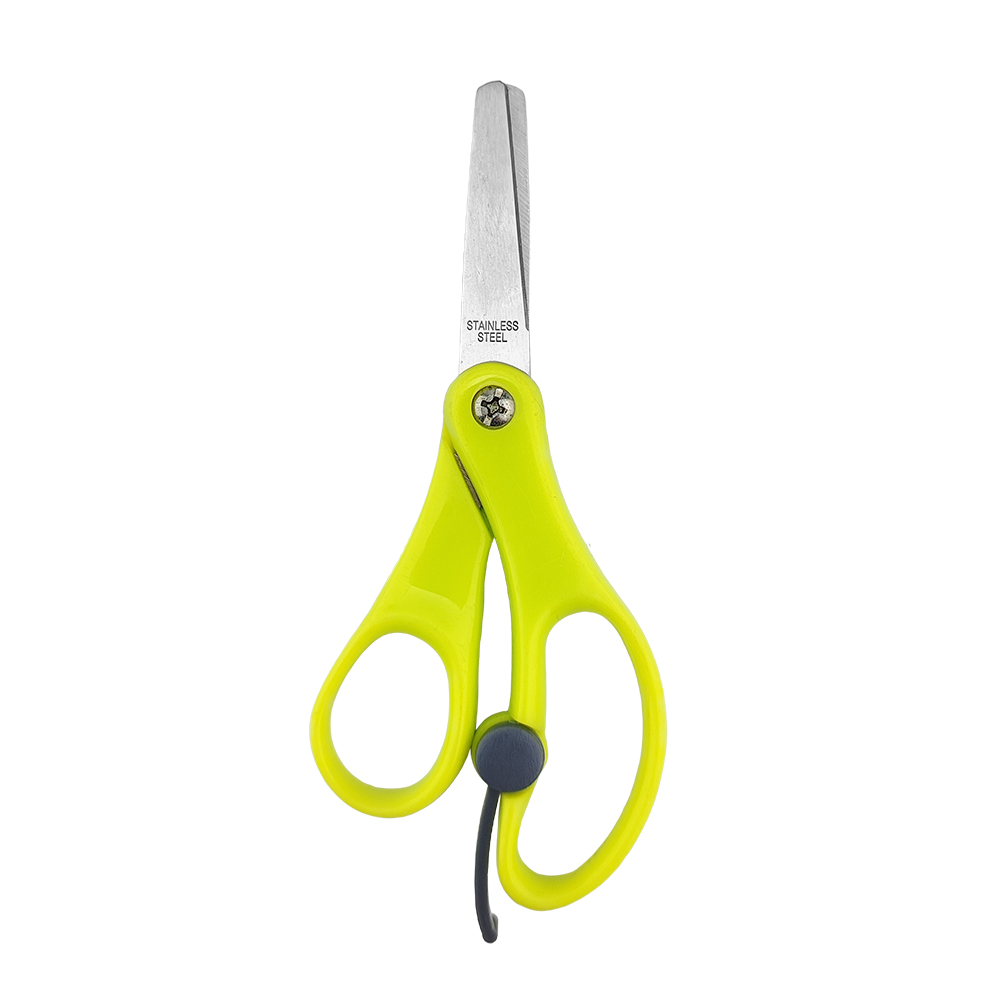
School scissors look simple, but for buyers, distributors, stationery brands, and classroom supply programs, the details matter. A child-friendly pair must be easy to control, comfortable in small hands, suitable for paper-based activities, and designed to reduce avoidable risks during everyday use. The KidSafe Precision scissors described in the original product article focus on several practical elements: a 5 inch size, lime green handles, rounded tips, stainless steel blades, and a built-in name tag slot. For OEM school scissors, those details can help a product fit classroom, craft, and back-to-school sourcing needs.
Key Takeaways
- For school use, 5 inch scissors can offer a practical balance of control, portability, and cutting reach.
- Rounded tips are important for child-focused scissors, but buyers should still ask suppliers how safety is tested and documented.
- A name tag slot can reduce classroom mix-ups and support school supply programs or customized orders.
- OEM buyers should confirm materials, packaging, labeling, color options, sample approval steps, and quality inspection standards before placing an order.
Why 5 Inch School Scissors Are Popular for Classrooms
The 5 inch format is widely used for children’s stationery because it is compact enough for pencil cases and classroom bins while still allowing controlled cutting for paper crafts. In the original article, the KidSafe Precision scissors are presented as 5 inch scissors intended for school and craft projects. This size is especially relevant for younger users who may struggle with longer blades or oversized handles.
For sourcing teams, size should not be evaluated by length alone. Ask for the full product drawing or sample measurements, including handle opening, blade length, thickness, and overall weight. A product may be labeled as 5 inch, but the user experience can vary depending on handle geometry and blade proportions. If the scissors are intended for school kits, also check whether the size fits standard retail cards, blister packs, pencil boxes, or bulk classroom storage trays.
Child-Friendly Design: What Buyers Should Check
The original product description highlights ergonomic handles sized for small hands. This is a useful design direction, but OEM buyers should verify comfort with samples rather than relying only on photos. A handle that looks attractive may still create pressure points if the inner edges are sharp, too narrow, or poorly finished.
When reviewing school scissors, consider the following design checks:
- Confirm the handle openings are appropriate for the target age group.
- Check whether the grip feels secure during repeated cutting motions.
- Inspect the pivot area for smooth movement without excessive looseness.
- Review molded plastic edges for burrs, rough seams, or flashing.
- Test cutting performance on the materials children are likely to use, such as paper and cardstock.
The lime green handle noted in the original article may be useful for visibility in classrooms and retail display, but color should also be discussed as part of the OEM brief. If a buyer needs brand colors, mixed cartons, or school-specific colors, those details should be confirmed with the supplier during the quotation stage.
Rounded Tips and Blade Performance
For school environments, rounded tips are a practical safety-focused feature. They help reduce the chance of accidental pokes compared with pointed craft scissors. The original article also states that the blades are stainless steel and intended to cut paper and cardstock. These are useful facts, but buyers should avoid assuming all stainless steel scissors perform the same. Blade thickness, edge grinding, pivot alignment, and assembly quality all affect cutting performance.
During sample review, test whether the blades cut cleanly from the base to the tip. Poorly aligned scissors may fold paper instead of cutting it, which can frustrate children and shorten product life. Also ask the supplier what internal inspection steps are used for blade sharpness, tip shape, handle strength, and pivot fastening. If the product will be sold in a regulated market, buyers should ask what safety or chemical compliance documents are available for review, rather than assuming compliance from the product description.
Name Card Scissors and Classroom Organization
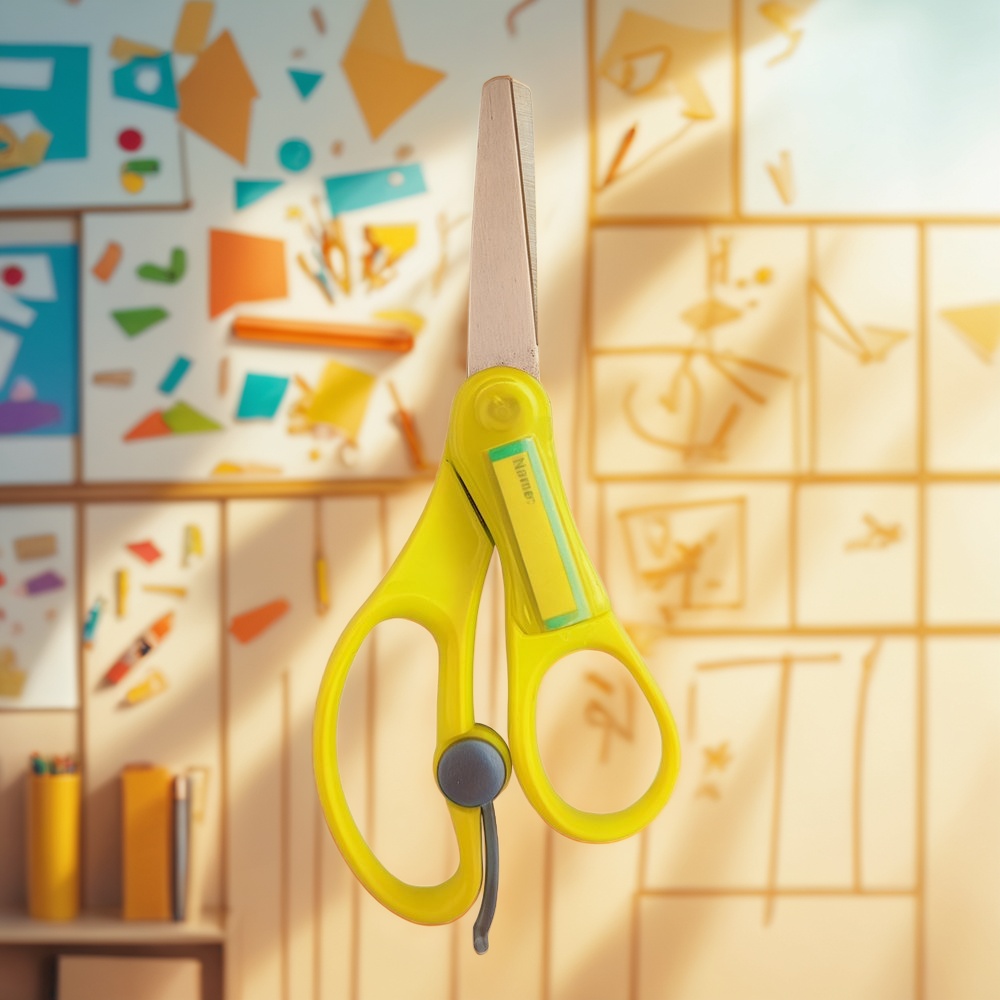
One of the more practical features in the original article is the built-in name tag slot. This turns the product into what many buyers might search for as name card scissors or personalized school scissors. In classrooms, shared supplies are easily misplaced. A name slot can help teachers, parents, and students identify ownership without using stickers that peel away or marker labels that fade.
For OEM and wholesale programs, a name tag area can also support retail differentiation. Buyers may want to ask whether the slot accepts a removable paper insert, whether insert cards can be supplied with the product, and whether packaging can show the feature clearly. If customization is required, clarify whether the supplier can support handle colors, logo printing, private-label packaging, or barcode labeling. Do not rely on verbal assumptions; request artwork templates, pre-production samples, and written approval steps.
Comparison Checklist for OEM School Scissors
| Evaluation Area | What to Look For | Questions to Ask a Supplier |
|---|---|---|
| Size and control | 5 inch format, manageable blade length, comfortable handle openings | Can you provide full dimensions and samples for age-group review? |
| Tip design | Rounded tips suitable for school use | How is the rounded tip shape checked during production? |
| Blade material | Stainless steel blades as stated in the product description | What blade material documentation or inspection records can be shared? |
| Cutting use | Clean cutting on paper and cardstock | What materials are used in factory cutting tests? |
| Identification | Built-in name tag slot for classroom organization | Can name cards, labels, or packaging callouts be customized? |
| OEM program | Color, logo, and packaging options aligned with the buyer’s channel | What are the sample process, lead time, MOQ, and carton details? |
OEM and Wholesale Sourcing Guidance
When sourcing OEM school scissors, the goal is not only to find an attractive product. Buyers need repeatable quality, accurate labeling, stable packaging, and clear communication. Start with a written product specification. Include size, handle color, blade material stated by the supplier, tip style, intended cutting materials, packaging format, warning statements if required, and any private-label requirements.
Before confirming bulk production, request physical samples and test them in realistic scenarios. For a school supply program, that may mean cutting construction paper, printer paper, and cardstock repeatedly. For retail, it may include checking shelf presentation and scan labels. For promotional or institutional orders, it may include verifying whether the name tag slot is easy to use and whether the product can be packed efficiently for distribution.
Commercial details should be confirmed directly with the supplier. Ask about minimum order quantity, unit packing, carton quantity, customization costs, production lead time, payment terms, inspection options, and replacement handling for defects. If compliance is required in the destination market, request current documents and confirm the exact product model covered by those documents.
FAQ
What makes these OEM school scissors suitable for children?
The original product information highlights a 5 inch size, small-hand handle design, rounded tips, and blades intended for paper and cardstock. Buyers should still test samples for comfort, cutting quality, and age suitability.
Can the scissors be customized for schools or retail brands?
The article describes them as customized school scissors and notes a built-in name tag slot. For OEM orders, ask the supplier about available handle colors, logo methods, packaging options, artwork requirements, and sample approval steps.
Are rounded-tip scissors completely safe?
Rounded tips can reduce certain risks, but scissors still require appropriate supervision and age-appropriate use. Buyers should ask suppliers what safety checks and compliance documents are available for the target market.
What should be tested before placing a wholesale order?
Test cutting performance, handle comfort, blade alignment, pivot smoothness, tip finish, packaging durability, label accuracy, and consistency across multiple samples. Confirm all commercial and compliance details in writing before production.
