




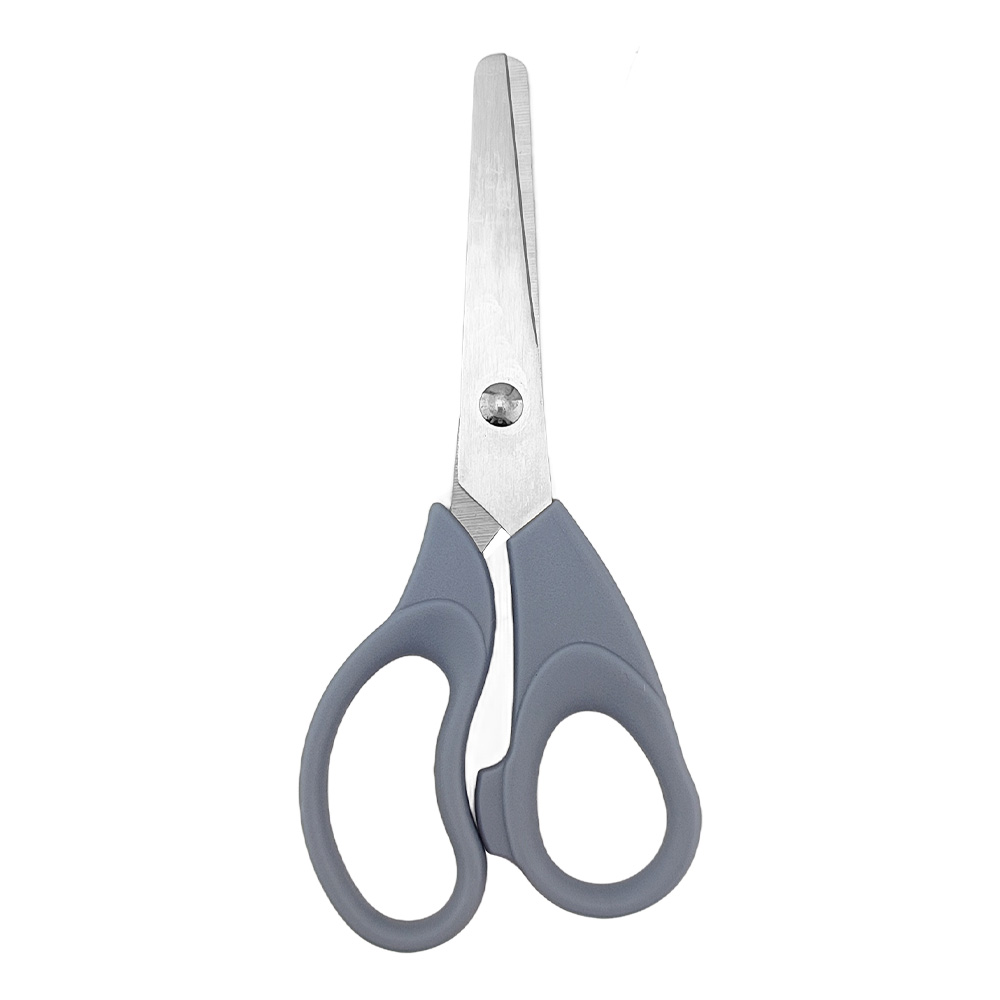
OEM School Scissors: Safety and Style Combined
OEM school scissors are a small product category with important purchasing implications. For brands, distributors, school-supply wholesalers, and retailers, the right pair of scissors must be easy for children to handle, suitable for classroom use, and practical to package, ship, and reorder. Design matters too: a playful appearance can make craft activities more inviting, while a protective cover helps keep the blades contained when the scissors are stored in a pencil case or supply box.
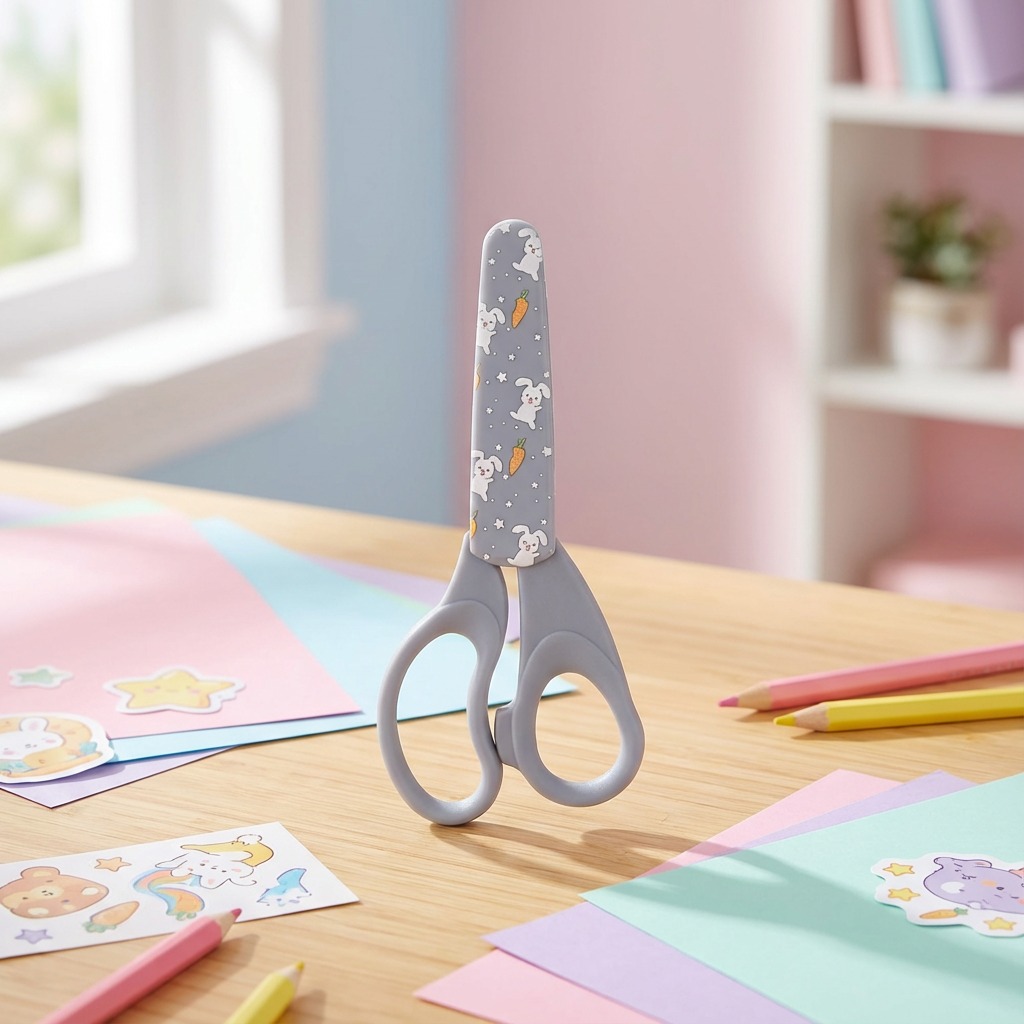
The Bunny & Carrot Safety Scissors described in the original product article combine several school-friendly ideas: a protective cover, rounded ends, grey handles shaped for small hands, and a bunny-and-carrot motif on a starry grey background. This guide explains how buyers can evaluate similar OEM school scissors and what to confirm with a supplier before placing a private-label or wholesale order.
Key Takeaways
- For children’s school scissors, review safety details first: rounded ends, blade coverage, handle comfort, and age suitability.
- A cover can improve storage and reduce exposed-blade contact, but it should fit securely and be easy to remove safely.
- For OEM orders, ask the factory to confirm materials, testing options, packaging formats, artwork requirements, and quality inspection steps.
- Do not rely on appearance alone; request samples and check real cutting performance on common classroom materials.
Why OEM School Scissors Need Careful Selection
School scissors are used by children in frequent, sometimes busy environments. They may be used for paper crafts, classroom projects, homework tasks, or art activities at home. A product that looks attractive but feels awkward in the hand can frustrate young users. A product that cuts poorly can lead to torn paper and extra force. A product without suitable protective design may be harder for schools and parents to store confidently.
OEM sourcing adds another layer of responsibility. Buyers may want custom colors, printed branding, retail cards, cartons, or themed designs. Each customization should be reviewed not only for appearance but also for usability. A supplier should be able to explain which parts can be customized, what artwork format is needed, how samples are approved, and how consistency is controlled during production.
Safety Features to Review Before Ordering
The original article highlights rounded ends and a protective cover for the Bunny & Carrot Safety Scissors. These are useful details to consider when evaluating school scissors, especially for younger users. However, buyers should not assume that all scissors with similar styling meet the same requirements. Safety-related claims should be supported by clear documentation or testing options from the supplier.
When discussing safety scissors with a factory or trading partner, ask practical questions such as:
- What is the intended user age range?
- Are the tips rounded, blunt, or otherwise designed to reduce sharp-point exposure?
- How does the cover attach, and does it remain in place during normal storage?
- What materials are used for the handles, blades, and cover?
- Can the supplier provide applicable test reports if required by the destination market?
- How are sharp edges, burrs, loose parts, and handle defects checked before shipment?
These questions help separate a visually appealing product from a well-controlled school-supply item. For B2B buyers, the goal is not just to buy scissors; it is to reduce uncertainty across design, compliance, packaging, and repeat supply.
Scissors with Cover: Benefits and Buyer Checks
A scissors-with-cover design can be particularly useful for students who carry supplies between home and school. The cover protects the blade area when the scissors are not in use and can help keep bags, pencil cases, and storage bins more organized. In the Bunny & Carrot example, the cover also supports the product’s visual theme, using playful motifs rather than a plain industrial look.
Still, the cover should be evaluated carefully. If it is too loose, it may fall off in a backpack. If it is too tight, children may pull hard and handle the scissors unsafely. If the cover has small decorative parts, buyers should ask whether those parts are secure and appropriate for the intended age group. The best cover design is simple, secure, and easy to understand without complicated instructions.
Design, Comfort, and Classroom Usability
The original product description mentions ergonomic grey handles suited for small hands. For a school scissors program, handle comfort should be tested with real use cases. Children may cut straight lines, curves, construction paper, worksheets, labels, or craft shapes. A comfortable handle should allow control without pinching. The finger holes should suit the target age range, and the opening and closing action should feel smooth.
Visual design also matters in retail and classroom settings. The bunny-and-carrot theme with a starry grey backdrop is a good example of a child-friendly concept that remains relatively calm in color. For OEM projects, buyers may request seasonal characters, school themes, brand colors, or coordinated stationery sets. Before committing to custom artwork, confirm whether printing, labeling, or molded color changes are available and whether there are setup costs or minimum order requirements.
OEM and Factory Sourcing Checklist
When sourcing from a school scissors factory, prepare a structured checklist. This keeps the conversation focused and makes it easier to compare suppliers. The table below can be used during sample review or request-for-quotation discussions.
| Evaluation Area | What to Check | Questions to Ask the Supplier |
|---|---|---|
| Child safety design | Rounded ends, smooth edges, secure cover, comfortable handles | What safety features are standard, and what tests can be arranged? |
| Materials | Blade, handle, and cover materials | Can you confirm material specifications and provide documentation if needed? |
| Cutting performance | Paper cutting, craft use, opening and closing smoothness | What materials are the scissors designed to cut? |
| OEM customization | Colors, patterns, logo, packaging, barcode, retail display options | Which parts can be customized, and what artwork files are required? |
| Packaging | Individual pack, bulk pack, retail card, instructions, labeling | Can packaging be adapted for wholesale, classroom kits, or retail shelves? |
| Quality control | Sample approval, production inspection, defect handling | What inspection steps are used before shipment? |
| Commercial terms | MOQ, lead time, payment terms, shipping method | What are the current terms for this exact model and customization level? |
Sample Testing Before Wholesale Purchase
Samples are essential for OEM school scissors. Photos can show shape and decoration, but they cannot prove comfort, cover fit, or cutting feel. Ask for samples in the closest available configuration to your intended order. If you plan to change colors or add branding, request a pre-production sample before mass production.
During sample review, test the scissors in realistic conditions. Open and close them repeatedly. Place the cover on and remove it several times. Store the scissors in a pencil pouch or box and check whether the cover stays attached. Cut common classroom paper and simple craft materials. Inspect for burrs, sharp handle edges, loose printing, uncomfortable finger holes, or inconsistent blade alignment. Record the results so you can provide clear feedback to the supplier.
Packaging and Private-Label Considerations
For retail or wholesale programs, packaging affects both presentation and compliance communication. A classroom buyer may prefer bulk packaging, while a retailer may need hanging cards, product information, barcode placement, and clear age guidance. If the scissors include a cover, packaging should show how the cover works and should protect the product from shifting during transport.
Private-label buyers should also confirm brand placement, color matching, carton marks, inner pack quantities, and any destination-market labeling requirements. If you need specific claims on the package, ask the supplier what documentation is available. Avoid adding claims such as certified safety performance, material grade, or regulatory compliance unless they are supported by valid documents for the intended market.
Practical FAQ
What makes school scissors different from general scissors?
School scissors are usually selected with child handling in mind. Buyers commonly look for rounded ends, comfortable handles, manageable size, and storage-friendly features such as a cover. Exact specifications should be confirmed with the supplier.
Are scissors with a cover better for children?
A cover can help keep the blade area enclosed during storage, but the design must be secure and easy to use. Always test whether the cover fits properly and whether children can remove it without unsafe pulling or twisting.
Can OEM school scissors be customized?
Many OEM programs may allow changes such as color, printed designs, branding, or packaging, but available options vary by supplier and model. Ask which parts can be customized and request samples before confirming an order.
What should buyers ask a school scissors factory?
Ask about materials, safety design, testing options, MOQ, lead time, packaging formats, sample approval, inspection procedures, and defect handling. Request current details for the exact model you intend to buy.
How should samples be evaluated?
Check handle comfort, cutting performance, cover fit, tip shape, surface finish, packaging strength, and consistency between samples. Use classroom-style materials rather than testing only on one sheet of paper.
Final Sourcing Advice
OEM school scissors should be chosen through a balance of safety review, functional testing, design planning, and supplier communication. The Bunny & Carrot Safety Scissors concept shows how protective covers, rounded ends, and child-friendly visuals can work together in a school-supply product. For wholesale or private-label orders, the next step is to verify the details: request samples, confirm materials and customization limits, and ask the factory how quality is controlled from production to shipment.
