




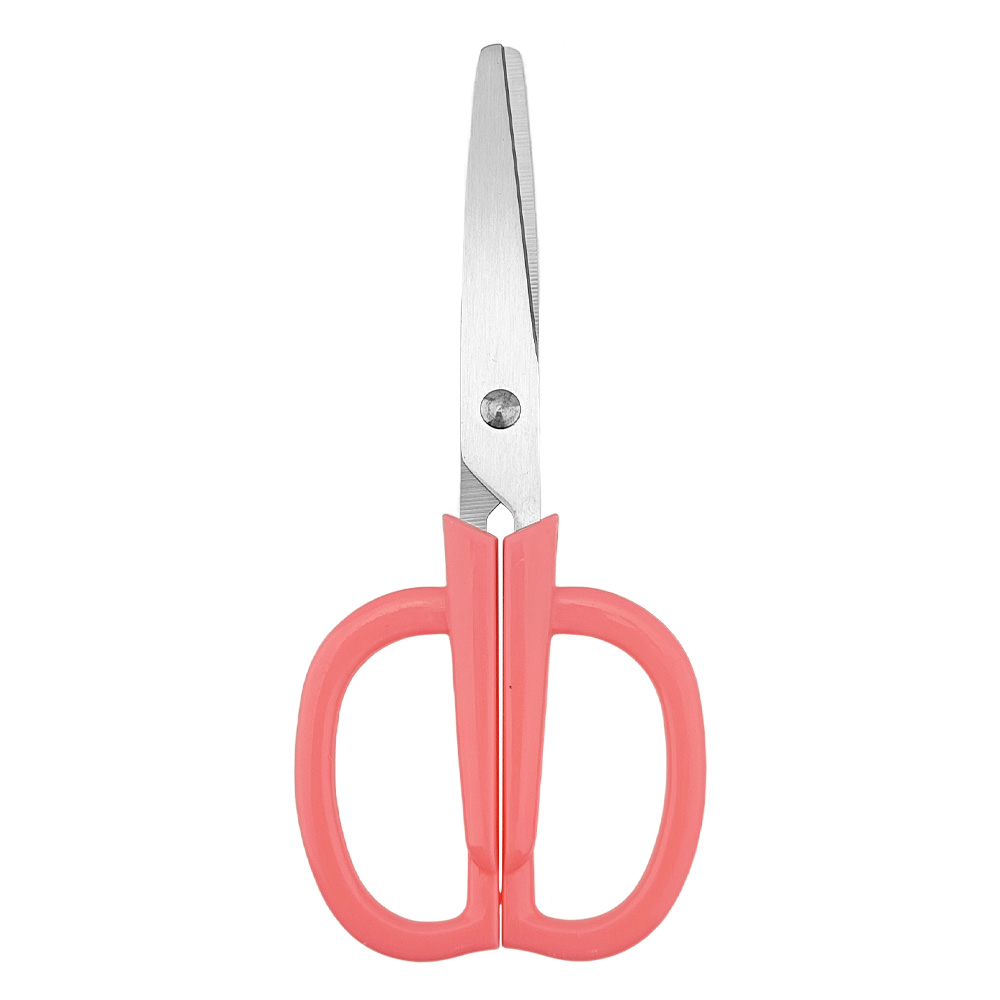
OEM School Scissors: Sourcing Safer, Practical Tools for Classrooms
OEM school scissors are not just small versions of office scissors. For education, stationery, craft, and retail buyers, the product has to balance cutting performance, child-friendly handling, storage safety, packaging appeal, and reliable supply. The original Pink Coral Safety Scissors with Blade Sheath is a useful example because it highlights several features buyers often request: a soft pink coral handle color, a matching blade sheath, stainless steel blades, and a hanging hole on the sheath for storage.
This guide explains how to evaluate OEM school scissors before placing an order. It is written for distributors, importers, school supply brands, promotional product buyers, and retailers comparing children scissors from different suppliers or manufacturers.

Key Takeaways
- Define the age group, cutting tasks, and classroom use case before selecting a scissor style.
- Check child-friendly design details such as handle comfort, tip shape, blade cover, and storage options.
- Ask suppliers to confirm materials, testing, packaging, MOQ, lead time, and customization limits in writing.
- Review samples with real paper, card, and craft materials before approving mass production.
What Makes School Scissors Different?
School scissors are designed for frequent use by children, teachers, and parents during art lessons, homework, paper crafts, and classroom projects. Compared with general stationery scissors, they normally need easier grip control, appropriate blade size, and safety-minded storage. The goal is not to remove every sharp edge, because scissors still need to cut, but to reduce avoidable risks through proportion, grip design, supervision guidance, and covers where suitable.
For OEM buyers, the first question is the user profile. Scissors for preschool craft kits may require a different structure from scissors for older students who cut thicker paper or fabric scraps. A school supply program may also need multiple colors, private label packaging, or a matched series for different age groups.
Product Features to Evaluate
The Pink Coral Safety Scissors with Blade Sheath shows several features that are commonly discussed in OEM sourcing. The soft pink coral handle gives the product a clear visual identity and can support color-coded ranges. The original article also describes stainless steel blades for smooth cutting and a matching sheath to protect the blades when stored.
When reviewing a sample, look beyond appearance. Open and close the scissors repeatedly and check whether the movement feels stable. Test cutting on standard copy paper, construction paper, and other materials relevant to your target market. If a product is marketed as children scissors, ask whether the blade tip, handle opening, and total size are appropriate for the intended age range.
Blade Sheath and Storage Considerations
A blade sheath can be valuable in busy classrooms, pencil cases, retail craft packs, and home storage drawers. The original Pink Coral model includes a matching cover with a hanging hole, which may help keep the scissors organized when not in use. For buyers, the important question is whether the sheath fits securely without being too difficult for the intended user to remove.
Ask the supplier how the sheath is packed: attached to the scissors, placed separately in a blister card, or included inside a pouch or carton. Small loose accessories can be lost during packing or retail handling, so packaging design matters. If the hanging hole is part of your merchandising or storage plan, request a sample and verify the hole size, strength, and position.
OEM Customization: What to Specify
OEM school scissors projects often involve color, handle shape, logo placement, packaging, barcode labels, and carton marking. However, buyers should avoid assuming that every element can be changed without tooling cost or schedule impact. Before confirming a design, prepare a written product brief and ask the supplier to confirm feasibility.
- Target users: age range, right-hand or left-hand needs, classroom or retail use.
- Cutting tasks: paper only, light card, craft sheets, or mixed materials.
- Visual design: handle color, sheath color, logo, and packaging artwork.
- Safety expectations: tip style, sheath fit, labeling, and applicable market requirements.
- Commercial details: sample timing, production lead time, MOQ, packing method, and payment terms.
Do not rely only on catalogue photos. A physical sample is important because handle comfort, blade alignment, sheath fit, and surface finish can only be judged properly in hand.
Comparison and Buyer Checklist
| Evaluation Point | Why It Matters | Questions to Ask the Supplier |
|---|---|---|
| Handle comfort | Children need control without hand fatigue during classroom activities. | What handle sizes and colors are available? Can samples be tested by the target age group? |
| Blade material | Cutting consistency depends on material, edge quality, and assembly. | What blade material is used, and can it be confirmed on the quotation or specification sheet? |
| Tip and safety design | Tip shape affects suitability for younger users. | Is the tip rounded or pointed? Which age range is the design intended for? |
| Blade sheath | Covers help protect blades during storage and transport. | How secure is the sheath, and is it packed attached or separately? |
| Packaging | Retail and school tender orders often require clear labeling. | Can the supplier support private label packaging, barcodes, carton marks, and warnings? |
| Compliance documents | Importers may need proof for their target market. | Which test reports or declarations are available, and are they current for the destination country? |
How to Work with a School Scissors Manufacturer
When sourcing from a school scissors manufacturer or OEM supplier, clear communication reduces mistakes. Send reference photos, color targets, artwork files, and packing requirements early. If you are comparing multiple suppliers, use the same specification sheet for each quotation so pricing and sample feedback are easier to compare.
Buyers should ask practical commercial questions rather than relying on broad claims. Confirm the minimum order quantity, sample fee, tooling needs, production lead time, inspection process, and whether pre-shipment photos or third-party inspection are accepted. If compliance is important for your market, ask for the exact reports available and check whether the product, material, and factory name match the documents.
Sample Testing Before Bulk Orders
Sample review should be systematic. Test cutting performance with the materials your customers will actually use. Check if the blades meet evenly, if the pivot feels loose, and if the handle edges are smooth. Put the scissors into and out of the sheath several times to confirm normal use. Also review packaging durability, especially if the item will be shipped in mixed cartons or sold through retail channels.
For OEM color projects like pink coral, compare samples under natural and indoor light. Color differences can happen between resin batches, printed packaging, and online images. If brand consistency matters, provide a color standard and ask how the supplier controls color during production.
FAQ
Are OEM school scissors suitable for all ages?
No. Suitability depends on size, tip design, blade sharpness, grip shape, and the user’s skill level. Buyers should define the target age range and ask the supplier to recommend an appropriate model.
Should I choose scissors with a blade sheath?
A sheath is useful for storage, retail packs, and classroom organization. Check that it fits securely, is not easily lost in packaging, and can be removed safely by the intended user.
Can I customize the handle color and packaging?
Many OEM projects involve color and packaging customization, but feasibility depends on tooling, MOQ, artwork, and production schedule. Ask for written confirmation before approving the order.
What documents should an importer request?
Ask for product specifications, material information, packaging details, and any available compliance or test documents required for your destination market. Have them reviewed before shipment.
How do I compare suppliers fairly?
Use the same specification, sample tests, packaging requirements, and quotation terms for each supplier. Compare not only unit price but also communication quality, sample accuracy, lead time, and documentation support.
