




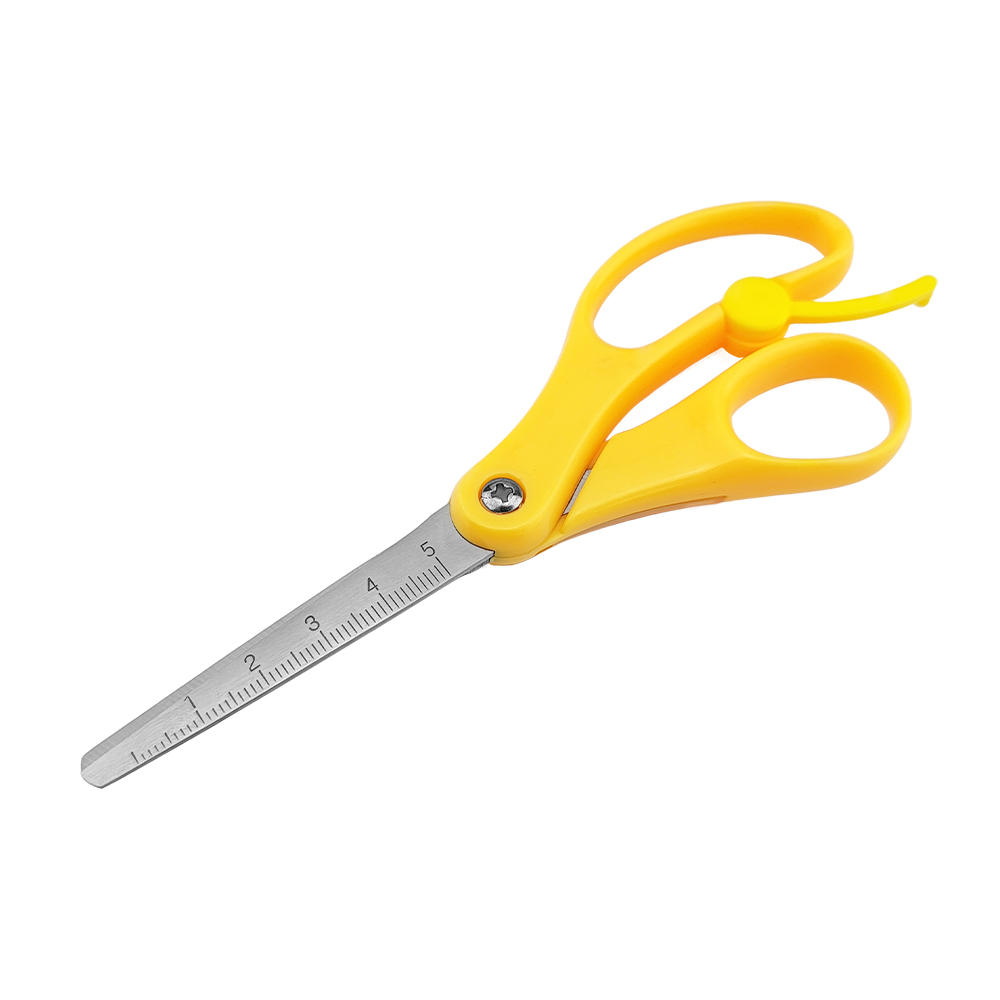
OEM School Scissors: Sourcing Guide for 6 Inch Student Scissors
For schools, stationery brands, distributors, and promotional product buyers, OEM school scissors are not just small classroom tools. They need to be practical, comfortable, easy to identify, and consistent enough for repeated daily use. The original Majestic Shears article highlighted a 6 inch student scissors design with stainless steel blades, a yellow ergonomic handle, and a built-in labeling strip for writing a student name. This rewrite takes that product idea and turns it into a clearer sourcing guide for buyers comparing school factory scissors for classroom, retail, or OEM projects.

Key Takeaways
- A 6 inch format is a practical size to evaluate for student use, craft activities, and general classroom cutting tasks.
- Stainless steel blades are explicitly noted in the original product description and should be checked for clean cutting on paper and cardstock.
- A built-in labeling strip can help reduce lost supplies in classrooms by allowing students to write their names on the handle.
- OEM buyers should confirm customization options, packaging, safety details, order terms, and quality inspection steps directly with the supplier.
Why 6 Inch Student Scissors Are Commonly Considered
The original product description presents the item as 6 inch student scissors, a size often considered manageable for school work, craft stations, and home learning supplies. For sourcing teams, size is more than a catalog number. It affects grip comfort, storage, packaging dimensions, and suitability for different age groups. A 6 inch pair can be large enough for basic paper and cardstock tasks while remaining compact for pencil cases, classroom supply bins, or retail display packs.
When comparing OEM school scissors, buyers should request physical samples instead of relying only on images. Ask several users to test the sample on common classroom materials such as copy paper, colored paper, and lightweight cardstock. The original article notes clean cutting without snagging on paper and cardstock; buyers should verify that performance on the actual materials used by their target customers.
Blade Material and Cutting Performance
The source article explicitly states that these scissors use stainless steel blades. That is a useful starting point, but procurement teams should still ask detailed questions. What blade thickness is used? How is the edge finished? What inspection process checks sharpness and alignment? Are there different blade options for different OEM projects? These details should not be assumed, because two scissors can both be described as stainless steel while performing differently in real use.
For school factory scissors, cutting quality should be consistent across a production lot. A sample that cuts well is helpful, but bulk production consistency is what matters for a school tender, stationery brand, or wholesale program. During evaluation, check whether the blades meet cleanly from pivot to tip, whether paper folds or tears during cutting, and whether the pivot feels stable after repeated opening and closing.
Personalized Name Card Scissors for Classroom Control
One practical feature from the original article is the built-in labeling strip. This makes the product useful as personalized name card scissors because a student can write a name directly on the handle area. In classrooms, shared supplies are frequently misplaced, and a simple name space can make daily organization easier for teachers and students.
For OEM or wholesale projects, buyers should review how the labeling strip is positioned and whether it remains readable after normal handling. If the scissors will be sold into school channels, ask whether the supplier can provide different label area designs, handle colors, or packaging layouts. Do not assume that all customization is available; confirm what can be changed, what requires tooling, and what affects lead time or cost.
Handle Comfort and Daily Classroom Use
The original article describes a vibrant yellow handle with an ergonomic shape intended for a comfortable grip and reduced hand fatigue during extended use. In sourcing terms, comfort should be tested with real handling rather than judged only by appearance. The handle opening, edge smoothness, grip angle, and balance all influence whether the scissors feel easy to control.
School scissors may be used for short cutting tasks many times a day. Buyers should check if the handle feels stable, if the inner edges are smooth, and if the scissors open and close without excessive force. If the target market includes younger students, ask the supplier what age range the design is intended for and what safety-related options or documentation may be available. Avoid making safety or compliance claims in marketing until they are supported by supplier documentation and applicable market requirements.
Comparison Checklist for OEM Buyers
| Evaluation Area | What to Check | Questions to Ask the Supplier |
|---|---|---|
| Size | Confirm the 6 inch format and handling comfort. | Is the size fixed, or are similar models available? |
| Blade | Test stainless steel blades on paper and cardstock. | How is blade sharpness and alignment inspected? |
| Labeling | Review the built-in name strip for readability. | Can the label area, color, or branding be customized? |
| Handle | Assess comfort, grip shape, and edge smoothness. | What handle material and color options are available? |
| Packaging | Check retail, classroom pack, or bulk pack needs. | What packaging formats can be supplied for OEM orders? |
| Quality Control | Compare samples with bulk shipment requirements. | What inspections are performed before shipment? |
OEM Customization Points to Confirm
Because this topic concerns OEM school scissors, sourcing teams should separate confirmed product facts from possible customization ideas. The existing product description confirms the 6 inch size, stainless steel blades, yellow ergonomic handle, and built-in labeling strip. Other commercial or technical details should be treated as questions for the supplier.
- Ask whether logo printing, handle color changes, or packaging artwork are available for the specific model.
- Confirm whether customization affects tooling, sample time, production schedule, or unit cost.
- Request pre-production samples before approving a bulk order.
- Clarify labeling requirements, barcode placement, carton marks, and language needs for the destination market.
- Ask what documents the supplier can provide for your internal quality, import, or retail compliance review.
How to Inspect Samples Before Ordering
A simple sample inspection can prevent many problems. Open and close each pair repeatedly and listen for scraping or looseness. Cut straight and curved lines on paper, colored craft paper, and cardstock. Check that the tip alignment is even and that the handle does not flex uncomfortably. Write a name on the labeling strip to see whether the area is large enough for classroom use.
For wholesale or institutional buyers, create a written approval checklist. This helps your team compare multiple school factory scissors fairly and gives the supplier clear standards. Include acceptable appearance, cutting performance, handle finish, packaging condition, and any customized artwork requirements. If possible, retain approved samples so they can be compared with production goods later.
Practical FAQ
What makes these OEM school scissors suitable for classrooms?
The original description highlights a 6 inch student size, stainless steel blades for cutting paper and cardstock, an ergonomic yellow handle, and a built-in labeling strip for student names. These are practical classroom-oriented features, but buyers should still test samples before ordering.
Can the scissors be customized for a school brand or retail program?
They are presented as OEM school scissors, but specific customization options should be confirmed with the supplier. Ask about logo placement, handle colors, packaging, artwork requirements, sample approval, and any tooling considerations.
Are the scissors certified for a specific market?
The source article does not provide certification details. Buyers should ask the supplier what documents, test reports, or compliance information are available for the intended market and product category.
What should buyers test first?
Start with cutting performance, handle comfort, blade alignment, labeling strip usability, and packaging quality. Testing on the actual materials used by students gives a more reliable result than judging by photos alone.
How can schools reduce lost scissors?
A built-in name strip is useful because students can write their names on the handle. Schools can also assign scissors by classroom, color, or supply station and include routine checks after craft activities.
