




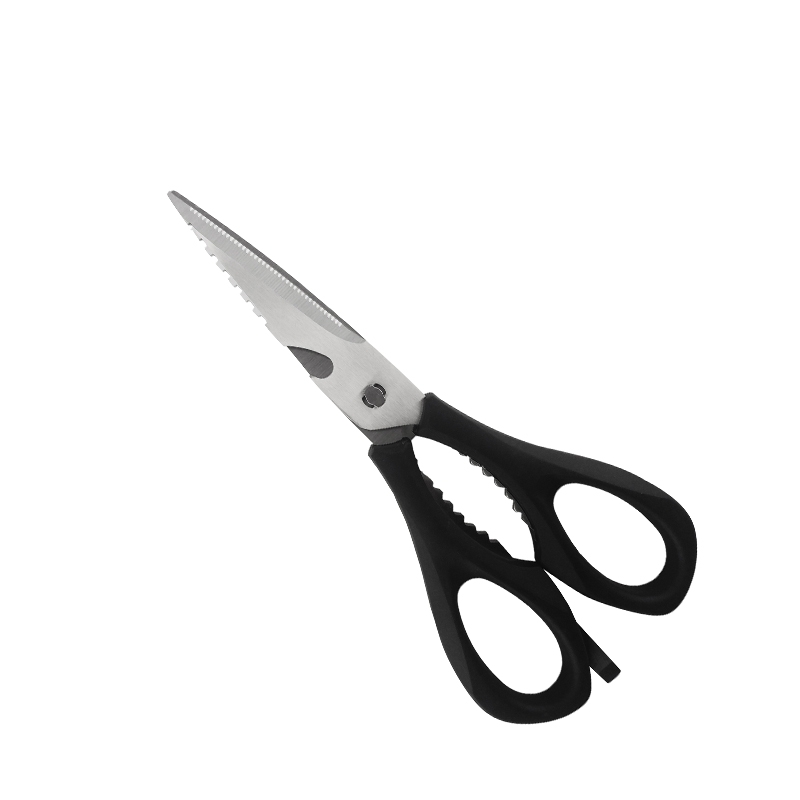
OEM Scissors Factory China: Sourcing Kitchen Scissors with Confidence
Finding an OEM scissors factory in China can be useful for importers, kitchenware brands, promotional buyers, and wholesalers that need private-label kitchen tools. The search intent is usually practical: buyers want to know whether a supplier can make reliable kitchen scissors, support customization, protect product quality, and communicate clearly through sampling, production, inspection, and shipment.

The original article highlights kitchen scissors, stainless steel construction, detachable cleaning, and ergonomic use. Those are useful starting points, but B2B sourcing requires more than a product description. This guide explains what to verify before choosing a kitchen scissors manufacturer, how to compare detachable designs, and which questions to ask before placing an OEM or wholesale order.
Key Takeaways
- Do not choose a scissors supplier based only on photos; request samples and inspect cutting performance, fit, finish, and packaging.
- For detachable kitchen scissors, confirm how the separation mechanism works and whether it is safe, stable, and easy to clean.
- Ask suppliers to clarify material, blade hardness, surface treatment, handle material, packaging, lead time, MOQ, and available customization.
- For OEM projects, provide clear artwork, target market requirements, inspection criteria, and packaging instructions before production.
- A strong China kitchen scissors supplier should communicate limits clearly instead of making vague claims about quality or capacity.
What an OEM Kitchen Scissors Factory Usually Provides
An OEM scissors factory typically manufactures products for another company’s brand. For kitchen scissors, this may include blade production, handle molding or assembly, sharpening, surface finishing, logo application, retail packaging, carton packing, and pre-shipment coordination. The exact scope varies by supplier, so buyers should not assume every factory offers the same services.
Kitchen scissors are different from ordinary stationery scissors because they may be used for food preparation tasks such as cutting herbs, trimming meat, opening packaging, or handling poultry bones depending on the design. That means buyers should evaluate comfort, grip stability, cleaning access, and edge retention, not just appearance.
How to Evaluate a Kitchen Scissors Manufacturer
Before requesting a quote, prepare a simple specification sheet. Include target use, preferred size, blade style, handle color, logo placement, packaging format, order quantity estimate, and destination market. If you do not know the exact technical specification, ask the supplier which options are available and request side-by-side sample comparisons.
A useful supplier conversation should cover these points:
- What materials are used for the blades, handles, screws, rivets, or detachable joint?
- Which parts can be customized for OEM branding?
- Can the supplier provide pre-production samples for approval?
- What quality checks are performed before packing?
- How are sharp edges protected during retail and export packaging?
- What documents, test reports, or compliance support can be provided if required by the buyer’s market?
A responsible buyer should verify any commercial or compliance claim directly. Do not rely on generic statements such as “top quality” or “international standard” unless the supplier can explain the standard, show documentation, and align with your market requirements.
Detachable Kitchen Scissors: Benefits and Checks
Detachable kitchen scissors are popular because the two blades can separate for easier cleaning and drying. This can help reduce trapped residue around the pivot area, which is important for kitchen hygiene. The original product description also notes that detachable scissors may be used in a multi-functional way, including as a utility-style cutting tool when separated. Buyers should test that function carefully rather than treating it as a universal feature.
When reviewing detachable scissors, check whether the blades separate smoothly but do not come apart accidentally during normal cutting. The joint should feel stable, the handle should remain comfortable, and the cutting edges should align properly after reassembly. If the product is intended for food use, buyers should also ask how the design supports cleaning and whether any hidden gaps can trap food particles.
Comparison Checklist for OEM Kitchen Scissors
| Evaluation Area | What to Check | Questions to Ask the Supplier |
|---|---|---|
| Blade material | Material type, thickness, sharpening quality, corrosion resistance expectations | What blade material is used, and can it be documented on the quotation? |
| Cutting performance | Clean cutting on herbs, packaging, meat, or the buyer’s target use | Can samples be tested against our intended use before production? |
| Detachable mechanism | Ease of separation, stability during use, cleaning access | How does the detachable joint prevent accidental separation? |
| Handle design | Grip comfort, hand size suitability, slip resistance, color options | Which handle materials and colors are available for OEM orders? |
| Branding | Logo position, printing or marking method, durability | Can you provide artwork templates and pre-production logo samples? |
| Packaging | Blade protection, retail display, barcode, carton strength | Can packaging be customized for our sales channel and destination market? |
| Inspection | Appearance, sharpness, assembly, function, packaging accuracy | What inspection steps are used, and can third-party inspection be arranged? |
OEM Customization Without Overlooking Risk
OEM customization can include logo marking, handle color, packaging artwork, instruction sheets, barcode labels, and carton marks. More complex changes, such as a new handle mold or blade shape, may require additional development time and tooling discussion. Buyers should ask about feasibility, cost, timeline, sample approval, and ownership of any custom tooling before moving forward.
Artwork control is also important. Confirm file formats, print colors, label placement, and packaging language before production. If your market requires warnings, care instructions, recycling marks, importer information, or other labeling, provide those requirements in writing. The factory may help apply the information, but the buyer should confirm legal suitability for the destination market.
Quality Control Points Before Shipment
Kitchen scissors should be checked before mass shipment because small defects can affect safety, usability, and customer satisfaction. Common inspection points include blade alignment, edge sharpness, opening and closing smoothness, handle finish, detachable function, logo accuracy, rust spots, scratches, packaging accuracy, and carton condition.
For wholesale and private-label orders, define acceptable quality levels before production starts. A simple inspection checklist is better than a vague instruction to “make good quality.” If possible, approve a golden sample that the supplier and buyer can use as a production reference.
Use and Care Guidance Buyers Can Include
Although this is a B2B sourcing topic, end-user care instructions can reduce complaints. For kitchen scissors, practical guidance may include washing after food contact, drying before storage, keeping blades away from children, avoiding misuse on materials beyond the intended purpose, and reassembling detachable scissors correctly after cleaning. If the supplier provides care instructions, review them for clarity and adapt them to your market language.
FAQ
What should I ask an OEM scissors factory in China first?
Start with product material, available designs, customization options, sample cost, MOQ, lead time, packaging choices, and inspection process. Ask for clear written answers rather than relying on catalog claims.
Are detachable kitchen scissors better than fixed scissors?
They can be easier to clean because the blades separate, but the mechanism must be stable and safe. Test samples to confirm that the scissors cut well and do not separate unintentionally.
Can I add my logo to kitchen scissors?
Many OEM suppliers can support logo or packaging customization, but methods and limitations vary. Ask for artwork requirements, logo sample approval, and durability expectations before confirming production.
How can I confirm product quality before shipment?
Request pre-production samples, approve a reference sample, define inspection criteria, and consider third-party inspection for larger orders. Check cutting performance, assembly, appearance, packaging, and labeling.
What details should be included in a supplier quotation?
A useful quotation should state product description, material information, customization scope, packaging, order quantity, MOQ if applicable, lead time, payment terms, shipping terms, and any sample or tooling charges.
Final Sourcing Advice
An OEM scissors factory in China can be a practical sourcing partner for kitchen scissors, including detachable designs, but the best results come from disciplined buying. Compare real samples, ask specific questions, document requirements, and verify claims before mass production. Treat the product as a functional kitchen tool, not just a branded item, and you will be better positioned to choose scissors that match your customers’ expectations.
