





OEM Scissors Factory China: Practical Sourcing Guide for Kitchen Scissors
Sourcing kitchen scissors from an OEM scissors factory in China can be a smart route for brands, importers, distributors, and promotional product buyers. China has a broad manufacturing base for kitchen accessories, including multifunctional scissors designed for home kitchens, food preparation, and general household use. The key is not simply finding a low price; it is finding a supplier that can make the product consistently, communicate clearly, and answer the right technical and commercial questions before production begins.
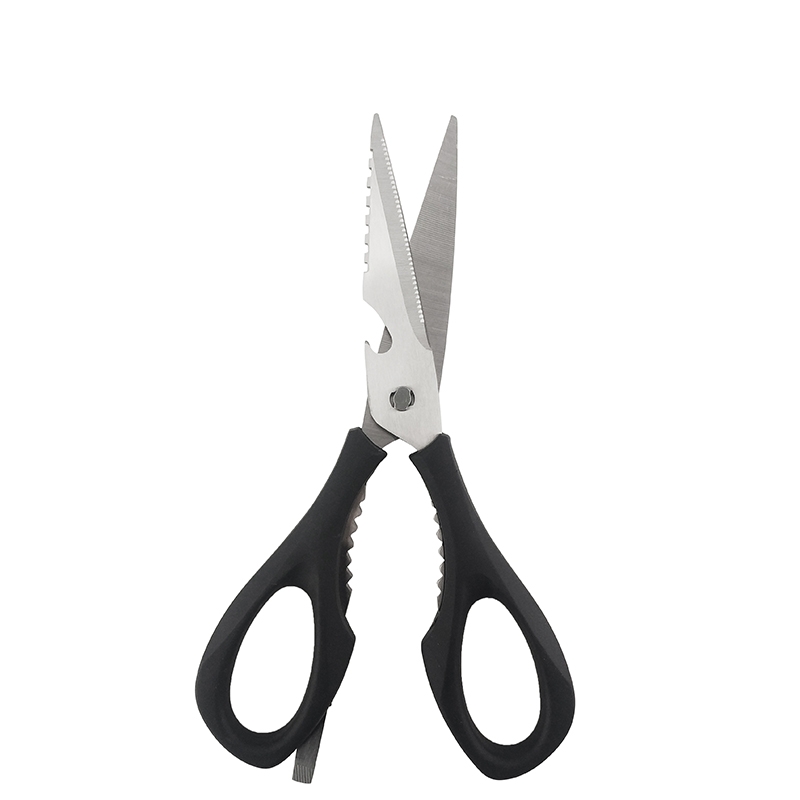
The original product focus is a 7-in-1 multifunctional kitchen scissors design. It is described as detachable, with high-grade stainless steel blades, rust-resistant performance, precision-sharpened cutting edges, non-slip grips, and added functions such as a bottle opener, nutcracker, and screwdriver. These are useful selling points, but B2B buyers should verify every feature through samples, specifications, and agreed inspection standards rather than relying only on catalogue wording.
Key Takeaways
- Choose an OEM kitchen scissors supplier based on product consistency, communication, sampling process, and inspection support.
- Confirm all claims, including stainless steel grade, rust resistance, blade sharpness, packaging, and accessory functions, in writing.
- Detachable kitchen scissors can improve cleaning convenience, but the joint design and reassembly fit should be checked carefully.
- Ask about OEM options such as handle color, logo placement, packaging artwork, carton marks, and barcode requirements.
- Use pre-production samples and final inspections to reduce the risk of inconsistent sharpness, loose handles, or packaging errors.
Why Buyers Look for an OEM Scissors Factory in China
For many wholesale and private-label buyers, China remains a major sourcing destination because of its established supply chain for metal processing, plastic handles, packaging, and kitchen tool assembly. An OEM scissors factory may be able to support product customization, including branding, color choices, packaging layout, and bundled sets. However, capabilities vary widely between factories, trading companies, and mixed suppliers, so buyers should identify who is actually responsible for production.
A reliable sourcing process starts with a clear product brief. Instead of asking for “best kitchen scissors,” prepare requirements such as target use, detachable or fixed construction, blade finish, handle material, grip texture, packaging type, logo position, carton quantity, and target market. If the supplier cannot confirm a detail, treat it as a question to resolve before sample approval.
Product Features to Verify Before Ordering
Multifunctional kitchen scissors are often marketed with several built-in uses. The detachable design can help users clean around the pivot area, while non-slip grips can improve control during food preparation. Added functions such as a bottle opener, nutcracker, and screwdriver may be useful, but each function should be evaluated in real use. A feature list is only valuable if the finished goods perform consistently across the order.
For the blade, ask the supplier to state the exact steel specification, hardness target if available, blade thickness, edge treatment, and surface finish. The source article mentions high-grade stainless steel, rust resistance, and precision sharpening, but buyers should request documentation or sample testing to confirm what those terms mean for the specific batch. For the handle, check comfort, grip security, heat exposure limitations, and whether color matching is available for OEM projects.
Supplier Evaluation Checklist
Before placing a wholesale or OEM order, compare potential suppliers using consistent questions. The table below can be used during initial screening, sample review, and price negotiation.
| Evaluation Area | What to Ask | Why It Matters |
|---|---|---|
| Factory role | Are you the manufacturer, assembler, or trading company? | Clarifies responsibility for quality control and production timing. |
| Material details | What blade material, handle material, and finish will be used? | Prevents vague claims and supports accurate comparison. |
| Detachable mechanism | How is the pivot designed, and how many times has it been tested for assembly? | Helps assess cleaning convenience and long-term fit. |
| OEM options | Can you support logo, color, packaging, barcode, and carton marks? | Confirms whether the supplier can meet private-label needs. |
| Quality inspection | What checks are done for sharpness, alignment, handle fit, and packaging? | Reduces defects before shipment. |
| Commercial terms | What are the MOQ, lead time, payment terms, and sample cost? | Sets expectations before artwork or tooling work begins. |
How to Review Samples Effectively
Samples are more than a visual approval step. They are the buyer’s opportunity to check handling, cutting performance, fit, finish, and packaging accuracy. Test the scissors on common kitchen tasks such as cutting herbs, trimming meat, opening packaging, and using the bottle opener or nutcracker if those features are included. After washing and drying, check whether the pivot area is easy to clean and whether reassembly feels secure.
- Compare the sample against the written product specification.
- Inspect blade alignment, edge smoothness, and cutting consistency from tip to base.
- Check whether the detachable parts separate and reconnect without looseness.
- Review handle comfort, grip texture, and any sharp plastic edges.
- Confirm packaging dimensions, printed text, logo placement, and barcode readability.
- Record defects with photos and ask the supplier how they will prevent them in production.
OEM and Packaging Questions for Wholesale Buyers
Private-label kitchen scissors often require packaging that fits both retail display and logistics needs. Ask whether the supplier can provide dielines, artwork templates, blister card options, color box options, instruction sheets, and export carton markings. If your market requires specific warning labels, language requirements, or retailer packaging rules, provide those requirements early and ask the supplier to confirm feasibility.
Do not assume that all OEM customization is included in a quoted unit price. Logo methods, color matching, packaging printing, sample revisions, and additional inspection steps may affect cost and timing. Buyers should request a formal quotation that separates product price, packaging, sample charges, tooling if any, freight terms, and estimated lead time.
Quality Control Points for Kitchen Scissors
Kitchen scissors combine metal cutting edges, plastic or coated handles, and moving parts, so small production variations can affect user experience. Common inspection points include blade sharpness, tip alignment, pivot tightness, handle bonding or assembly, surface scratches, rust marks, packaging damage, and carton quantity. For detachable scissors, the locking or pivot structure deserves special attention because it affects both safety and cleaning.
Importers should define acceptable quality limits with their inspection partner or internal team. If there are legal or compliance requirements in the destination market, ask qualified professionals or testing laboratories for guidance. A supplier can provide information, but buyers should not treat general statements as proof of compliance unless suitable documentation and testing are available.
FAQ
What should I ask an OEM scissors factory in China first?
Start with factory role, product materials, available OEM options, MOQ, lead time, sample process, and quality control procedures. Ask for clear written answers before comparing prices.
Are detachable kitchen scissors better than fixed scissors?
Detachable scissors can be easier to clean around the pivot, which is useful for kitchen use. The design should still be checked for secure reassembly, stable cutting, and long-term fit.
Can I claim stainless steel or rust-resistant performance on packaging?
Only make claims that are supported by the supplier’s confirmed specifications and, when needed, appropriate testing. Ask the supplier to state the exact material and finish used.
What is the best way to reduce sourcing risk?
Use a detailed specification sheet, approve samples carefully, confirm packaging artwork, agree on inspection standards, and keep written records of all changes before mass production.
Should I choose the lowest quotation?
Not without checking what is included. A lower price may reflect different materials, simpler packaging, fewer inspections, or limited OEM support. Compare quotations line by line.
Final Sourcing Advice
An OEM scissors factory in China can be a valuable partner for multifunctional kitchen scissors, especially when the buyer approaches sourcing with clear specifications and disciplined sample review. Focus on verifiable details: blade material, detachable structure, grip design, added functions, packaging, inspection criteria, and commercial terms. When these points are confirmed early, buyers are better positioned to build a reliable kitchen scissors product for wholesale, private-label, or retail programs.
