




OEM Scissors Factory China: Sourcing Multi-Purpose Kitchen Scissors
For importers, kitchenware brands, distributors and retail buyers, choosing an OEM scissors factory in China is not only about finding a low-cost cutting tool. The better question is whether a supplier can help you develop a kitchen scissors product that is practical, consistent, easy to explain to customers and suitable for your sales channel.
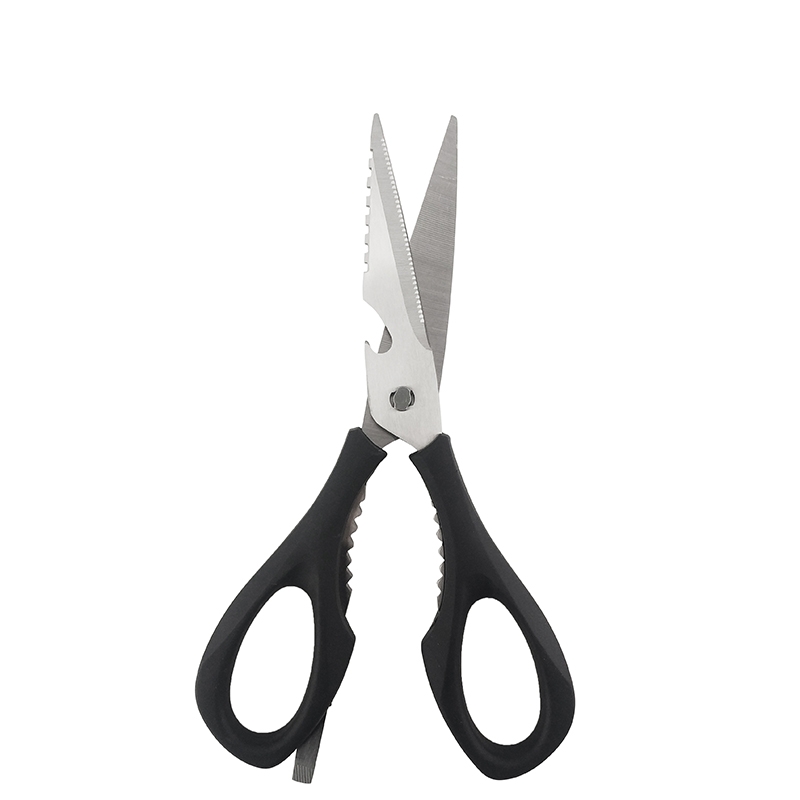
The original product focus is a Multi-Purpose Kitchen Scissors concept. The source content describes detachable kitchen scissors with stainless steel blades, an ergonomic design, and additional functions such as a bottle opener and nutcracker. Those are useful starting points, but B2B buyers should still verify every commercial and technical detail before placing an order.
Key Takeaways
- Kitchen scissors sourcing should begin with the product use case: food prep, packaging, herbs, meat trimming or multi-function household use.
- Detachable construction can improve cleaning, but buyers should assess safety, hinge strength and reassembly smoothness.
- Stainless steel blades are mentioned in the source article, yet buyers should ask the supplier to confirm the exact grade, hardness target and surface finish.
- Multi-function details such as a bottle opener or nutcracker can add value only if they are durable and intuitive for end users.
- For OEM orders, confirm samples, packaging files, inspection standards and replacement-part policy before mass production.
Why China Is Often Considered for OEM Kitchen Scissors
China has a mature supply base for kitchen utensils, including cutting tools, tongs, peelers, openers and other food preparation accessories. For buyers, this means it may be possible to source kitchen scissors alongside related products, reducing vendor fragmentation and simplifying packaging coordination. However, not every supplier that sells scissors is a true OEM partner.
A capable OEM kitchen scissors supplier should be able to discuss product structure, blade finishing, handle materials, packaging options, quality control checkpoints and customization boundaries. If the factory only provides generic photos and a unit price, buyers may need to request more detail before evaluating long-term suitability.
Understanding the Product: Detachable Multi-Purpose Kitchen Scissors
Detachable kitchen scissors are designed so the two blades can separate for cleaning. This is especially relevant for food-contact tools because moisture, fibers and small food particles can remain around the pivot area. A detachable design may help users wash and dry the tool more thoroughly, but it also increases the need for precise fitting.
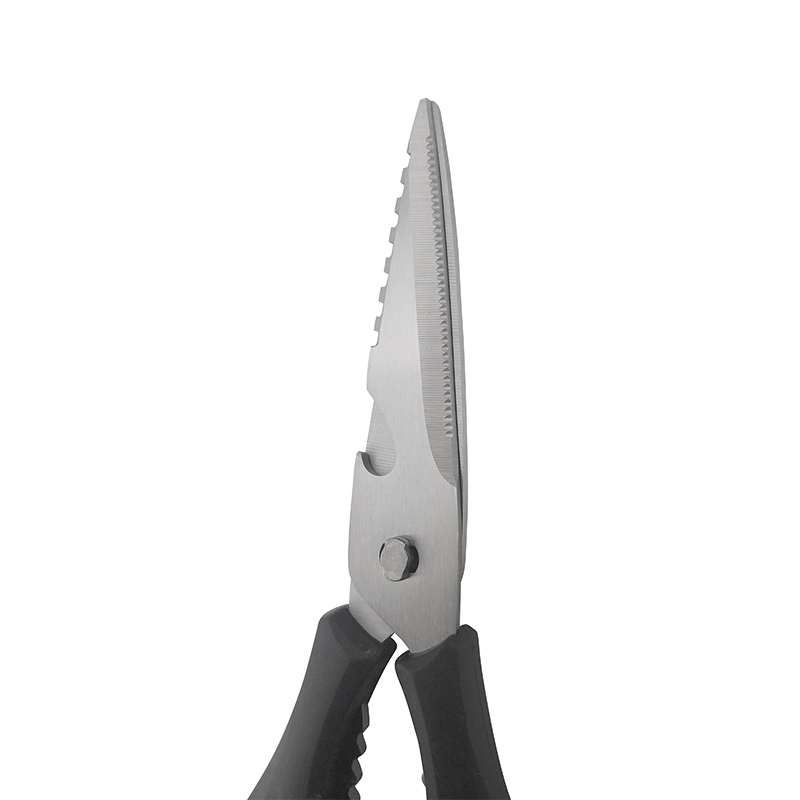
The source article highlights stainless steel blades, ergonomic handling, and added features including a bottle opener and nutcracker. These features can support a broad product positioning, but buyers should avoid treating them as automatic quality indicators. The most important performance questions are simple: do the blades cut cleanly, do the handles feel stable, does the hinge loosen after use, and are the added functions strong enough for realistic household tasks?
Factory Evaluation Checklist
Before comparing quotations, buyers should build a checklist that separates confirmed facts from assumptions. This helps prevent misunderstandings during sampling and reduces the risk of approving a product that looks good online but performs poorly in use.
| Evaluation Area | What to Check | Questions to Ask the Supplier |
|---|---|---|
| Blade material | Stainless steel is stated, but exact grade is not specified in the source. | What steel grade is used, and can it be documented on the quotation or specification sheet? |
| Cutting performance | Test herbs, packaging, poultry skin or meat trimming based on your target market. | What internal cutting tests are performed before shipment? |
| Detachable hinge | Check separation, reassembly, stability and cleaning access. | How is hinge fit controlled during production? |
| Handle comfort | Assess grip shape, pressure points and suitability for different hand sizes. | Can handle color, texture or material be customized? |
| Extra functions | Review bottle opener and nutcracker usability without weakening the scissors. | Are these features tested separately from blade cutting? |
| Packaging | Confirm retail box, insert card, barcode, manual and warning text needs. | What packaging formats are available for OEM branding? |
OEM Customization Points Buyers Should Define Early
OEM projects become smoother when the buyer provides a clear brief. For kitchen scissors, the brief should include the target user, retail price tier, preferred appearance, packaging channel and any market-specific labeling requirements. A supplier can then respond with what is already available and what would require tooling or process changes.
- Confirm whether the order needs logo printing, laser marking, private-label packaging or a fully customized handle design.
- Request physical samples before approving images, because balance and grip comfort cannot be judged reliably from photos.
- Ask for a written product specification that covers dimensions, material descriptions, packaging, color and accessories.
- Clarify whether the detachable mechanism is standard across models or unique to one product line.
- Define acceptable quality limits for scratches, blade alignment, handle defects, package crushing and functional failure.
Quality Questions for a Kitchen Scissors Manufacturer
Quality control should not be limited to appearance. A kitchen scissors manufacturer should be able to explain how it checks blade sharpness, pivot smoothness, handle bonding or assembly, and final packaging condition. If the scissors include a nutcracker or bottle opener, those parts should be checked as functional elements, not just visual details.
Buyers should also ask how the supplier manages consistency between samples and bulk production. A beautiful sample is not enough if mass-production materials, finishes or assembly tolerances change later. The safest approach is to approve a sealed sample, attach a specification sheet to the purchase order, and define inspection criteria before production begins.
Practical Product Selection Guidance
For consumer-facing kitchen scissors, usability matters more than a long feature list. A detachable product should separate easily but not come apart unexpectedly during normal use. Handles should provide enough control when cutting slippery foods, and the blade length should suit common prep tasks. If the product is intended for retail shelves, packaging should explain the detachable cleaning feature clearly and avoid overclaiming performance.
Consider the customer segment. A budget household product may prioritize simple cutting, safe storage and clear care instructions. A premium retail product may need more refined finishing, stronger packaging and a more detailed usage guide. Food-service or professional buyers may focus on cleaning, durability and replacement cycles. The same scissors design will not satisfy every channel equally.
Packaging, Documentation and Compliance Discussions
The original article does not provide certifications, test results, MOQ, capacity or compliance details. Buyers should not assume these are available. Instead, ask the supplier directly which documents can be provided for your destination market and product category. Requirements may differ depending on whether the scissors are sold as household utensils, food-contact accessories or general cutting tools.
Useful documentation may include a product specification sheet, packaging dieline, care instructions, material declaration, inspection report format and shipping carton details. If third-party testing is required by your customer or market, confirm who arranges it, who pays for it and which sample stage is used for testing.
FAQ
What should I ask an OEM scissors factory in China first?
Start with the product specification: blade material, handle material, detachable mechanism, available packaging, customization options, sample lead time and inspection process.
Are detachable kitchen scissors better than fixed scissors?
They can be easier to clean around the pivot area, which is useful for kitchen use. However, the hinge must be stable, safe and easy to reassemble.
Can I claim the scissors are food-safe or professional grade?
Only if the supplier provides suitable documentation and the claim is valid for your market. Do not rely on marketing wording without supporting evidence.
Do extra functions like a bottle opener and nutcracker matter?
They can help differentiate the product, but only if they work reliably. Test each function during sampling instead of assuming it adds value.
How do I reduce risk before placing a wholesale order?
Approve physical samples, document specifications, confirm packaging artwork, agree on inspection standards and ask what happens if bulk goods differ from the approved sample.
