




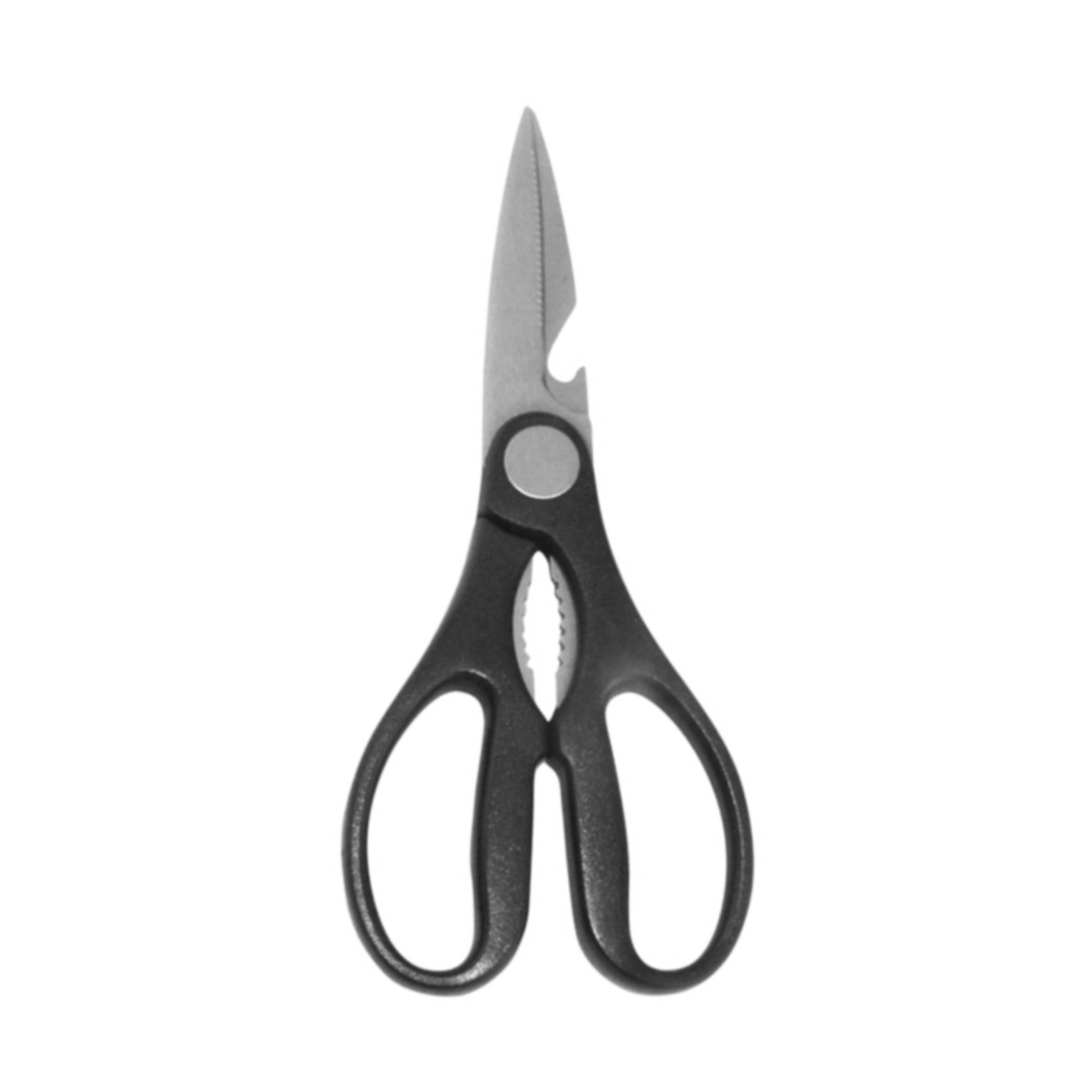
OEM Scissors Factory: Practical Sourcing Guide for Kitchen Shears
An OEM scissors factory can be an important partner for brands, importers, distributors, and kitchenware companies that want to develop kitchen shears under their own label. The goal is not simply to find a factory that can make scissors, but to identify a scissors manufacturer that understands cutting performance, handle comfort, safety expectations, packaging needs, and repeatable quality.
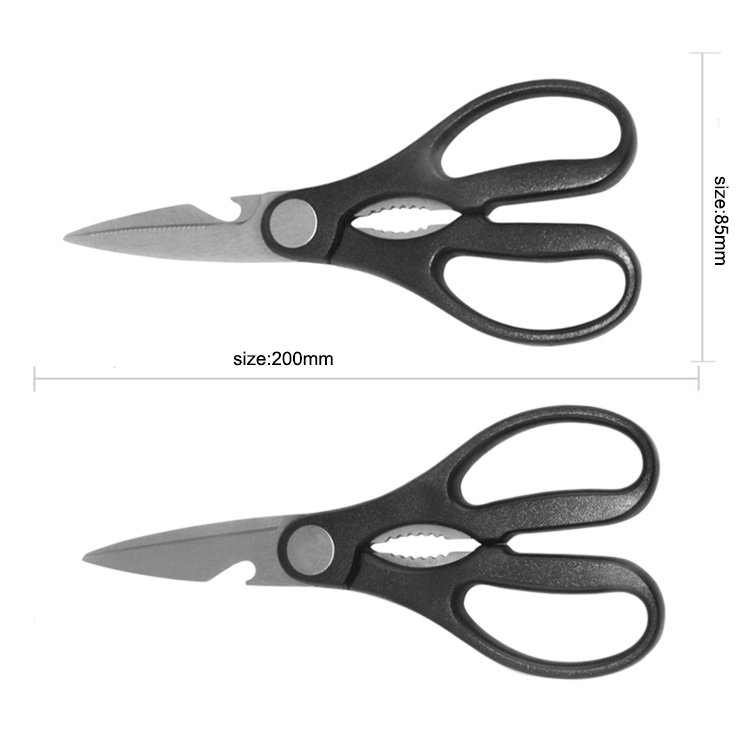
The original product context highlights OEM kitchen scissors with stainless steel blades, ergonomic handles, and a built-in bottle opener. Those are useful features for many kitchen tasks, including cutting food packaging, slicing meat portions, trimming herbs, and handling occasional tasks such as cracking nuts. For a business buyer, however, feature lists should be only the starting point. A strong sourcing process also asks how those features are produced, checked, packed, and kept consistent across orders.
What an OEM Scissors Factory Actually Does
An OEM scissors factory manufactures scissors according to a buyer's product direction, brand requirements, and order specifications. In kitchenware, this may include blade shape, handle color, packaging format, logo placement, and accessory functions. The buyer usually provides a target market, expected use case, positioning, and any required documentation, while the factory advises what can be produced efficiently.
For kitchen scissors, the factory role may include material sourcing, blade forming, grinding, assembly, handle production, surface finishing, inspection, and packing. Some factories may manage more of these steps internally, while others may rely on outside partners for certain processes. Buyers should not assume the workflow. Instead, ask which production steps are completed in-house, which are outsourced, and how quality is controlled at each stage.
Key Product Features to Review Before Sourcing
Kitchen shears are judged by how reliably they cut and how comfortable they feel in daily use. Stainless steel blades are a common and useful feature because kitchen tools are regularly exposed to moisture and food contact. However, buyers should ask the supplier to confirm the exact steel type, finishing process, corrosion-resistance expectations, and care instructions rather than making assumptions.
Ergonomic handles are another important point. A handle that looks comfortable in a photo may not suit every hand size or grip style. Buyers should evaluate sample units with real use scenarios: cutting poultry skin, trimming vegetables, opening packaging, or using the built-in bottle opener. If the scissors include additional functions, such as a nut-cracking area or opener, confirm that these features do not weaken the main cutting function.
- Check whether the blades cut cleanly through common kitchen materials without slipping.
- Confirm that the handles feel stable when used with wet or slightly oily hands.
- Ask whether the built-in bottle opener has been tested for repeated use.
- Review whether the hinge tension stays consistent after repeated opening and closing.
- Request care guidance for cleaning, drying, and storage.
Supplier Evaluation Checklist
A professional scissors manufacturer should be able to explain how it manages product consistency. Buyers do not need to know every technical detail of scissors production, but they should know what questions to ask. The table below can help structure supplier discussions before confirming samples or placing an OEM order.
| Evaluation Area | What to Ask the Factory | Why It Matters |
|---|---|---|
| Blade material | What stainless steel is used, and can it be documented? | Material choice affects cutting feel, care requirements, and buyer claims. |
| Sharpness control | How is cutting performance checked during production? | Consistent sharpness reduces complaints and returns. |
| Handle design | Can handle color, shape, or logo placement be customized? | OEM buyers often need brand differentiation. |
| Multi-function parts | How are openers or nut-cracking features inspected? | Extra functions should not compromise safety or durability. |
| Packaging | What retail, bulk, or private-label packaging options are available? | Packaging affects shelf presentation, shipping, and market compliance. |
| Quality records | What inspection reports or sample approvals are provided? | Documentation helps buyers manage repeat orders. |
How to Approach OEM Customization
OEM customization should begin with a clear product brief. A buyer should define the target customer, expected retail channel, preferred price segment, packaging style, and any functions that are essential. For example, a kitchenware brand may want scissors with stainless steel blades, a bottle opener, and comfortable handles, while a wholesale distributor may prioritize simple packaging and broad usability.
When discussing customization, avoid vague requests such as asking for a "better" or "premium" version. Instead, specify measurable preferences where possible. Ask the factory which handle materials are available, what logo methods can be used, what packaging templates already exist, and whether a new mold or tooling step would be required. If the factory cannot confirm a detail immediately, request written clarification before sample approval.
It is also useful to separate cosmetic customization from functional customization. Changing a handle color may be simpler than changing blade geometry or hinge structure. Functional changes can affect balance, cutting strength, and production consistency, so they should be validated with samples before commercial decisions are made.
Quality Control Points for Kitchen Shears
Quality control for kitchen scissors should cover both appearance and function. Visual inspection can identify scratches, uneven finishing, poor handle molding, or packing defects. Functional inspection should focus on cutting action, hinge smoothness, blade alignment, handle comfort, and the performance of any added functions such as a built-in bottle opener.
Buyers should ask the scissors manufacturer how samples are approved and how production units are compared with approved samples. A golden sample or signed reference sample can reduce misunderstandings. For repeat orders, confirm whether the factory keeps production records, material records, and inspection standards linked to the original order.
For markets with specific product safety, labeling, or food-contact requirements, buyers should ask what documents the supplier can provide and whether independent testing is needed. Do not assume compliance based on product type alone. Importers and brand owners should verify requirements for their destination market before shipment.
Common Sourcing Mistakes to Avoid
One common mistake is choosing an OEM scissors factory based only on a catalog image. Kitchen shears can look similar online while feeling very different in use. Always request samples and test them against realistic kitchen tasks. Another mistake is focusing on unit cost while ignoring packaging strength, inspection process, or after-sales communication. A low initial price may become expensive if cutting performance is inconsistent.
Buyers should also avoid making marketing claims that have not been verified. If a supplier has not provided details on steel grade, testing, certifications, or durability results, those claims should remain questions rather than statements. Responsible product pages and packaging should match confirmed facts.
Key Takeaways
- An OEM scissors factory should be evaluated on production capability, communication, samples, and quality control.
- Useful kitchen shear features include stainless steel blades, ergonomic handles, and practical add-ons such as a bottle opener.
- Buyers should confirm material details, inspection methods, packaging options, and documentation before ordering.
- Functional customization requires sample testing because small design changes can affect cutting performance.
- Commercial details such as MOQ, pricing, lead time, and certifications should be requested directly from the supplier.
Practical FAQ for Buyers
What should I ask an OEM scissors factory first?
Start with production scope, available kitchen shear models, customization options, sample process, packaging choices, and quality inspection methods. Then ask for any documents required for your market.
Are stainless steel blades enough to judge quality?
No. Stainless steel is useful, but buyers should also review sharpness, blade alignment, hinge stability, handle comfort, finishing, and care instructions.
Can kitchen scissors include multiple functions?
Yes, kitchen scissors may include functions such as a built-in bottle opener or nut-cracking area. Buyers should test whether these features work reliably without reducing cutting comfort.
How should I approve an OEM sample?
Test the sample in realistic use, check appearance and packaging, confirm logo placement, and document approved details in writing. Keep a reference sample for future comparison.
What commercial details should be confirmed before ordering?
Ask the supplier about MOQ, pricing, payment terms, production lead time, packaging costs, inspection standards, shipping terms, and any available compliance documents.
