




OEM Scissors Factory: How to Source Kitchen Shears with Confidence
Finding the right OEM scissors factory is not only about choosing a supplier that can make a sharp cutting tool. For importers, retailers, kitchenware brands, and distributors, the better question is whether the factory can consistently produce kitchen shears that match your product positioning, quality expectations, packaging needs, and after-sales risk tolerance.
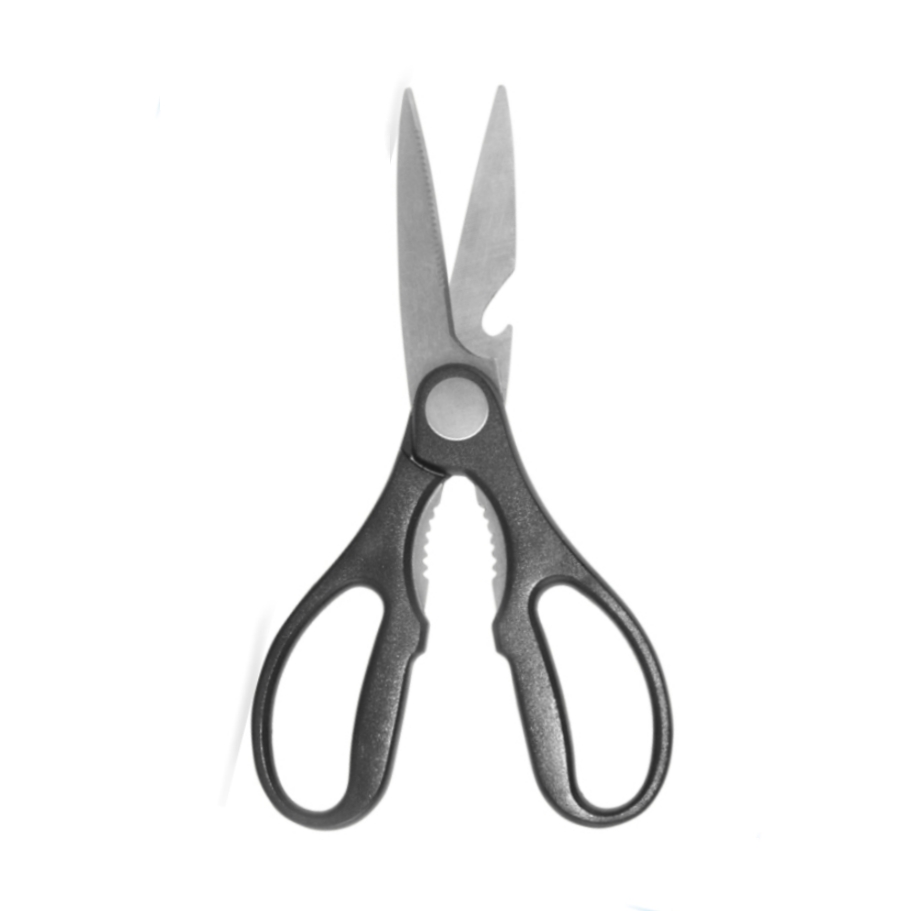
The original focus of this topic is clear: OEM kitchen scissors, also known as kitchen shears, are valued for versatility, comfort, and practical features. They may be used for everyday food preparation, opening packaging, trimming herbs, cutting poultry, or handling small kitchen tasks. Some designs also include additional functions such as a built-in bottle opener or nut cracker. When sourcing from an OEM scissors manufacturer, buyers should verify which features are actually available for the target model rather than assuming every design includes them.
Key Takeaways
- An OEM scissors factory should be evaluated on consistency, communication, sampling, packaging support, and quality control, not claims alone.
- Kitchen shears are often promoted for multifunctional use, but buyers should confirm each feature, material, finish, and packaging detail in writing.
- Rust-resistant stainless steel blades and ergonomic handles are useful product attributes when explicitly offered for the selected model.
- Before placing a bulk order, request samples, inspection criteria, carton details, and answers to compliance questions for your sales market.
What an OEM Scissors Factory Does
An OEM scissors factory produces scissors or shears according to a buyer's requested design, branding, packaging, or product requirements. In the kitchenware category, OEM work may include adapting a handle color, adding a logo, adjusting packaging artwork, or selecting from existing kitchen scissors models that can be customized for a brand program.
Not every factory offers the same level of development support. Some manufacturers mainly supply existing designs with private-label packaging. Others may assist with mold development, structure adjustments, or coordinated product sets. Buyers should ask where the factory's actual capability begins and ends. This avoids confusion between full custom development, light customization, and standard wholesale supply.
Core Product Qualities to Check
Kitchen shears need to cut cleanly, feel controlled in the hand, and tolerate regular kitchen use. The original article mentions rust-resistant stainless steel blades, ergonomic handles, sharpness, durability, and multifunctionality. Those are useful evaluation points, but each should be checked against the specific sample and order specification.
Blade performance is usually the first concern. A buyer should inspect how the shears cut common kitchen materials such as herbs, food packaging, parchment, and poultry skin if relevant to the product claim. Handle comfort is just as important because a tool that cuts well but causes strain may lead to poor reviews. Ergonomic handles should be assessed by actual grip testing, not only by looking at product photos.
For multifunctional kitchen shears, confirm whether features such as a bottle opener or nut cracker are included in the model, and whether those functions work safely and comfortably. Extra features can add value, but they also add points of failure if the design is weak or unclear to the end user.
Supplier Evaluation Checklist
A practical sourcing process should turn general claims into verifiable details. The table below can help buyers compare an OEM kitchen scissors supplier before committing to production.
| Evaluation Area | What to Ask | Why It Matters |
|---|---|---|
| Product model | Is this an existing design or a custom-developed model? | Clarifies tooling needs, lead time, and customization limits. |
| Blade material | What stainless steel or blade material is used for this exact model? | Prevents unsupported assumptions about grade or performance. |
| Handle design | Can handle color, logo, or texture be customized? | Helps align the product with brand and retail requirements. |
| Functions | Does the selected model include a bottle opener, nut cracker, or other feature? | Ensures marketing copy matches the delivered product. |
| Quality control | What inspection steps are used before shipment? | Reduces risk of inconsistent sharpness, finish, or assembly. |
| Packaging | Can the factory support branded packaging and carton labeling? | Important for retail, wholesale, and marketplace fulfillment. |
| Commercial terms | What are the MOQ, sample cost, lead time, and payment terms? | These details should be confirmed directly with the supplier. |
Questions to Ask Before Sampling
Sampling is where many sourcing assumptions become visible. Before requesting a sample, prepare a short specification sheet. Include product size if known, intended market, expected use, packaging type, logo requirement, target retail channel, and any special restrictions your buyers require.
- Which kitchen scissors models are available for OEM or private-label supply?
- What blade material, handle material, and surface finish are used for each model?
- Are the blades designed to separate for cleaning, or are they fixed together?
- Which parts of the product can be customized without new tooling?
- Can the supplier provide packaging dielines or artwork requirements?
- What quality checks are performed for cutting performance, assembly, and appearance?
- Which compliance documents or test reports are available, if required for the destination market?
These questions do not assume the factory has a specific certification or test result. They simply help you identify what evidence is available and what additional testing may be needed for your business.
How to Review a Kitchen Shears Sample
When the sample arrives, review it like a customer and like a quality inspector. First, check appearance: blade finish, handle alignment, rivet or joint stability, logo placement if applicable, and packaging condition. Then test basic use. The shears should open and close smoothly, cut without excessive force, and feel stable during repeated motion.
Next, look at cleaning and storage. Kitchen scissors are exposed to moisture, food residue, and frequent handling. If the product is promoted as rust-resistant, ask the supplier what material and finish support that claim. Also clarify recommended care instructions, such as hand washing, drying after use, or whether dishwasher cleaning is advised for the specific model. Do not add care claims to your listing unless the supplier confirms them for that product.
Balancing Cost, Quality, and Brand Positioning
Lower unit cost can be attractive, especially for wholesale or promotional programs, but kitchen shears are highly experience-driven. If the blades dull quickly, the handles feel uncomfortable, or the packaging looks weak, the product may create returns or negative feedback. A reliable OEM scissors factory should be able to explain the cost difference between models, materials, finishes, handle designs, and packaging options.
For a value-focused line, a simple pair of kitchen scissors may be enough if it cuts reliably and is packed cleanly. For a higher-positioned kitchenware range, buyers may prioritize smoother operation, stronger presentation packaging, improved handle comfort, or added functions. The best sourcing decision is not always the most complex model; it is the model that fits your sales channel and customer expectation.
Practical FAQ
What is the difference between an OEM scissors factory and a wholesaler?
An OEM scissors factory typically supports manufacturing and customization, while a wholesaler may mainly sell ready-made stock. Some suppliers do both, so ask whether they manufacture directly or trade products from another source.
Can kitchen shears be customized with a private logo?
Often they can, but the available methods depend on the model, handle material, blade finish, and order quantity. Ask the supplier which logo positions and techniques are suitable for the exact product.
Should I choose multifunctional kitchen scissors?
Multifunctional designs can be useful when features such as a bottle opener or nut cracker are included and work well. Test those functions during sampling and make sure they are relevant to your customers.
What should buyers confirm before a bulk order?
Confirm the final sample, material description, packaging artwork, inspection standard, carton information, lead time, MOQ, payment terms, and any market-specific compliance requirements.
How can I avoid misleading product claims?
Use only claims supported by the supplier's specification, samples, or documents. If a material grade, certification, or test result is not confirmed, treat it as a question for the supplier rather than a marketing statement.
Final Sourcing Advice
An OEM scissors factory can be a valuable partner for building a kitchen shears product line, but the best results come from precise questions and careful sample review. Focus on verifiable product details: blade performance, handle comfort, included functions, packaging, inspection steps, and commercial terms. By turning broad quality claims into written specifications, buyers can source OEM kitchen scissors that are better matched to their brand, channel, and customer expectations.
