




OEM Scissors Factory: Your Go-To for Cutting-Edge Kitchen Shears
Choosing an OEM scissors factory is not only about finding a producer that can make a sharp pair of kitchen shears. For brand owners, wholesalers and kitchenware importers, the real goal is to source a product that fits the target market, performs reliably in daily food preparation and can be customized without creating avoidable quality or delivery risks. Multifunction kitchen shears are especially demanding because one tool may combine cutting, gripping, opening and scaling functions in a compact design.
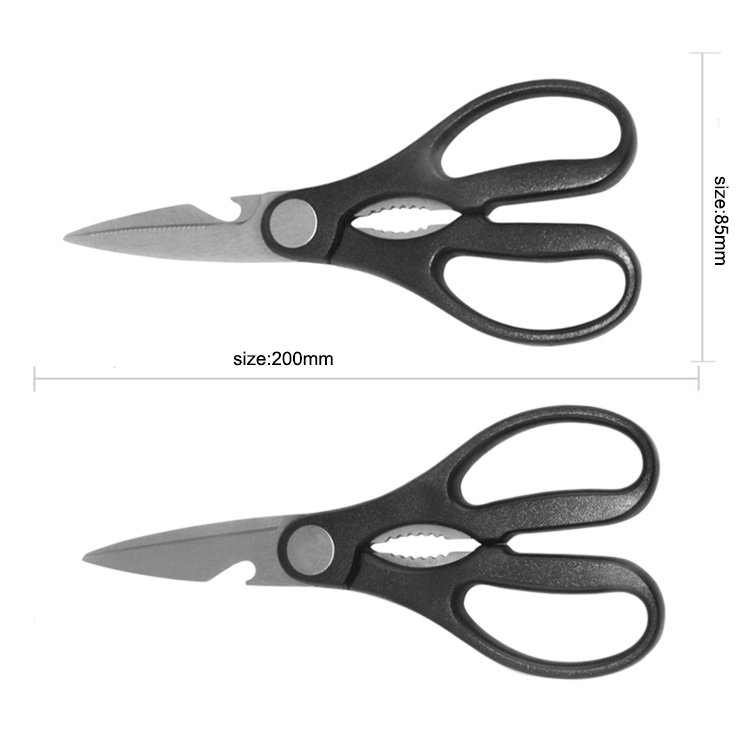
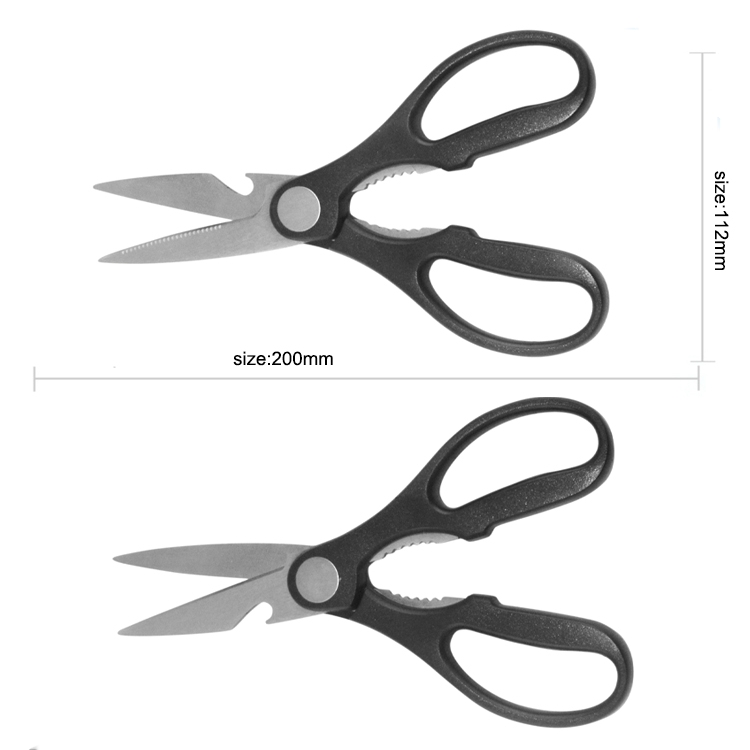
The original product focus is a pair of Multi-Function Kitchen Shears. The described design includes stainless-steel blades, a serrated section for fish scaling, a bottle opener on the blade, a central hinge used as a nutcracker and bottle grip, and ergonomic soft-grip handles. These are useful features, but buyers should still verify materials, dimensions, finish, packaging and compliance requirements directly with any supplier before confirming an OEM order.
Key Takeaways
- An OEM scissors factory should be evaluated on product engineering, quality control, customization support and communication, not price alone.
- Multifunction kitchen shears need careful checking because every added feature can affect comfort, cleaning and durability.
- Ask clear questions about blade material, handle material, packaging, branding options, samples, lead time and inspection standards.
- Request physical samples and test them against realistic kitchen tasks before placing a larger wholesale or private-label order.
What an OEM Scissors Factory Should Provide
An OEM scissors factory manufactures scissors or shears according to a buyer’s design, branding or product requirements. In kitchenware sourcing, this may include private-label packaging, handle color changes, logo placement, blade finish choices or adjustments to the tool’s accessory functions. A capable supplier should be able to explain which parts of the product are standard and which can be customized.
For kitchen shears, buyers should look for a factory or supplier that understands both cutting performance and food-use practicality. The shears should open and close smoothly, feel stable at the hinge and allow the user to clean around functional areas. If the product includes a bottle opener, nutcracker, serrated scaler or grip section, each function should be easy to identify and should not interfere with normal cutting.
Core Product Features to Review
The original article highlights stainless-steel blades and multifunction details. Stainless steel is commonly selected for kitchen tools because it is associated with corrosion resistance and ease of cleaning, but buyers should not assume a specific grade unless the supplier states it. Ask the factory what material is used for the blades and handles, whether documentation is available and how the material is controlled in production.
Blade sharpness is another key point. Kitchen shears may be used to cut herbs, packaging, vegetables, meat portions or poultry bones, depending on design strength. A sample should be tested for clean cutting, tip alignment and edge retention under reasonable use. For handles, soft-grip designs can improve comfort, but buyers should confirm the handle surface, grip texture and resistance to slipping when hands are wet.
OEM Kitchen Shears Comparison Checklist
| Evaluation Area | What to Check | Questions to Ask the Supplier |
|---|---|---|
| Blade material | Stainless-steel type, thickness, finish and edge quality | What blade material is used, and can you provide material information? |
| Cutting performance | Smooth action, sharpness, alignment and ability to handle intended foods | What cutting tests are performed during production or inspection? |
| Multifunction parts | Fish scaler, bottle opener, nutcracker or bottle grip usability | Are these functions standard, and can their design be modified? |
| Handle comfort | Grip shape, soft-touch feel, stability and left/right-hand usability | What handle material is used, and are color options available? |
| Cleaning and safety | Hinge access, surface finish, burrs and sharp non-cutting edges | How are burrs, polishing and final inspection controlled? |
| OEM packaging | Logo, carton, blister, card, manual or barcode requirements | What packaging formats can be supplied, and what files are needed? |
How to Source From an OEM Scissors Manufacturer
A structured sourcing process reduces misunderstandings. Start with a written product brief instead of a general inquiry. Include the intended market, target retail channel, approximate order quantity, preferred packaging, branding needs and any required documents. If you are matching an existing product, provide photos, measurements and function expectations without asking the supplier to copy protected designs.
Next, request samples. A catalog sample helps you understand the factory’s current capability, while a pre-production sample confirms your specific branding and packaging choices. During sample review, test the shears with realistic tasks and note any problems: loose hinge, uncomfortable handle pressure, uneven cutting, difficult bottle opener access or hard-to-clean areas. Share detailed feedback with photos or short videos so the supplier can respond accurately.
Quality Control Points Before Bulk Orders
Quality control for kitchen shears should include both appearance and function. Appearance checks may cover scratches, polishing marks, handle color consistency, logo placement and packaging accuracy. Functional checks should cover opening and closing action, blade contact, screw or rivet stability, sharpness and correct operation of any extra features.
Buyers should ask whether the supplier can support incoming material checks, in-process inspection and final inspection. Do not assume testing standards, certifications or compliance status. If your destination market requires specific food-contact, safety, labeling or chemical requirements, list them clearly and ask what documents can be provided. For higher-risk programs, consider third-party inspection before shipment.
Customization Options to Discuss
OEM does not always mean every part can be changed without tooling costs or longer lead time. Common customization areas may include handle color, logo method, packaging design and bundled instructions. More complex changes, such as altering blade shape, hinge structure or integrated tools, may require engineering review and sampling.
- Confirm which parts are standard and which require new tooling.
- Ask for artwork templates before preparing packaging files.
- Review logo size, placement and durability on the sample.
- Check whether the packaging protects blade tips and handles during shipping.
- Agree on approval samples and inspection criteria before mass production.
Common Mistakes Buyers Should Avoid
One common mistake is focusing only on the number of functions. A kitchen shear with many features is not automatically better if those features make the tool bulky, uncomfortable or difficult to wash. Another mistake is approving a product from photos alone. Kitchen shears are tactile products; hinge feel, handle pressure and cutting balance need physical evaluation.
Buyers should also avoid vague purchase requirements. Instead of asking for “high quality kitchen scissors,” specify expected use, packaging type, branding needs and any market requirements. Clear communication helps the OEM scissors factory quote more accurately and reduces the risk of sample revisions later.
Practical FAQ
What should I ask an OEM scissors factory first?
Start by asking about available kitchen shear models, blade and handle materials, customization options, sample process, packaging formats, lead time and inspection procedures. If you have compliance requirements, mention them at the beginning.
Are multifunction kitchen shears suitable for wholesale programs?
They can be, especially for kitchenware retailers, promotional programs and private-label ranges. However, wholesale buyers should test samples to confirm that each function is practical and that packaging is suitable for the sales channel.
Can I customize the handle color and logo?
Many OEM suppliers offer some level of color or logo customization, but options depend on the existing mold, material and production process. Ask the supplier what is possible, what files are required and whether sample approval is needed.
How do I judge whether the shears are durable?
Check hinge stability, blade alignment, handle bonding, cutting consistency and resistance to looseness after repeated use. Ask the supplier what internal tests they perform, but verify performance with your own sample testing as well.
Should I request product certifications?
Ask based on your destination market and sales channel requirements. Do not assume certifications are available. Provide the required standard or document name and ask the supplier what they can supply or help arrange.
Final Sourcing Advice
An OEM scissors factory can be a valuable partner when you need branded, multifunction kitchen shears for retail or wholesale distribution. The best results come from combining a clear product brief, careful sample testing and direct questions about materials, customization and inspection. Treat the shears as a practical kitchen tool first and a branded product second. If the cutting action, comfort and cleaning experience are right, the added features can support a stronger product offer without creating unnecessary sourcing risk.
