





OEM Scissors Manufacturer: Kitchen Sourcing Guide
Kitchen scissors are a small product category, but they influence how efficiently people prepare food, open packaging, trim herbs, portion ingredients, and handle quick cutting tasks. For retailers, importers, distributors, and private-label brands, the question is not only whether a pair of scissors looks good. The more important question is whether the product is comfortable, durable enough for its intended use, consistent in production, and clearly specified before an order is placed.
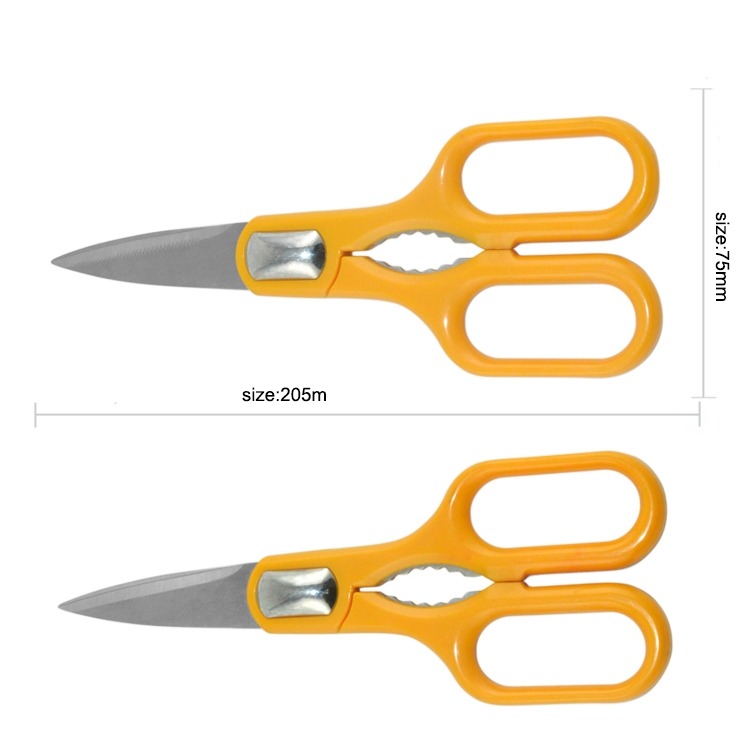
The original product concept highlights several useful design points: ergonomic plastic handles, stainless steel blades, and a multi-purpose serrated section between the handles that may be used as a bottle opener or nut cracker. These are practical features for kitchen use, but B2B buyers should still verify the details with the factory rather than assuming every model has the same performance, dimensions, packaging, or compliance documentation.
Key Takeaways
- Kitchen scissors for OEM or wholesale sourcing should be evaluated by blade material, handle comfort, cutting performance, safety, packaging, and quality control process.
- Stainless steel blades and durable plastic handles are useful starting points, but buyers should request exact material details, samples, and inspection standards.
- Multi-purpose features such as a serrated section, bottle opener, or nut cracker can add value, but they should be tested for real usability and user safety.
- Do not rely only on product photos. Confirm drawings, dimensions, finish, logo options, packing method, and after-sales handling before production.
Why Kitchen Scissors Matter in Product Sourcing
Kitchen scissors are often bought as part of a broader houseware range, but they deserve careful attention. Unlike decorative products, scissors must perform a physical task every time they are used. Poor alignment, weak pivot tension, uncomfortable handles, or dull blades can quickly lead to customer complaints. For a B2B buyer, this can affect reviews, repeat orders, and retailer confidence.
A well-planned OEM scissors project should begin with the end user. Will the scissors be sold for home kitchens, supermarket houseware aisles, online bundles, promotional gift sets, or professional food-preparation environments? A home-use model may prioritize comfort, attractive colors, and easy packaging. A commercial-oriented range may require stronger performance expectations, more detailed quality control, and clearer maintenance instructions.
The product described in the source article focuses on a practical kitchen-use design: oversized plastic handles for grip, stainless steel blades for cutting, and an added serrated function between the handles. These features fit common consumer expectations, but they should be translated into measurable sourcing requirements before any OEM order is confirmed.
Core Product Features to Evaluate
When discussing kitchen scissors with an OEM manufacturer, buyers should separate visual features from functional specifications. A photo may show the general shape, but production decisions depend on exact details.
- Blade material: The source article mentions stainless steel blades. Buyers should ask which stainless steel is used, whether the supplier can provide material documentation, and how the blade edge is finished.
- Handle material: The source mentions durable plastic handles. Buyers should confirm the plastic type, color options, surface texture, heat exposure limitations, and whether the handle is single-material or combined with soft grip inserts.
- Ergonomics: Oversized handles can improve grip for many users, but comfort should be checked with actual samples. Handle opening size, finger clearance, and edge smoothness all matter.
- Pivot and tension: The screw or rivet area affects cutting feel. Ask how blade alignment is controlled and whether tension is adjustable or fixed.
- Multi-function section: If the scissors include a serrated grip, bottle opener, or nut-cracking area, test each function under realistic conditions.
- Cleaning and care: Buyers should ask whether the scissors are intended for hand washing, whether they can be disassembled, and what care instructions should appear on packaging.
Comparison and Supplier Checklist
The table below can be used during supplier evaluation. It does not replace a formal inspection plan, but it helps buyers convert product claims into practical questions.
| Evaluation Area | What to Check | Questions to Ask the Supplier |
|---|---|---|
| Blade performance | Sharpness, alignment, cutting consistency, edge finish | What stainless steel is used? How is blade sharpness inspected before shipment? |
| Handle comfort | Grip size, smooth edges, plastic durability, color consistency | What plastic material is used? Can handle colors be matched to a brand palette? |
| Multi-purpose functions | Serrated section, bottle opener, nut-cracking usability | Are these functions tested? What use limitations should be stated? |
| OEM customization | Logo, packaging, color, instruction leaflet, barcode placement | Which parts can be customized, and what files or artwork are required? |
| Quality control | Incoming materials, in-process checks, final inspection | What inspection steps are used, and can a buyer define AQL or critical defects? |
| Commercial terms | MOQ, lead time, sample cost, payment terms, reorder process | What are the current MOQ, sampling timeline, production lead time, and payment terms? |
How to Work With an OEM Scissors Manufacturer
OEM sourcing works best when requirements are documented early. Instead of asking a factory to “make good kitchen scissors,” prepare a specification brief. This brief should include product photos or reference samples, target retail channel, desired handle color, logo placement, packaging style, expected order quantity, target market, and any compliance or documentation requirements relevant to that market.
For kitchen scissors, a practical OEM brief may include blade length, total length, handle opening size, blade finish, plastic color, logo method, packaging type, carton packing, and user instructions. If the product will be sold online, buyers may also need high-quality product photography, warning text, and clear care instructions. These assets should be planned as part of the project, not left until the shipment is ready.
Buyers should also clarify whether they are selecting an existing factory model with branding changes or developing a new mold. Existing models usually reduce development complexity, while new tooling gives more control over shape and branding. The right choice depends on budget, timeline, differentiation needs, and expected order volume. Since commercial details vary by supplier, ask directly about tooling charges, ownership, modification limits, and sample approval procedures.
Sample Testing Before Wholesale Orders
Samples are essential for scissors because small differences in alignment and comfort can change user experience. A buyer should test samples in the way customers will use them. This does not require a laboratory for every initial review, but it does require disciplined observation.
- Check opening and closing feel: The motion should be smooth, without excessive looseness or stiffness.
- Cut common kitchen items: Test herbs, soft packaging, paper labels, thin plastic packaging, and other expected materials.
- Inspect the handle: Look for sharp plastic edges, visible defects, color inconsistency, or uncomfortable pressure points.
- Try multi-purpose functions: If a bottle opener or nut-cracking section is included, confirm that it is practical and not awkward to use.
- Wash and dry the sample: Follow the proposed care method and check whether water collects near the pivot or handle joint.
- Review packaging fit: Make sure the scissors are secure, blades are protected, and retail information is easy to understand.
After testing, send consolidated feedback to the manufacturer. Avoid vague comments such as “make it better.” Instead, state the exact issue: for example, “handle edge feels sharp near the index finger,” “blade tips do not fully meet,” or “packaging does not protect the blade point.” Specific feedback helps the factory respond with practical adjustments.
Quality Control Points for Kitchen Scissors
A quality plan should define what is acceptable and what is not. Critical defects for kitchen scissors may include broken handles, loose blades, unsafe sharp burrs, severe rust marks, incorrect logo, missing packaging warnings, or scissors that cannot cut as intended. Major and minor defects should also be defined according to the buyer’s sales channel and customer expectations.
Buyers should ask the supplier how quality is controlled during production. Useful questions include: How are blades inspected before assembly? How is handle color consistency checked? Is every pair opened and closed during final inspection? Are packed goods checked against the approved packaging sample? Can the supplier support third-party inspection if required?
If the scissors are intended for specific markets, buyers should identify applicable regulations and documentation needs with qualified compliance advisers. A supplier may be able to provide documents, but buyers should not assume certification, testing, or legal compliance unless it has been confirmed in writing and supported by appropriate evidence.
Packaging, Branding, and Retail Readiness
Packaging affects both customer perception and product safety. Kitchen scissors may be packed on a blister card, in a paper sleeve, in a box, or as part of a kitchen tool set. The right choice depends on retail channel, shipping distance, sustainability goals, and price point.
For OEM projects, packaging should communicate the product clearly without overpromising. If the scissors have stainless steel blades, plastic handles, and a serrated middle section, those points can be explained in plain language. Care instructions should be simple and practical. If hand washing is recommended, say so. If the product has sharp edges, include appropriate warning text based on the destination market’s requirements.
Private-label buyers should also confirm logo position, print durability, barcode placement, carton marks, and language requirements before mass production. A pre-production packaging sample is useful because artwork mistakes are often easier to prevent than to fix after printing.
FAQ: Sourcing OEM Kitchen Scissors
What should I ask an OEM scissors manufacturer first?
Start with the basics: available models, blade material, handle material, customization options, MOQ, sample timeline, production lead time, packaging choices, and quality control process. If you have a target market, ask what documentation the supplier can provide for that market.
Are stainless steel blades enough to guarantee quality?
No. Stainless steel is a useful material category, but quality also depends on the specific steel, blade thickness, heat treatment if applicable, sharpening, alignment, pivot construction, and final inspection. Always test samples.
Can kitchen scissors be customized for private label?
Many OEM projects can include logo, color, and packaging customization, but the available options depend on the supplier and model. Ask which parts can be changed, what artwork files are required, and whether customization affects MOQ or lead time.
How do I compare two similar suppliers?
Compare sample quality, communication clarity, willingness to answer technical questions, packaging support, inspection process, commercial terms, and consistency between the approved sample and production goods. The lowest quoted price is not always the lowest total risk.
Should multi-purpose scissors include a bottle opener or nut cracker?
Those features can be useful when they are well designed. However, they should be tested for comfort, safety, and actual performance. If the feature is difficult to use, it may add complexity without improving customer satisfaction.
Final Sourcing Advice
An OEM kitchen scissors project should balance usability, manufacturability, cost, and customer expectations. The most successful buyers treat scissors as a functional tool rather than a simple accessory. They verify materials, test samples, document specifications, confirm packaging, and define quality standards before production begins.
For importers, wholesalers, and private-label brands, this disciplined approach reduces misunderstandings and helps create a product that is practical for everyday kitchen tasks. Ask clear questions, request evidence where needed, and make approval decisions based on real samples instead of assumptions. That is the most reliable path to sourcing kitchen scissors that support efficiency in the kitchen and consistency in the supply chain.
