




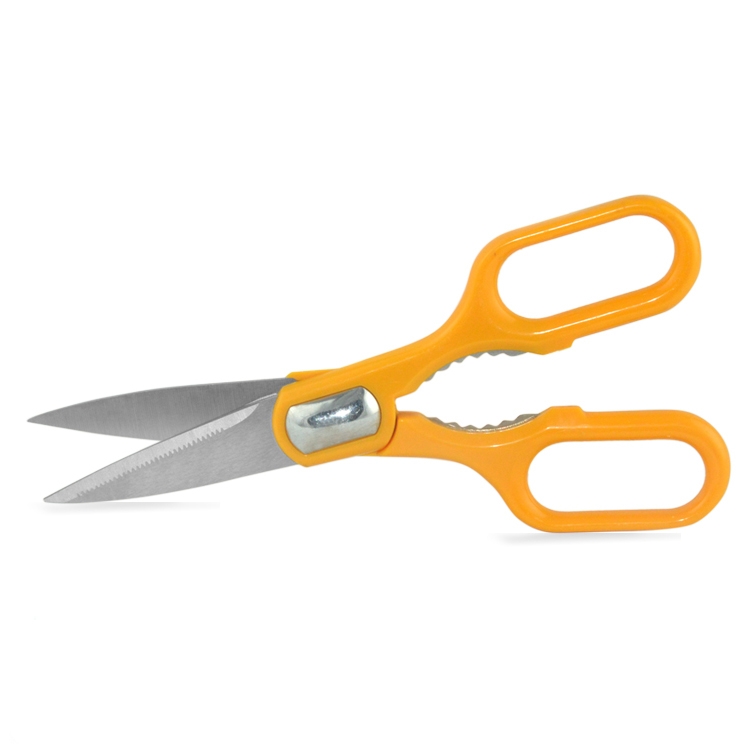
OEM Scissors Manufacturer: Precision & Style
For kitchenware brands, wholesalers, and importers, sourcing scissors is not only about finding a sharp cutting tool. A good OEM scissors manufacturer should help you evaluate usability, consistency, packaging readiness, and the commercial details that affect repeat orders. Kitchen scissors are handled often, stored in drawers, washed frequently, and expected to cut different foods cleanly, so small design choices can influence customer satisfaction.
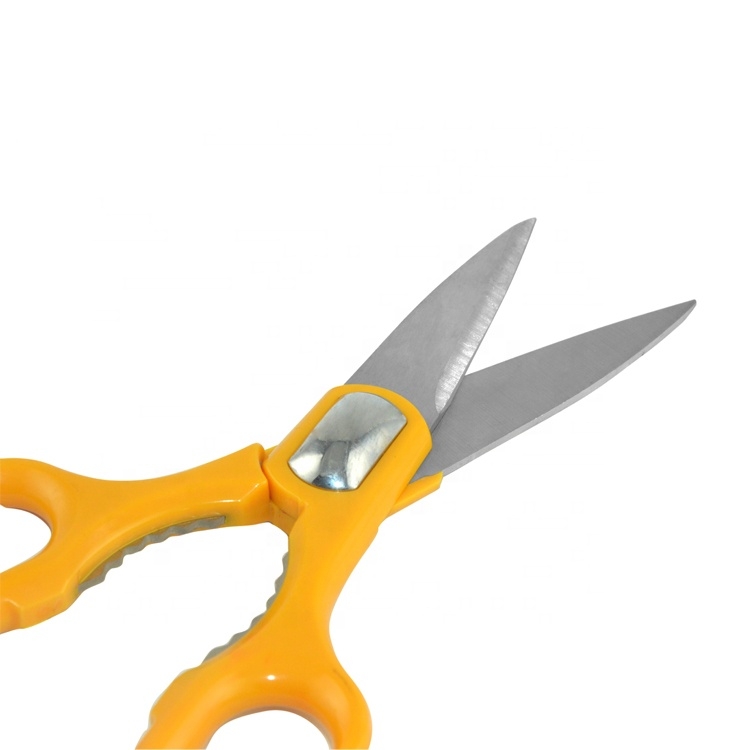
The original product description highlights several explicit features: rust-resistant stainless steel blades, finely serrated edges, glossy amber ergonomic handles, and an integrated metal notch for cracking nuts or opening bottles. Those are useful starting points for a buyer brief, but a sourcing decision should also include sample checks, quality questions, and clear expectations for customization.
Key Takeaways
- Kitchen scissors should be assessed for cutting performance, grip comfort, cleanability, and durability before bulk purchase.
- Explicit product features include stainless steel blades, serrated blade edges, amber ergonomic handles, and a metal notch in the handle.
- OEM buyers should ask suppliers about customization options, quality control steps, packaging, lead time, MOQ, and documentation.
- Do not rely only on photos; request samples and test them against the intended use cases.
What Buyers Should Look For in OEM Kitchen Scissors
The best sourcing brief starts with the end user. Home cooks may prioritize comfort, simple cleaning, and easy storage. Professional or food-service buyers may care more about repeated cutting, hand fatigue, and predictable quality across batches. If the product is planned for a retail set, packaging strength and barcode placement may matter as much as the scissors themselves.
Because kitchen scissors are often used for herbs, poultry preparation, food packaging, and general kitchen tasks, buyers should define what the product must cut and what it should not be marketed for. Clear positioning helps prevent overclaiming and gives the manufacturer a realistic benchmark for samples.
Blade Construction and Cutting Performance
The source article states that the scissors use high-grade, rust-resistant stainless steel blades with a finely serrated edge. In sourcing terms, this should be verified through samples and supplier documentation rather than assumed from a product page. Ask what stainless steel specification is used, how the blade is hardened, what edge geometry is applied, and how sharpness is checked during production.
Serration can help grip slippery materials and reduce sliding while cutting, especially when preparing herbs or trimming kitchen ingredients. However, buyers should test whether the serration is appropriate for the target user. A very aggressive tooth pattern may feel rough, while a subtle serration may not grip enough. Sample testing should include wet herbs, food packaging, thin vegetables, and any other materials relevant to the product listing.
Handle Comfort and Multifunction Details
The original article describes glossy amber handles shaped for a comfortable and secure grip. For OEM and wholesale projects, handle design deserves close review because it affects both perceived value and practical use. Buyers should check whether the handle opening suits different hand sizes, whether the inner edges feel smooth, and whether the grip remains secure when hands are wet.
The integrated metal notch is described as useful for cracking nuts or opening bottles. If this feature will be promoted, request a sample and test it in normal kitchen scenarios. Also confirm whether the notch design affects handle comfort or storage safety. Multifunction features can be helpful, but only when they do not compromise the main cutting function.
Comparison Checklist for Supplier Evaluation
| Evaluation Area | What to Check | Questions to Ask the Supplier |
|---|---|---|
| Blade material | Rust-resistant stainless steel is stated in the original product description. | What steel specification is used, and can it be documented? |
| Cutting edge | Finely serrated blades should cut cleanly without excessive tearing. | How is sharpness tested before shipment? |
| Handle design | Amber ergonomic handles should feel stable and comfortable. | Can handle color, finish, or branding be customized? |
| Multifunction notch | Check whether the notch works for bottle opening or nut cracking as intended. | Has the notch been tested for repeated use? |
| Packaging | Retail packaging should protect the blades and present the product clearly. | What packaging formats and artwork requirements are available? |
| Quality control | Inspect finish, alignment, rivets, blade closure, and surface defects. | What inspection process is used before shipment? |
OEM Customization Points to Clarify
OEM scissors projects often include more than a logo. Buyers may need custom handle colors, private-label packaging, barcode placement, instruction inserts, or carton marks. Before comparing quotations, prepare a specification sheet that separates required details from optional preferences. This reduces misunderstandings and makes supplier responses easier to compare.
- Confirm the intended market and retail channel.
- List required product features and any features that are only optional.
- Request available customization options for handle color, logo, and packaging.
- Ask about MOQ, sample fees, sample lead time, production lead time, and payment terms.
- Define inspection criteria before placing a production order.
If compliance or food-contact documentation is needed for your market, ask the supplier what documents can be provided and whether third-party testing is available. Do not assume a certificate applies to your order unless it references the correct product, material, and destination market requirements.
Sample Testing Before Wholesale Orders
A sample is the most practical way to move from marketing claims to evidence. Test the scissors with the same tasks your customers are likely to perform. Record how the blades align, whether the cut is smooth, whether the handles pinch, and whether the scissors remain comfortable after repeated use. Also inspect surface finishing, blade tips, screw or rivet tightness, and how safely the product can be packed.
For wholesale orders, consider a simple inspection checklist for incoming samples and pre-shipment review. Consistency matters because buyers are not purchasing only one pair; they are purchasing repeatable production. If your brand requires tighter tolerances, define them early and ask whether the manufacturer can support those requirements.
Practical FAQ
What should I ask an OEM scissors manufacturer first?
Start with material specification, customization options, MOQ, sample timing, production lead time, packaging choices, and the supplier's quality control process. These answers help you decide whether the factory fits your project before detailed negotiation.
Are serrated kitchen scissors better than smooth-edge scissors?
Serrated edges can improve grip on slippery or flexible materials, which is useful in many kitchen tasks. Smooth edges may be easier to sharpen in some cases. The better option depends on your target customer and intended use.
Can handle color and branding be customized?
Many OEM projects include handle color, logo, or packaging customization, but availability depends on the supplier's tooling, order quantity, and production setup. Ask for current options, MOQ, artwork requirements, and sample confirmation.
How should buyers verify product quality before ordering?
Request samples, test the scissors in realistic kitchen tasks, inspect finishing and blade alignment, and agree on inspection criteria before mass production. For regulated markets, ask what documentation or third-party testing can be arranged.
What information should be included in an RFQ?
Include product photos or references, desired features, expected order quantity, packaging needs, branding requirements, destination market, target timeline, and any documentation requests. A clear RFQ helps suppliers quote more accurately.
