





OEM Scissors Manufacturer: How to Source Soft Grip Household Scissors with Confidence
Choosing an OEM scissors manufacturer is not only about finding a factory that can produce a sharp household tool. For importers, distributors, private-label brands, and promotional product buyers, the real question is whether the supplier can consistently deliver scissors that match the intended use, packaging plan, safety expectations, and retail positioning. Soft grip household scissors are a practical category because they serve many daily tasks, from paper cutting and light crafting to home organization and general kitchen or office use.
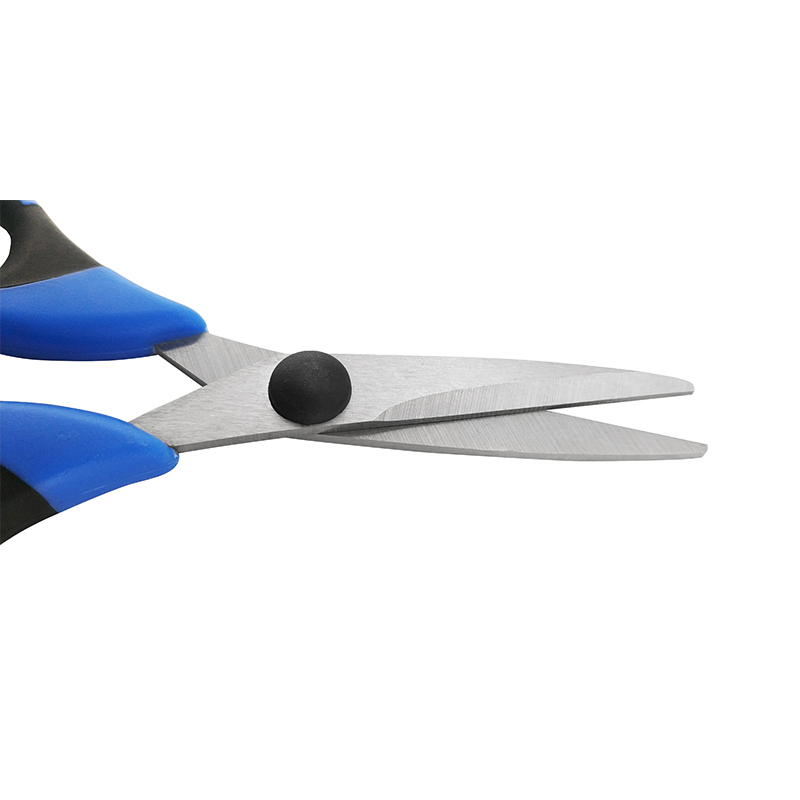
The original product presentation highlights a blue and black soft-grip handle, an ergonomic handle concept, and stainless steel blades. Those are useful starting points, but B2B buyers should go further before confirming an OEM or wholesale order. The guide below explains what to review, what to ask, and how to compare supplier responses without relying on vague claims.
Key Takeaways
- Soft grip household scissors should be evaluated for comfort, cutting feel, blade alignment, packaging suitability, and repeatability across production batches.
- OEM buyers should ask suppliers direct questions about customization options, sample approval, inspection process, packaging artwork, and lead time.
- Do not assume material grade, compliance status, capacity, or certifications unless the supplier provides written documentation.
- A good sourcing process includes sample testing, packaging review, shipment inspection, and clear product specifications before purchase order confirmation.
What Makes Soft Grip Household Scissors Suitable for OEM Programs?
Household scissors are simple in appearance, but small details affect user satisfaction. The handle must feel stable in the hand, the blades should open and close smoothly, and the cutting edge should perform consistently on common materials. A soft-grip coating can improve comfort during repeated cutting tasks, especially for home, craft, school, and office use. The blue and black color scheme shown in the existing product image also gives buyers a visible design reference when discussing private-label presentation.
For an OEM project, the buyer should define the product role first. Is the item meant for supermarket household aisles, a stationery range, a promotional bundle, or an e-commerce multipack? Each channel may require different packaging, labeling, color matching, barcode placement, carton strength, and inspection standards. A supplier that understands these practical details is often easier to work with than one that only provides a low unit quote.
Product Features to Confirm Before Ordering
The source article mentions ergonomic soft grip handles and stainless steel blades. These are valuable features, but they still need to be translated into measurable purchasing requirements. For example, buyers can ask for handle material details, blade thickness, overall length, weight, rivet construction, edge finish, and intended cutting applications. If a supplier cannot provide a specification sheet, ask for a written product description that can be attached to the purchase order.
Comfort should also be checked with real users. A handle that looks ergonomic in a photo may feel different depending on hand size, finger opening, surface texture, and resistance when cutting. Request samples and test them with common use cases such as cutting paper, thin card, fabric scraps, packaging tape, and light household materials. If the scissors are not intended for heavy-duty use, the packaging and online listing should avoid implying that they are.
OEM Customization Questions for Buyers
Household scissors OEM projects often involve changes to branding, handle color, packaging, or assortment format. Before discussing price, prepare a concise request for quotation that separates required details from optional preferences. This helps the manufacturer respond accurately and reduces misunderstandings later.
- Can the supplier provide logo placement options on the handle, blade, label, or packaging?
- What handle colors are available, and can the supplier match a buyer-provided color reference?
- Which packaging formats are available, such as blister card, paper card, hanging tag, bulk pack, or custom box?
- What artwork files, dielines, barcode details, and warning statements does the supplier need?
- What sample process is used for confirming color, grip feel, blade finish, and packaging before production?
- What inspection steps are used before shipment, and can the buyer arrange third-party inspection?
Supplier Comparison Checklist
When comparing an OEM scissors manufacturer with a trading company or wholesale supplier, use the same checklist for each candidate. The goal is not to find the longest list of promises, but to identify which supplier can document and repeat the product you need.
| Evaluation Area | What to Ask | Why It Matters |
|---|---|---|
| Product specification | Can you provide dimensions, blade material description, handle material, weight, and finish? | Clear specifications reduce disputes and make samples easier to approve. |
| Customization | Which parts can be customized: color, logo, packaging, label, or set configuration? | Not every supplier can support the same OEM scope. |
| Sample approval | How many sample rounds are included, and how are changes recorded? | Written approval protects both buyer and supplier before mass production. |
| Quality control | What checks are performed for blade alignment, opening and closing, handle finish, and packaging? | Household scissors need consistent cutting feel and safe presentation. |
| Commercial terms | What are the MOQ, lead time, payment terms, carton details, and shipping options? | These details affect landed cost and inventory planning. |
| Documentation | Can the supplier provide requested declarations, test reports, or compliance documents if required by the market? | Claims should be supported by documents, not assumed from a product photo. |
Quality Checks for Household Scissors
Quality control for scissors should include more than a visual inspection. Buyers should review whether the blades meet evenly, whether the pivot is too loose or too tight, and whether the cutting action remains smooth after repeated use. The handle should not have sharp plastic edges, visible defects, unstable coating, or uncomfortable pressure points. Packaging should hold the scissors securely and protect the blades during transport and retail handling.
For private-label projects, keep one approved pre-production sample and compare it with production samples. If the final goods differ in color, grip texture, blade finish, or packaging layout, the buyer should document the issue quickly. It is also useful to define acceptable and unacceptable defects in advance, especially for visible retail goods.
Packaging and Retail Presentation
Packaging is often where an OEM scissors program succeeds or fails. A durable product can still receive poor reviews if packaging bends, scratches the product, hides key information, or does not match the sales channel. For brick-and-mortar retail, hanging display strength and barcode placement may be important. For e-commerce, compact packaging and damage resistance may matter more. For wholesale distribution, carton labeling and inner-pack quantity can simplify warehouse handling.
Buyers should avoid adding unsupported claims to packaging. If the supplier has not documented a specific material grade, safety certification, or performance test, do not print that claim. Instead, use practical descriptions that match the confirmed product, such as soft grip handle, household use, stainless steel blades if confirmed, or suitable for everyday cutting tasks.
Practical FAQ
How should I choose an OEM scissors manufacturer?
Start with product samples, clear specifications, packaging requirements, and written answers to your customization and quality control questions. Compare suppliers on documentation and consistency, not only on quoted price.
Can soft grip household scissors be customized?
Many OEM projects may include color, logo, packaging, or assortment customization, but the exact options depend on the supplier. Ask which parts can be changed and whether sample approval is required before production.
What should I test in a scissors sample?
Check cutting smoothness, blade alignment, handle comfort, grip stability, opening and closing resistance, surface finish, and packaging fit. Test with materials that match the intended household use.
Should I ask for certifications or test reports?
Yes, if your market, retailer, or product category requires them. Do not assume compliance from general product descriptions. Ask the supplier what documents are available and verify whether they match your destination market.
What information should be included in an RFQ?
Include target quantity, packaging type, branding needs, color requirements, product size expectations, destination market, inspection requirements, and any required documents. A detailed RFQ usually leads to a more reliable quotation.
Final Sourcing Advice
An OEM scissors manufacturer can support a practical household product line when the buyer defines the product carefully and confirms details before mass production. Soft grip household scissors are familiar everyday tools, but sourcing them well still requires disciplined sample review, packaging planning, and quality checks. Treat every attractive feature as something to verify, document, and approve. That approach helps buyers build a more reliable scissors program for retail, wholesale, or private-label distribution.
