




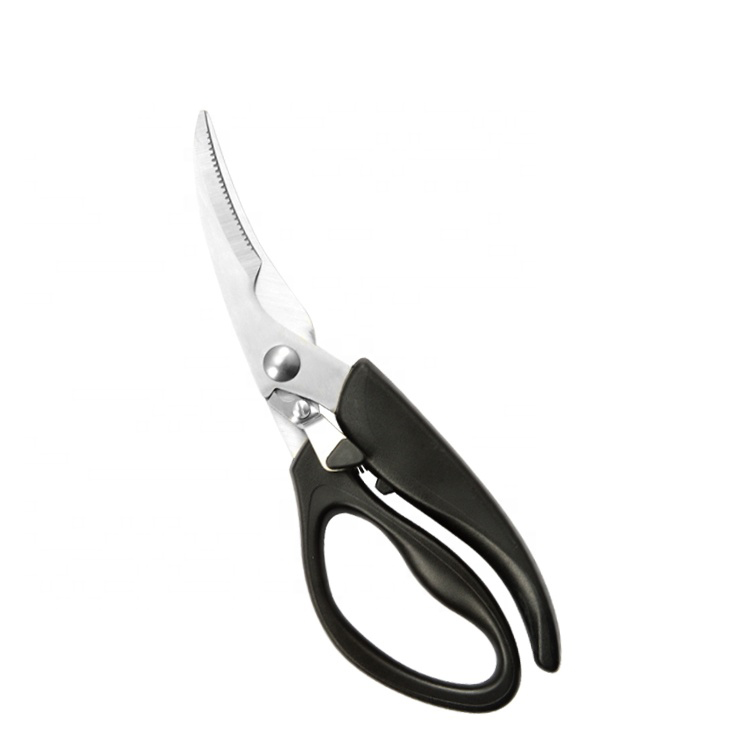
OEM Scissors Manufacturer: Precision Tools for Your Kitchen
For kitchenware brands, importers, and wholesale buyers, choosing an OEM scissors manufacturer is not just about finding a cutting tool at a target cost. Kitchen scissors need to feel stable in the hand, cut consistently, store safely, and match the expectations of the market where they will be sold. A product that looks simple on a catalog page can involve many sourcing decisions: blade shape, handle comfort, spring action, locking design, packaging, and quality checks before shipment.
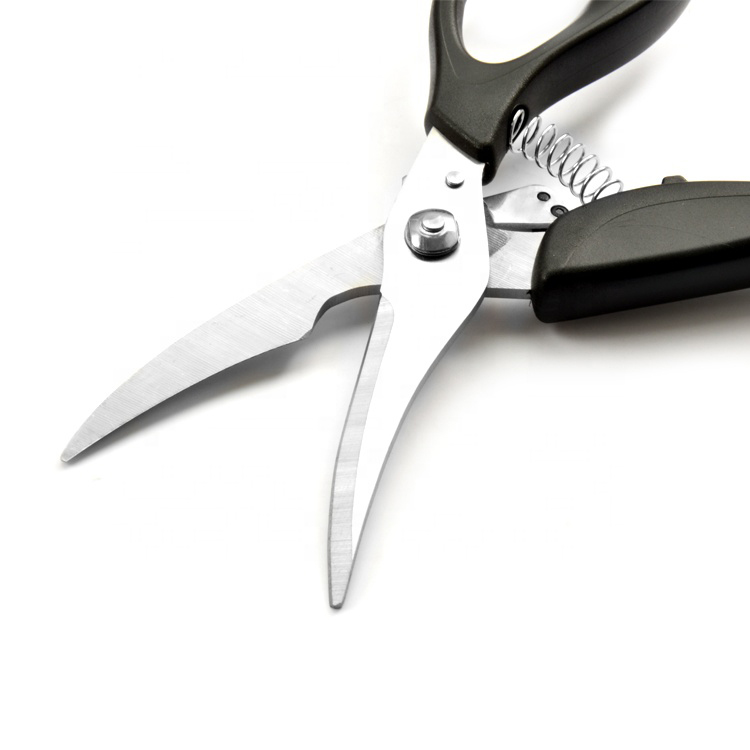
The original product description highlights kitchen scissors made with stainless steel, straight and serrated blades, an ergonomic handle, a built-in spring, and a locking mechanism. Those are useful starting points for a sourcing conversation. The next step is to translate those features into clear buyer requirements, sample evaluation criteria, and supplier questions.
Key Takeaways
- An OEM kitchen scissors project should define blade style, handle feel, spring performance, lock safety, and packaging before sampling.
- Straight and serrated blades can serve different kitchen tasks, so buyers should test both delicate cutting and tougher packaging or poultry preparation.
- Stainless steel is explicitly stated in the source, but buyers should ask the supplier to confirm the exact grade, finish, hardness target, and corrosion-resistance process.
- For wholesale or private-label orders, do not rely only on appearance; request samples, inspection criteria, and written specifications.
Why Kitchen Scissors Matter in a Product Line
Kitchen scissors occupy a practical space between cutlery, prep tools, and household utility items. They are often used for cutting herbs, trimming vegetables, opening packaging, and preparing poultry. Because the tool is handled frequently and sometimes used on slippery food, comfort and control are important. A poor pair may bend, pinch the hand, feel unsafe, or lose cutting performance quickly.
For B2B buyers, this makes kitchen scissors a valuable but detail-sensitive product. They can fit into cookware sets, kitchen gadget assortments, promotional bundles, or private-label retail programs. However, the product should be evaluated like a functional tool, not only as a low-cost accessory.
Blade Design: Straight, Serrated, and Task Fit
The source article describes scissors with both straight and serrated blades. This combination is common in kitchen applications because different edges behave differently. A straight blade can help with clean snips on herbs, vegetables, and thin materials. A serrated edge can add grip when cutting tougher packaging or slippery surfaces.
When discussing blade design with an OEM scissors manufacturer, buyers should ask for clear drawings or photos showing blade length, edge type, tip shape, blade thickness, and pivot structure. If the scissors are positioned as poultry shears, sample testing should include realistic poultry preparation tasks. If the product is positioned for general kitchen use, testing should include herbs, plastic packaging, paperboard, and soft food materials.
Handle Comfort, Spring Action, and Locking Safety
The original article notes an ergonomic handle, a built-in spring, and an easy-to-use locking mechanism. These details influence user experience more than many buyers expect. A spring can reduce repeated hand effort, but it should open smoothly without feeling loose or overly strong. A lock can make storage safer, but it should not accidentally release inside a drawer.
Buyers should test handle comfort with different hand sizes and grip positions. Look for pressure points, sharp seams, slippery surfaces, and whether the handle supports controlled cutting. If the product will be sold to restaurants, foodservice distributors, or serious home cooks, comfort during repeated use is especially important.
OEM Sourcing Checklist for Kitchen Scissors
| Evaluation Area | What to Check | Questions to Ask the Supplier |
|---|---|---|
| Blade material | Stainless steel is stated, but details are not provided | What stainless steel grade, hardness target, and finish are used? |
| Blade edges | Straight and serrated cutting performance | Can samples be tested on herbs, packaging, vegetables, and poultry tasks? |
| Handle design | Grip comfort, stability, and seam quality | Are alternative handle colors, shapes, or materials available for OEM projects? |
| Spring mechanism | Smooth opening and repeated-use feel | How is spring durability checked during production inspection? |
| Locking mechanism | Ease of use and secure storage | What is the lock design, and how is accidental opening prevented? |
| Packaging | Retail display, e-commerce protection, and labeling | Can packaging artwork, barcode placement, and inner carton requirements be customized? |
| Quality control | Consistency across bulk production | What inspection points are used before shipment, and can a buyer provide an AQL plan? |
Private Label and OEM Customization Points
For a private-label kitchen scissors program, customization may involve branding, handle color, packaging, instruction inserts, and product bundles. Some buyers may also request changes to the blade profile or lock style, but those changes should be confirmed with engineering samples before bulk ordering. Even small design adjustments can affect balance, cutting feel, and assembly stability.
Commercial details such as minimum order quantity, tooling cost, sample lead time, production lead time, and carton configuration should be requested directly from the supplier. The source text does not provide those figures, so they should not be assumed. Buyers should also ask whether logo placement is printed, etched, molded, or applied through another method, and how that method performs after normal cleaning and handling.
Quality Control Before Bulk Shipment
A reliable OEM scissors manufacturer should be able to support a clear inspection process. Buyers can create a checklist covering visual finish, blade alignment, cutting performance, spring response, lock function, handle defects, packaging accuracy, and carton labeling. For scissors intended for food preparation, buyers should also ask what documentation is available for materials and whether any market-specific requirements apply to the destination country.
Sample approval is not enough by itself. Bulk production should match the approved sample in appearance and function. If the order is large or the sales channel has strict standards, third-party inspection may be worth considering. The inspection should use measurable criteria where possible, rather than vague terms such as good quality or sharp enough.
How to Compare Potential Suppliers
When comparing suppliers, avoid judging only by unit price. Lower pricing may be attractive, but kitchen scissors with poor alignment, weak locking, or uncomfortable handles can lead to returns and negative reviews. Ask each supplier for the same information so comparisons are fair: product drawings, material details, sample policy, packaging options, inspection process, and customization limits.
- Request product specifications and confirm what is standard versus customizable.
- Order samples and test them using the intended kitchen tasks.
- Review packaging strength for retail shelves or e-commerce shipping.
- Clarify branding options, commercial terms, and production timeline.
- Define final inspection standards before confirming a bulk order.
Practical FAQ
What should buyers ask an OEM scissors manufacturer first?
Start with blade material details, edge design, available customization, sample process, packaging options, and quality-control steps. These answers show whether the supplier can support a structured B2B project.
Are straight and serrated blades useful for kitchen scissors?
Yes. The source describes both blade types. Straight blades can support clean snipping, while serrated blades can help grip tougher or slippery materials. Actual performance should be confirmed through sample testing.
Can these scissors be positioned as poultry shears?
The source refers to high-quality poultry shears and mentions cutting through poultry and small bones. Buyers should still test samples against their intended use and ask the supplier to define recommended usage limits.
What product details should not be assumed?
Do not assume stainless steel grade, MOQ, certifications, capacity, compliance status, or test results unless the supplier provides written confirmation. These details should be requested during sourcing.
How can buyers reduce risk before ordering?
Approve physical samples, document specifications, confirm packaging artwork, set inspection criteria, and ask how the supplier handles defects or production differences before shipment.
Final Sourcing Guidance
An OEM kitchen scissors project works best when buyers treat the product as a functional cutting tool with clear performance expectations. The stainless steel construction, straight and serrated blades, ergonomic handle, spring, and lock described in the source are all relevant selling points, but they should be verified through samples and written specifications. By asking detailed questions early, brands and wholesalers can build a more dependable product brief and select a supplier that fits their market, packaging needs, and quality expectations.
