




OEM Scissors Manufacturer: Professional Kitchen Shears
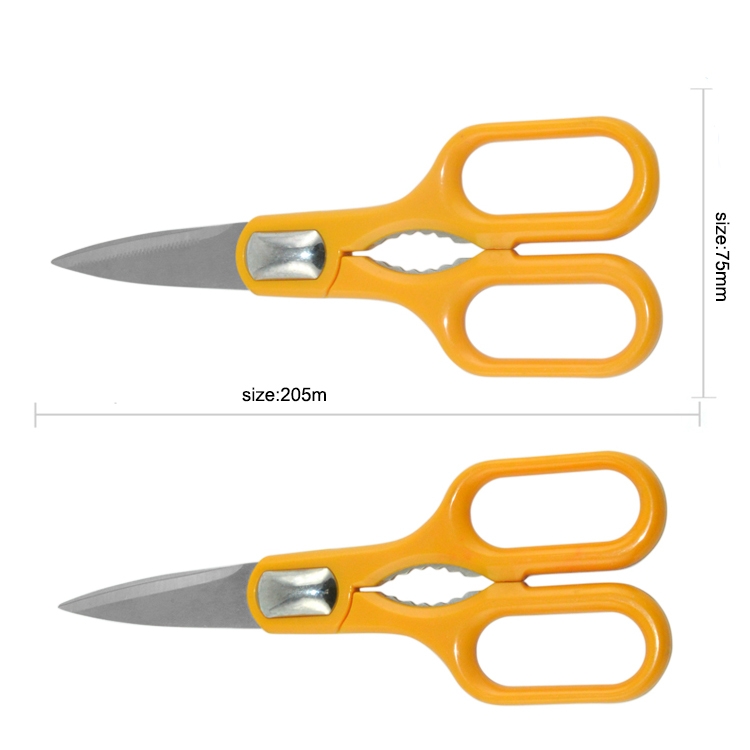
Choosing an OEM scissors manufacturer is not only about finding a factory that can make a sharp cutting tool. For kitchen shears, buyers also need to evaluate comfort, food-preparation suitability, packaging options, quality control, and whether the supplier can support consistent repeat orders. The original Bonet Houseware article introduced a vibrant yellow Multi-Function Kitchen Shears product with stainless steel blades, large looped plastic handles, a precision pivot, and a serrated section between the handles for extra utility. This rewritten guide expands that topic into practical sourcing advice for importers, wholesalers, brand owners, and kitchenware distributors.
Key Takeaways
- Kitchen shears should be assessed as food-preparation tools, not only as general scissors.
- Ask suppliers to confirm blade material, handle material, packaging, inspection process, and customization limits in writing.
- For OEM projects, samples should be tested for cutting performance, grip comfort, pivot stability, and cleaning convenience.
- A clear specification sheet helps prevent misunderstandings before production begins.
What Buyers Should Expect from an OEM Scissors Manufacturer
An OEM scissors manufacturer should be able to translate a buyer's product brief into a practical, repeatable item. For kitchen shears, that usually includes blade shape, handle design, color, packaging, logo placement, and carton requirements. If the buyer already has a target retail channel, such as supermarkets, online marketplaces, hospitality suppliers, or promotional programs, the supplier should understand how the product will be used and displayed.
When evaluating a potential supplier, avoid relying only on catalogue photos. Ask whether the factory can provide current product samples, packaging examples, and a written quotation that separates tooling, decoration, packaging, and freight-related assumptions where applicable. If commercial details such as MOQ, lead time, testing documents, or certifications are important to your market, request them directly instead of assuming they are available.
Product Features to Review in Professional Kitchen Shears
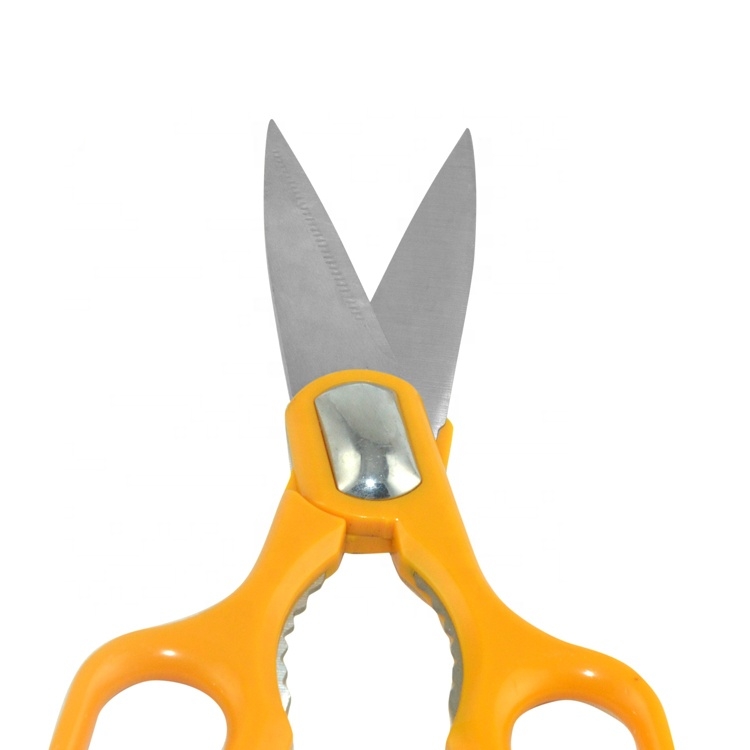
The kitchen shears described in the source article are presented as a multi-function design in a bright yellow color. The article states that the shears use stainless steel blades, large looped plastic handles, a precision-engineered pivot, and a serrated section between the handles for tasks such as cracking nuts or opening bottle caps. These are useful starting points for product evaluation, but buyers should still confirm the exact specification before ordering.
For B2B sourcing, the most important product details are those that affect daily use. Blade sharpness matters, but so does the stability of the pivot after repeated opening and closing. Handle size matters because kitchen shears may be used by different staff or household users. The serrated section can add utility, but it should not create uncomfortable pressure points during normal cutting. If the product is intended for poultry, herbs, vegetables, packaging, or general kitchen prep, test the sample on those actual tasks.
Supplier Comparison Checklist
A comparison table helps buyers evaluate multiple factories or trading suppliers in a structured way. The goal is not to select the cheapest offer automatically, but to understand which supplier can support your quality, packaging, and delivery expectations.
| Evaluation Item | What to Check | Questions to Ask |
|---|---|---|
| Product specification | Blade material, handle material, size, color, pivot, added functions | Can you provide a full specification sheet for this kitchen shears model? |
| Sample quality | Sharpness, handle comfort, alignment, surface finish, opening and closing feel | Are pre-production samples available before bulk production? |
| OEM support | Logo, color, packaging, barcode, instruction sheet, carton marks | Which customization options are standard, and which require extra tooling? |
| Quality control | Incoming material checks, in-process checks, final inspection | What inspection steps are used before shipment? |
| Compliance documents | Market-specific documents requested by the buyer | Which test reports or declarations can you provide for our destination market? |
| Commercial terms | MOQ, lead time, payment terms, sample cost, packaging cost | Can you confirm all order terms in a proforma invoice or quotation? |
How to Assess Blade, Handle, and Pivot Quality
For kitchen shears, blade quality is often the first concern. The source article refers to stainless steel blades and describes them as durable and resistant to rust. Buyers should still ask for the exact material grade and any available material information if that matters for the target market. During sample review, test whether the blades cut cleanly near the tip, in the middle, and close to the pivot. Uneven cutting can indicate poor alignment or inconsistent sharpening.
The handles deserve equal attention. The original article describes large, looped plastic handles and mentions BPA-free plastic. If the product will be marketed with any material safety statement, request supporting documentation from the supplier. Comfort can be evaluated by using the shears repeatedly for several minutes, not just by holding them once. Look for sharp molding edges, slippery surfaces, or handle openings that are too small for some users.
The pivot is another critical point. A smooth pivot should open and close without wobbling, grinding, or feeling too loose. Buyers should ask whether the pivot tension can be adjusted during production and how the supplier checks consistency across a batch.
OEM Customization: What to Clarify Before Ordering
OEM projects often create problems when customization details are discussed casually. Before confirming an order, create a written checklist covering the exact product model, color, logo method, packaging design, inner box or blister requirements, carton quantity, labeling, and shipping marks. For a yellow kitchen shears product, even color should be defined carefully because a photo on a screen may not match a physical production color.
- Confirm whether the selected kitchen shears model is a stock design or requires tooling changes.
- Request a physical sample in the intended color and packaging where possible.
- Approve artwork proofs before production starts.
- Define acceptable tolerances for appearance, assembly, and packaging defects.
- Keep a signed or clearly approved reference sample for comparison.
If your sales channel requires retail-ready packaging, ask whether the supplier can support hang holes, barcode placement, multilingual text, care instructions, or warning labels. Do not assume these details are included in a basic quotation.
Quality Control and Use Testing for Kitchen Shears
A good sourcing process includes practical use testing. Buyers can create a simple internal test plan for samples before committing to bulk orders. Cut common kitchen items such as herbs, vegetable stems, food packaging, parchment paper, and poultry skin if that matches the intended product claim. If the shears include a serrated grip area between the handles, test it only for the tasks the supplier says it is designed to perform.
Cleaning is also important. Kitchen shears come into contact with food, oils, and moisture. Ask the supplier for recommended care instructions, including whether the product is intended for hand washing or another cleaning method. Do not add dishwasher-safe claims, food-contact claims, or performance guarantees to your packaging unless the supplier can provide suitable support for your market requirements.
Practical FAQ for Buyers
What information should I send to an OEM scissors manufacturer?
Send your target product type, expected use, quantity estimate, destination market, packaging preference, logo requirements, and any compliance documents requested by your customer or market. Clear information helps the supplier quote accurately.
Can I customize the color and packaging of kitchen shears?
Many OEM suppliers offer customization, but options vary by model and order quantity. Ask which colors, logo methods, and packaging formats are available for the specific kitchen shears you are considering.
How should I compare two kitchen shears samples?
Compare blade alignment, cutting consistency, grip comfort, pivot smoothness, finish quality, and packaging strength. Use the same test materials for each sample so the comparison is fair.
Should I ask for certifications or test reports?
Yes, if your market, retailer, or importer requires them. Ask the supplier which documents are available for the exact product and material, and verify whether they are current and relevant to your destination market.
What is the biggest mistake in sourcing OEM kitchen shears?
The biggest mistake is approving production based only on price and photos. Always confirm specifications, review samples, approve packaging, and agree on inspection criteria before the order moves forward.
Final Sourcing Advice
Professional kitchen shears can be a strong addition to a kitchenware line when the product is comfortable, practical, and consistently made. For OEM buyers, the safest approach is to treat every feature as a specification that must be confirmed: blade material, handle material, pivot construction, added functions, color, packaging, and documentation. A reliable supplier should be willing to answer detailed questions and provide samples or written confirmations where needed. By combining hands-on sample testing with disciplined supplier evaluation, buyers can reduce sourcing risk and select kitchen shears that fit their market instead of relying on assumptions.
