




OEM Scissors Manufacturer: Sourcing Better Kitchen Tools
For a cookware brand, importer, promotional buyer, or private-label retailer, choosing an OEM scissors manufacturer is not simply about finding a low unit price. Kitchen scissors are handled frequently, exposed to moisture, used on varied foods and packaging, and judged quickly by end users. A weak hinge, uncomfortable handle, poor edge retention, or unclear packaging claim can turn a simple product into a complaint driver.
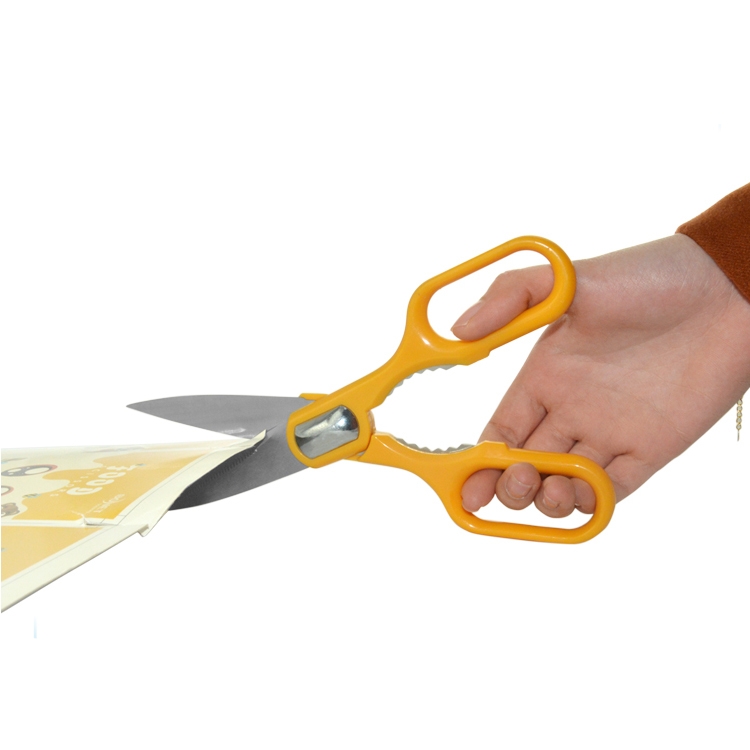
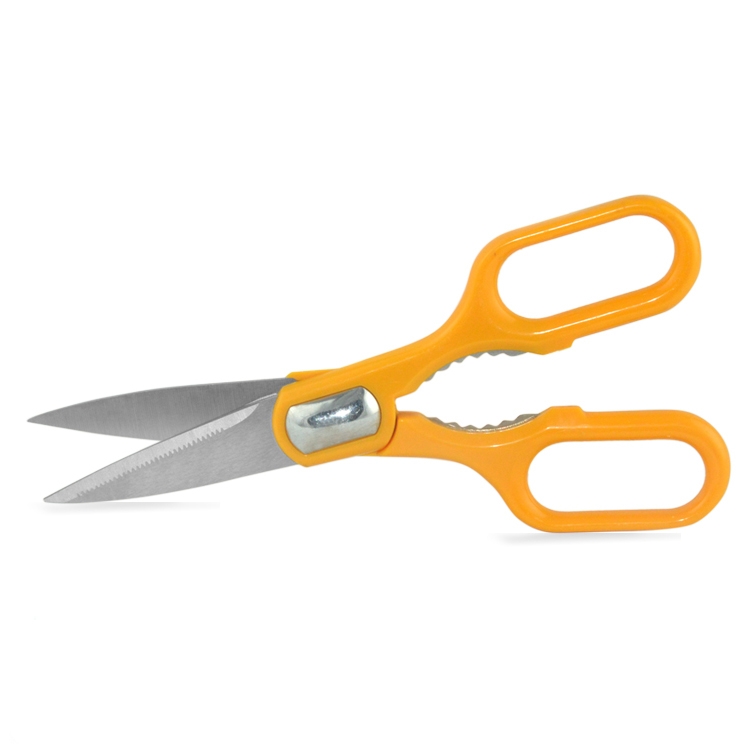
The original product concept discussed here is a pair of multifunctional professional kitchen scissors with stainless steel blades, a yellow soft-grip handle, a built-in bottle opener, and serrated gripping edges between the handles for jar lids. Those are useful starting points, but B2B buyers still need to verify construction, consistency, customization options, and quality control before placing an OEM order.
Key Takeaways
- Start with the real use case: food preparation, packaging, poultry, herbs, or general kitchen tasks.
- Ask the supplier to confirm blade material, hardness, handle material, finish, and corrosion-resistance testing rather than assuming specifications.
- Evaluate samples for cutting performance, hinge stability, grip comfort, cleaning ease, and packaging accuracy.
- For OEM projects, clarify logo method, color matching, packaging artwork, inspection standards, and replacement procedures before production.
- Choose a manufacturing partner based on communication, process control, and documentation, not price alone.
What Buyers Should Expect From Professional Kitchen Scissors
Professional kitchen scissors need to do more than cut paper in a showroom. A practical pair should cut food packaging cleanly, handle meat or herbs without slipping, and remain comfortable during repeated use. The source article notes stainless steel blades, which are common for kitchen tools because they help resist everyday moisture and food contact. Buyers should still ask the factory to identify the exact steel specification and provide supporting information if the material grade is used in marketing.
The yellow soft-grip handle is also worth evaluating carefully. Color can support brand recognition or retail shelf visibility, while a softer grip can improve comfort. However, buyers should confirm the handle material, heat tolerance if relevant, odor control, colorfastness, and whether the grip is over-molded or assembled as a separate component.
Useful Multifunction Features to Verify
Multifunction kitchen scissors can add genuine value when the extra features are sturdy and intuitive. The product described in the original article includes a built-in bottle opener and serrated edges between the handles for gripping jar lids. These features can be attractive for retail and promotional channels, but they should be tested as functional parts, not treated as decorative additions.
During sample review, check whether the bottle opener engages securely without bending the handle area. For the serrated jar-grip section, test several lid sizes and confirm that the teeth provide grip without feeling sharp or unsafe during normal hand placement. If the scissors are marketed for meats, packaging, herbs, or other tasks, request realistic cutting tests that match the claim.
OEM Sourcing Checklist for Scissors Buyers
A structured checklist helps buyers compare suppliers on the same basis. Before discussing mass production, ask each potential factory or trading partner the same technical and commercial questions.
| Area to Check | Questions to Ask the Supplier | Why It Matters |
|---|---|---|
| Blade material | What stainless steel is used, and can it be documented? | Prevents vague material claims and supports accurate product listings. |
| Cutting performance | What internal cutting tests are performed on samples and production goods? | Helps confirm the scissors work for the intended kitchen tasks. |
| Handle design | What material is used for the soft grip, and can the color be matched? | Affects comfort, appearance, durability, and branding. |
| Hinge or pivot | How is looseness, alignment, and opening smoothness controlled? | The pivot strongly affects cutting feel and long-term usability. |
| OEM options | Which logo, color, packaging, and accessory options are available? | Defines how far the product can be adapted for a private label. |
| Inspection | What acceptance criteria apply for defects, sharpness, finish, and packaging? | Reduces disputes after production is completed. |
How to Evaluate a Chinese Scissors Factory
Many buyers search for a Chinese scissors factory because China has a broad kitchenware supply chain and many OEM-capable suppliers. The key is to distinguish between a factory that understands scissors production and a general supplier that only resells catalog items. Both can be useful, but they require different levels of buyer control.
Ask whether blade forming, sharpening, handle molding, assembly, and packing are done in-house or subcontracted. In-house production may offer better process visibility, while subcontracted steps can still work if they are controlled and documented. Request sample timelines, production lead-time estimates, and the process for pre-production samples. If your market requires specific labeling, safety, or food-contact documentation, ask what the supplier can provide and what must be arranged through third-party testing.
Customization: Logo, Color, Packaging and Claims
OEM scissors projects often begin with visible customization: logo placement, handle color, retail card design, barcode labels, or instruction inserts. These details matter, but they should not create unsupported claims. For example, do not print a specific steel grade, dishwasher-safe claim, certification mark, or performance promise unless the supplier can substantiate it and it fits the rules of your target market.
For the yellow handle shown in the original concept, buyers may ask whether the color can be kept as-is, adjusted to a brand color, or produced in multiple colorways. Before approving mass production, review a physical color sample under normal lighting, not only a digital rendering. Packaging should show the correct product image, feature list, country-of-origin statement where required, and any warnings or care instructions appropriate for the destination market.
Sample Testing Before a Wholesale Order
Sample testing does not need to be complicated, but it should be consistent. Compare several samples from the same supplier rather than judging one perfect piece. Open and close each pair repeatedly, check for blade rub, inspect the tip alignment, and cut different materials that reflect the intended use. For kitchen scissors, common trial materials may include food packaging, herbs, thin cardboard, and raw or cooked food items if relevant to your product claim.
Also evaluate cleaning. Kitchen tools encounter moisture, oil, and food residue, so buyers should ask whether the scissors are detachable for cleaning or fixed, how users should wash them, and whether there are areas where residue may collect. If the supplier cannot provide care guidance, the buyer should develop conservative instructions and validate them before printing packaging.
Questions to Ask Before Confirming the Manufacturer
- What exact blade and handle materials are used?
- Which product features are standard and which require custom tooling?
- What logo methods are available, and how durable are they in normal use?
- Can the supplier provide a signed pre-production sample for approval?
- What inspections are performed before packing and before shipment?
- How are defective goods, mixed packaging, or color differences handled?
- Which documents can be provided for your import and retail requirements?
Practical FAQ
What makes an OEM scissors manufacturer different from a wholesaler?
An OEM manufacturer can usually adapt the product to a buyer's requirements, such as logo, handle color, packaging, or certain construction details. A wholesaler may mainly offer existing stock or catalog designs with limited changes.
Can I claim the scissors are made from a specific stainless steel grade?
Only if the supplier confirms the grade and you have suitable documentation. The original product description mentions stainless steel blades, but buyers should not add a specific grade unless it is verified.
Are multifunction kitchen scissors better for retail?
They can be, especially when features such as a bottle opener or jar-grip teeth are useful and easy to understand. However, every added function should be tested for strength, safety, and user comfort.
What should I check in the first sample?
Focus on cutting performance, blade alignment, pivot smoothness, handle comfort, finish quality, feature usability, and whether the sample matches the requested packaging and branding direction.
How can buyers reduce sourcing risk?
Use clear specifications, approve a physical pre-production sample, define inspection criteria, avoid unsupported claims, and confirm how the supplier handles quality issues before placing a large order.
Final Sourcing Advice
A good OEM kitchen scissors project starts with a useful product concept and becomes successful through careful verification. Stainless steel blades, a comfortable yellow soft-grip handle, a bottle opener, and jar-gripping serrations can all support a strong retail item when they are well made and accurately described. For B2B buyers, the best supplier is not only the one that can produce the shape, but the one that can answer technical questions, support consistent quality, and help you bring a reliable kitchen tool to market without unsupported claims.
