




OEM Scissors: Practical Sourcing Guide for Dual-Tone Precision Scissors
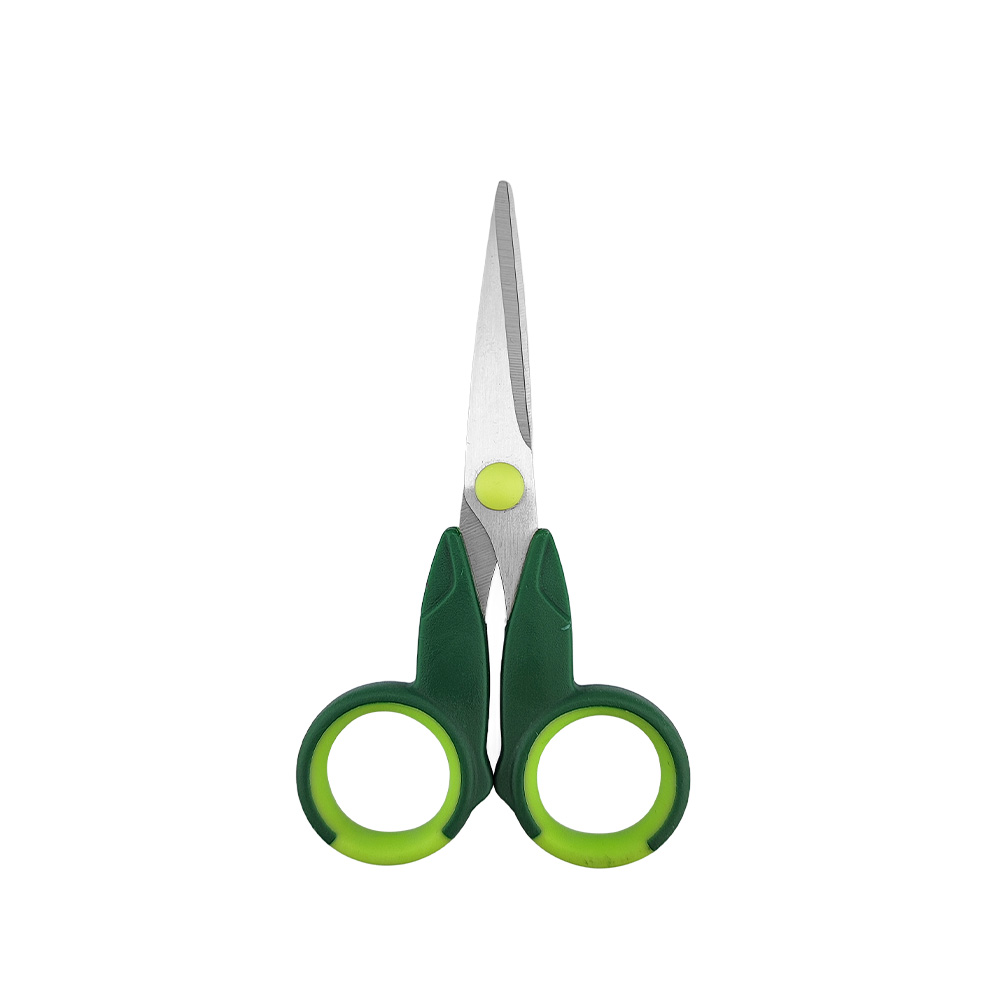
For retailers, distributors, and private-label buyers, scissors are a deceptively simple product category. A pair may look attractive in a catalog, but long-term customer satisfaction depends on cutting feel, blade alignment, handle comfort, packaging quality, and consistency across production batches. The Dual-Tone Precision Scissors described in the original article combine deep forest green and lime handles, a soft non-slip grip, stainless steel blades, and a secure pivot bolt. Those are useful starting points, but professional sourcing requires a broader evaluation.
This guide rewrites the product story from a buyer’s perspective: what to inspect, what to ask an OEM scissors supplier, and how to compare samples before committing to a wholesale or private-label order.
Key Takeaways
- OEM scissors should be assessed by cutting performance, comfort, alignment, durability, and production consistency, not appearance alone.
- The highlighted model features dual-tone handles, a soft non-slip grip, stainless steel blades, and a secure pivot bolt, according to the original product description.
- Buyers should request samples and ask suppliers clear questions about customization, packaging, quality checks, and order requirements.
- For household, craft, and general-use scissors, ergonomic comfort is especially important because users may cut repeatedly over longer sessions.
Understanding the Product and Intended Use
The original article positions these scissors as suitable for household tasks, gift wrapping, crafting, kitchen-adjacent everyday jobs, and professional-style precision work such as paper design or fabric cutting. That broad application range can be attractive for buyers because it allows one SKU to serve several retail channels. However, it also means the product must perform reliably across different materials.
Before sourcing, define the primary use case. Are the scissors intended for home organization, school and craft aisles, sewing accessories, office supply shelves, or promotional gift sets? The answer affects blade length, handle size, packaging style, labeling, and acceptable price positioning. A general household scissor can be versatile, but a buyer should avoid marketing it for specialized industrial or medical use unless the supplier provides appropriate documentation and the product is designed for that purpose.
Design and Handle Comfort
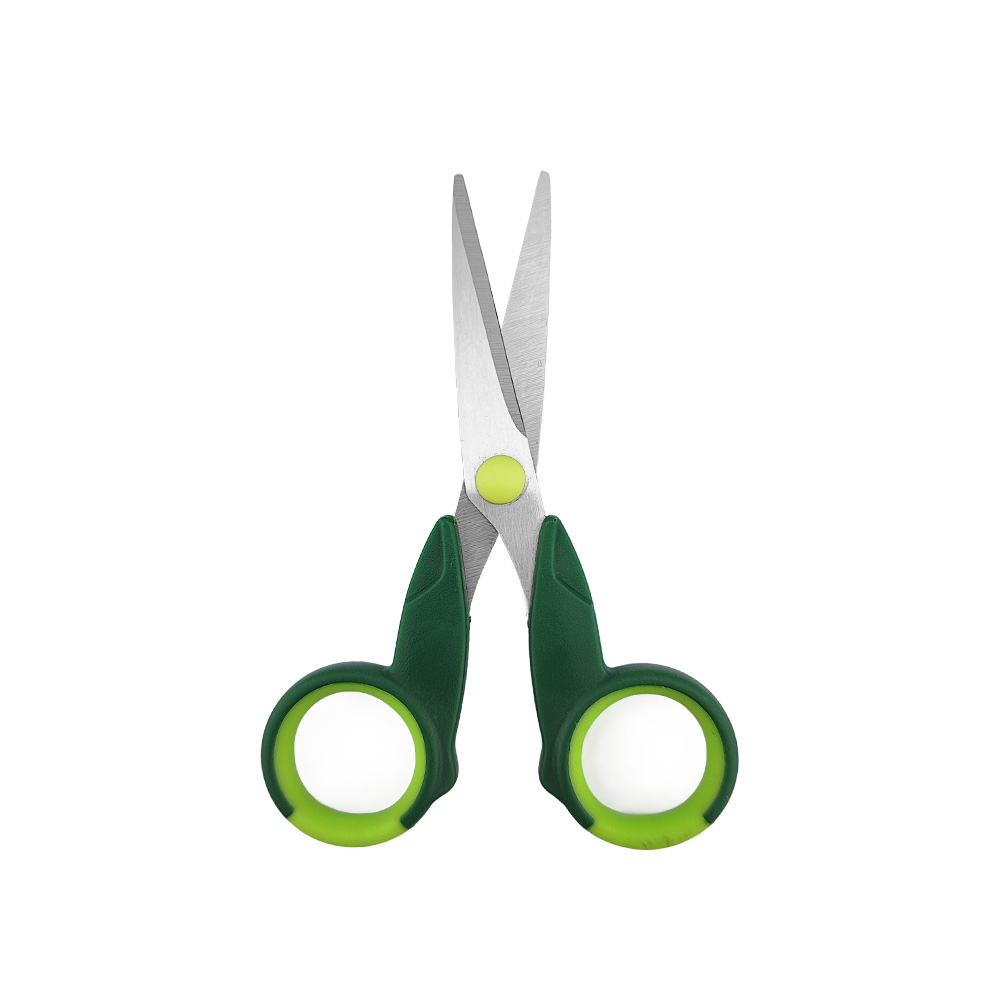
The dual-tone handle is a visible selling point. Deep forest green paired with lime creates shelf contrast and can help a private-label line look more distinctive than plain black or gray scissors. Still, color is only part of the design decision. The original description also mentions an ergonomic shape and a soft, non-slip grip that fits naturally in the hand. For end users, this affects control, comfort, and fatigue during repeated cutting.
When evaluating samples, have several people test the scissors, including users with different hand sizes. Check whether the finger loops have smooth edges, whether the grip material feels secure, and whether the handle remains comfortable after several minutes of cutting. For OEM development, ask whether handle colors can be adjusted to match brand guidelines and whether the grip texture can be modified without changing the tooling or increasing cost significantly.
Blade Performance and Cutting Quality
The original content states that the blades are made from high-quality stainless steel and sharpened for clean, precise cuts. In sourcing terms, buyers should verify how that performance translates in real use. Sample testing should include thin paper, packaging film, cardstock, light fabric, ribbon, and other materials relevant to the target market.
Look for clean starts at the blade tip, smooth closing action, and minimal tearing. A pair of scissors may cut well near the pivot but fail at the tip, which can frustrate crafters and office users. Also inspect blade edges after repeated cutting. If the product is intended for household use, buyers should ask how the supplier controls blade sharpening consistency across production rather than relying only on one polished sample.
Pivot Bolt, Alignment, and Durability
A secure pivot bolt is explicitly noted in the original article, and it is one of the most important details in scissor construction. The pivot controls blade contact, cutting smoothness, and long-term alignment. If it is too loose, the blades may fold material instead of cutting it. If it is too tight, the scissors feel stiff and tiring.
During inspection, open and close the scissors repeatedly and listen for grinding, scraping, or uneven movement. Check whether the blade tips meet correctly and whether there is side-to-side looseness. For wholesale orders, buyers should ask the supplier how pivot tension is checked during quality control and whether random production samples are tested before shipment. Do not assume durability based on appearance; verify it through sample use and supplier documentation.
Comparison Checklist for OEM Scissors Buyers
| Evaluation Area | What to Check | Questions to Ask the Supplier |
|---|---|---|
| Handle comfort | Grip feel, finger loop edges, control during repeated use | Can handle colors or grip texture be customized? |
| Blade performance | Clean cuts on paper, fabric, ribbon, and cardstock | How is blade sharpness checked during production? |
| Pivot quality | Smooth opening, correct tension, stable alignment | Is pivot tension inspected before packing? |
| Visual consistency | Color matching, surface finish, logo placement | What tolerances apply to color and printing? |
| Packaging | Retail display, barcode area, safety protection | What packaging options are available for OEM orders? |
| Commercial terms | Lead time, MOQ, sample process, payment terms | What are the current MOQ and production timelines? |
OEM Customization and Private-Label Questions
OEM scissors sourcing often involves more than selecting an existing model. Buyers may need brand colors, logo printing, customized blister cards, barcode placement, multilingual instructions, or carton labeling. Because these details affect cost and timing, they should be discussed before order confirmation.
- Request pre-production samples that show the exact handle color, logo, and packaging design.
- Ask whether the supplier can provide artwork templates and packaging dielines.
- Confirm whether any changes require new tooling or only color and print adjustments.
- Clarify how defects such as scratches, uneven printing, loose pivots, or color variation are handled.
- Ask what inspection standard the supplier uses and whether third-party inspection is supported if needed.
It is also wise to confirm product claims carefully. If marketing materials mention stainless steel blades, ergonomic design, or non-slip grips, ensure those statements are supported by the supplier’s specifications and the final sample. Avoid adding claims about certifications, food safety, or professional-grade testing unless the supplier provides relevant evidence.
Packaging, Safety, and Retail Presentation
For scissors, packaging must balance visibility and safety. A clear blister pack can show the dual-tone handle and blade shape, while a carded sleeve may reduce material use and simplify shelf display. In either case, the blade tips should be protected during shipping and handling. Retail packaging should also communicate the intended use clearly, such as household, craft, office, or general-purpose scissors.
Buyers should review carton packing, inner box quantity, barcode placement, and label accuracy. Poor packaging can create returns even when the scissors themselves are acceptable. Ask whether the supplier can conduct drop checks or packing reviews, but do not assume specific testing has been completed unless it is confirmed in writing.
Practical FAQ
What makes these OEM scissors different from basic household scissors?
The original product description highlights dual-tone handles, a soft non-slip grip, stainless steel blades, and a secure pivot bolt. For buyers, the value depends on whether these features are consistent across production samples and suitable for the target retail channel.
Can these scissors be used for fabric and craft projects?
The original article mentions use with delicate fabric, cardstock, and paper designs. Buyers should still test samples with the exact materials their customers are likely to cut, because performance can vary by material thickness and blade condition.
What should I ask before placing a wholesale order?
Ask about MOQ, lead time, customization options, packaging choices, sample approval, inspection process, defect handling, and carton specifications. These details should be confirmed before payment and production.
Should I choose an existing model or request a custom design?
An existing model can reduce development time and risk, especially if the handle and blade design already fit your market. A custom design may be better when you need exclusive styling, brand-specific colors, or a unique packaging concept.
How can I avoid quality problems in an OEM scissors order?
Approve a final sample, define acceptable quality criteria, inspect packaging artwork carefully, and consider pre-shipment inspection for larger orders. Pay special attention to blade sharpness, pivot tension, handle finish, and logo placement.
Final Sourcing Advice
Dual-tone precision scissors can be a strong addition to a household, craft, or office product line when the design is supported by dependable cutting performance and careful quality control. The model described in the original article has several marketable features, including a distinctive color combination, soft non-slip grip, stainless steel blades, and secure pivot construction. The next step for any serious OEM buyer is to move from description to verification: request samples, test them under realistic conditions, and ask the supplier specific questions about customization, inspection, packaging, and commercial terms.
