




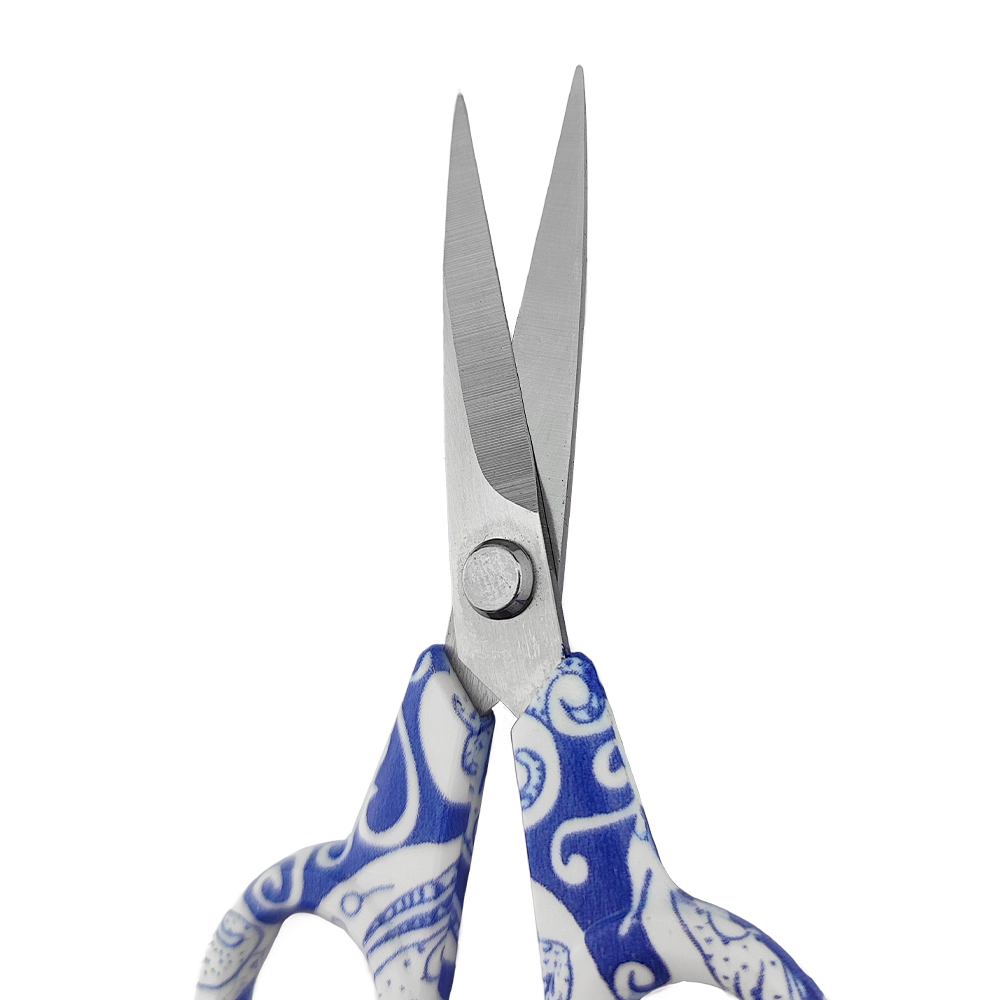
OEM Sewing Scissors: Elegance and Professional Performance
OEM sewing scissors are a small tool with a large impact on cutting accuracy, user comfort, and brand perception. For importers, wholesalers, craft retailers, sewing kit brands, and promotional product buyers, the goal is not simply to find scissors that look attractive. The better question is whether the scissors can deliver clean cuts, consistent handling, practical packaging options, and reliable repeat orders.
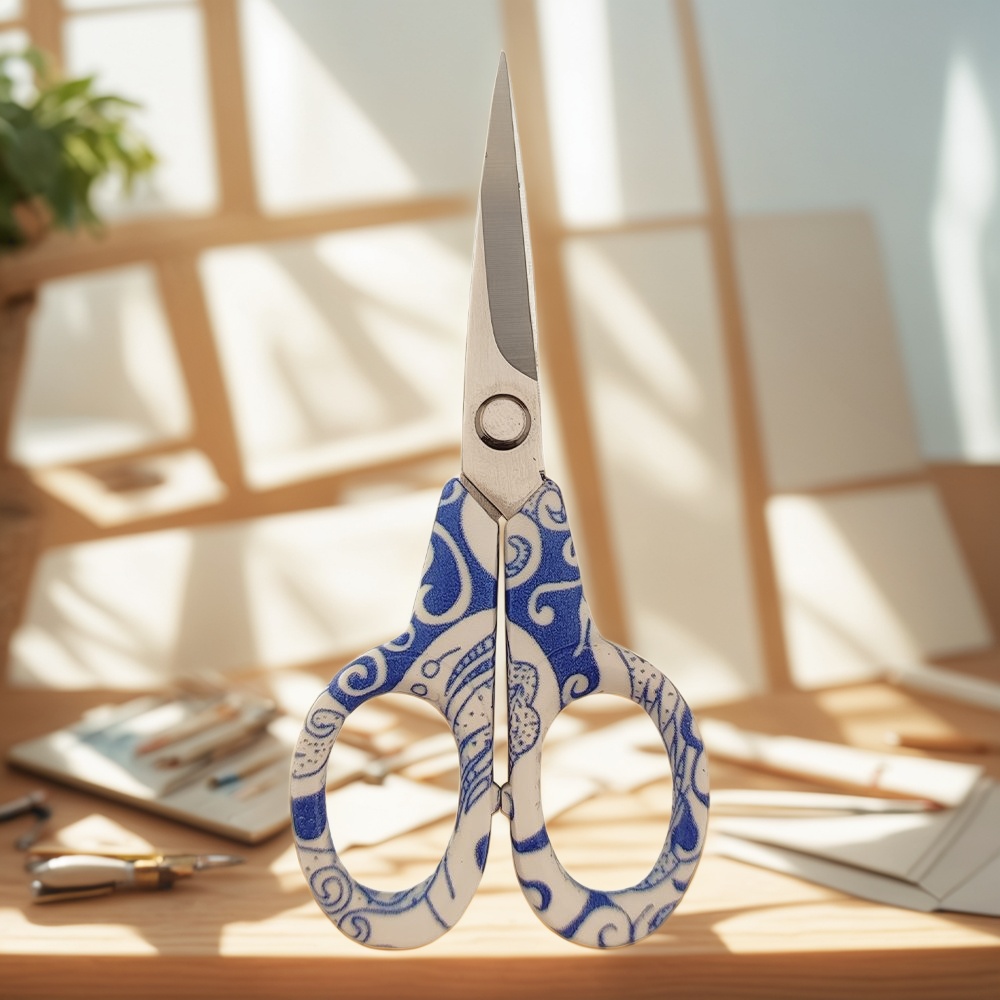
The original product shown here is a pair of blue ornate patterned scissors designed for sewing, tailoring, and craft work. Explicit visible and described features include decorative blue and white handles, a textured grip impression, stainless steel blades, a pointed tip, loop handles, a lightweight but solid feel, and suitability for both left- and right-handed users. These details make the product a useful reference point for buyers comparing OEM sewing scissors for retail or brand programs.
Key Takeaways
- Choose OEM sewing scissors by cutting performance, comfort, finish consistency, and packaging readiness, not appearance alone.
- Decorative handles can add retail appeal, but buyers should confirm grip comfort, print durability, and batch color consistency.
- Stainless steel blades and a pointed tip support clean sewing and craft cuts, but samples should be tested on real target materials.
- Before placing bulk orders, ask suppliers about customization limits, quality inspection steps, packaging options, lead time, and replacement handling.
Why OEM Sewing Scissors Matter for Buyers
Sewing scissors sit in a competitive category. Many products look similar online, yet the user experience can vary sharply. A pair that drags through fabric, loosens at the pivot, feels awkward in the hand, or arrives with inconsistent decoration can create returns and poor reviews. For B2B buyers, this means supplier evaluation should include both product function and production reliability.
OEM sourcing adds another layer. You may need a custom handle color, printed logo, retail card, barcode label, gift box, or assortment packing. A supplier may be able to produce scissors, but that does not automatically mean they can manage your branding, inspection criteria, export cartons, or documentation needs. Treat the product sample as the beginning of the evaluation, not the final proof.
Design and Handle Details to Review
The blue ornate patterned handles are the most distinctive element of this sewing scissor style. Decorative handles can help a product stand out in craft stores, sewing kits, online listings, and gift-focused assortments. However, design should be assessed practically. Check whether the pattern is aligned, whether the colors remain consistent across samples, and whether the surface feels comfortable rather than slippery.
The original description notes that the pattern adds subtle texture that improves grip. This is a useful feature for sewing and craft users, especially when cutting for long periods. Buyers should still request samples and test them with different hand sizes. Loop handles should allow secure control without pinching fingers. If the product is marketed for broad retail use, confirm whether the handle geometry is comfortable for both occasional crafters and frequent sewing users.
Blade Performance and Cutting Control
The described scissors use sharp, durable stainless steel blades and a pointed tip. For sewing applications, this combination is important because users often need clean lines, accurate trimming, and controlled detail cuts. The pointed tip is especially useful for thread trimming, paper pattern work, small fabric adjustments, and other precise tasks.
Before committing to an OEM order, test cutting performance on the materials your customers actually use. For example, a craft retailer may test cotton fabric, felt, ribbon, paper templates, and thread. A tailoring-focused buyer may prioritize woven fabric, lining material, interfacing, and seam trimming. Ask whether the supplier can provide consistent blade sharpness across production, how the pivot tension is controlled, and whether each pair is checked before packing.
OEM Sourcing Checklist
| Evaluation Area | What to Check | Questions to Ask the Supplier |
|---|---|---|
| Blade quality | Sharpness, edge consistency, pointed tip accuracy, smooth opening and closing | How is cutting performance inspected before shipment? |
| Handle design | Pattern clarity, grip comfort, color consistency, left- and right-hand usability | Can you match a custom pattern or color, and what sample approval is required? |
| OEM branding | Logo position, packaging artwork, barcode labels, carton marks | Which customization options are available for this model? |
| Packaging | Retail card, sleeve, box, protective tip cover, export carton strength | What packaging formats can be quoted for wholesale or retail orders? |
| Order control | Sample approval, production lead time, inspection process, defect handling | What is the process if finished goods differ from the approved sample? |
What to Ask a Yangjiang Scissors Factory or Supplier
The original article references Yangjiang as a known scissors manufacturing base. If you are sourcing from a Yangjiang scissors factory or trading supplier, keep the discussion specific and evidence based. Avoid assuming capability from location alone. Ask for current product photos, pre-production samples, packaging examples, and clear answers about customization.
Useful sourcing questions include: What materials are used for the blades and handles? Can the supplier confirm the stainless steel type used in the quoted product? What handle decoration methods are available? Can they supply a golden sample for approval? What are the inspection steps for blade sharpness, pivot tightness, surface finish, and packaging? What is the expected production lead time after artwork approval? Are there additional costs for molds, artwork setup, labels, or custom cartons?
How to Compare Samples Before Ordering
When samples arrive, compare them side by side rather than reviewing one pair in isolation. Open and close each scissor repeatedly to feel pivot smoothness. Cut the same materials with each sample and note whether the blades push fabric, snag thread, or leave uneven edges. Inspect the pointed tip for alignment. Check whether the handle pattern has scratches, blurred printing, or color variation.
- Test cutting on your main customer materials, not only on thin paper.
- Measure consistency between multiple samples from the same supplier.
- Review handle comfort during repeated use for at least several minutes.
- Check packaging protection to reduce scratched handles or damaged tips in transit.
- Record sample results in writing so the approved standard is clear before production.
Positioning for Retail, Wholesale, and Craft Channels
These ornate sewing scissors are best positioned where appearance and everyday function both matter. They may suit craft kits, sewing accessory displays, tailor supply assortments, giftable stationery and craft sets, or private label household tool ranges. The decorative blue and white handles give the item more visual identity than a plain utility scissor, while the stainless steel blades and pointed tip support practical sewing use.
For wholesale buyers, the product page or catalog copy should stay accurate. Avoid claiming industrial cutting ability, special steel grades, certified safety performance, or long service life unless the supplier provides evidence. Strong product copy can still be effective by focusing on confirmed benefits: decorative patterned handles, stainless steel blades, pointed tip control, comfortable loop handles, lightweight handling, and use by left- or right-handed customers.
Practical FAQ
Are these OEM sewing scissors suitable for professional tailoring?
They are described as professional sewing scissors with stainless steel blades and a pointed tip, which are useful for tailoring and detailed cutting. Buyers should still test samples on the exact fabrics and tasks required by their target customers.
Can the handle pattern be customized for private label orders?
That depends on the supplier's OEM capability. Ask about available decoration methods, artwork requirements, sample fees, color matching, approval samples, and any minimum order requirements before confirming a design.
What should buyers check before placing a bulk order?
Check blade sharpness, pivot smoothness, handle comfort, pattern consistency, packaging protection, carton labeling, inspection standards, production lead time, and how defects or shipment issues are handled.
Do stainless steel blades mean the scissors never rust?
No. Stainless steel generally offers corrosion resistance, but care conditions still matter. Keep scissors dry, clean residue after use, and store them away from damp environments.
How should retailers describe this product accurately?
Use confirmed details: blue ornate patterned handles, stainless steel blades, pointed tip, loop handles, comfortable control, and suitability for sewing or craft use. Avoid unsupported claims about certifications, steel grade, or factory capacity.
