




OEM Sewing Scissors: Practical Sourcing Guide for Tailor and Craft Lines
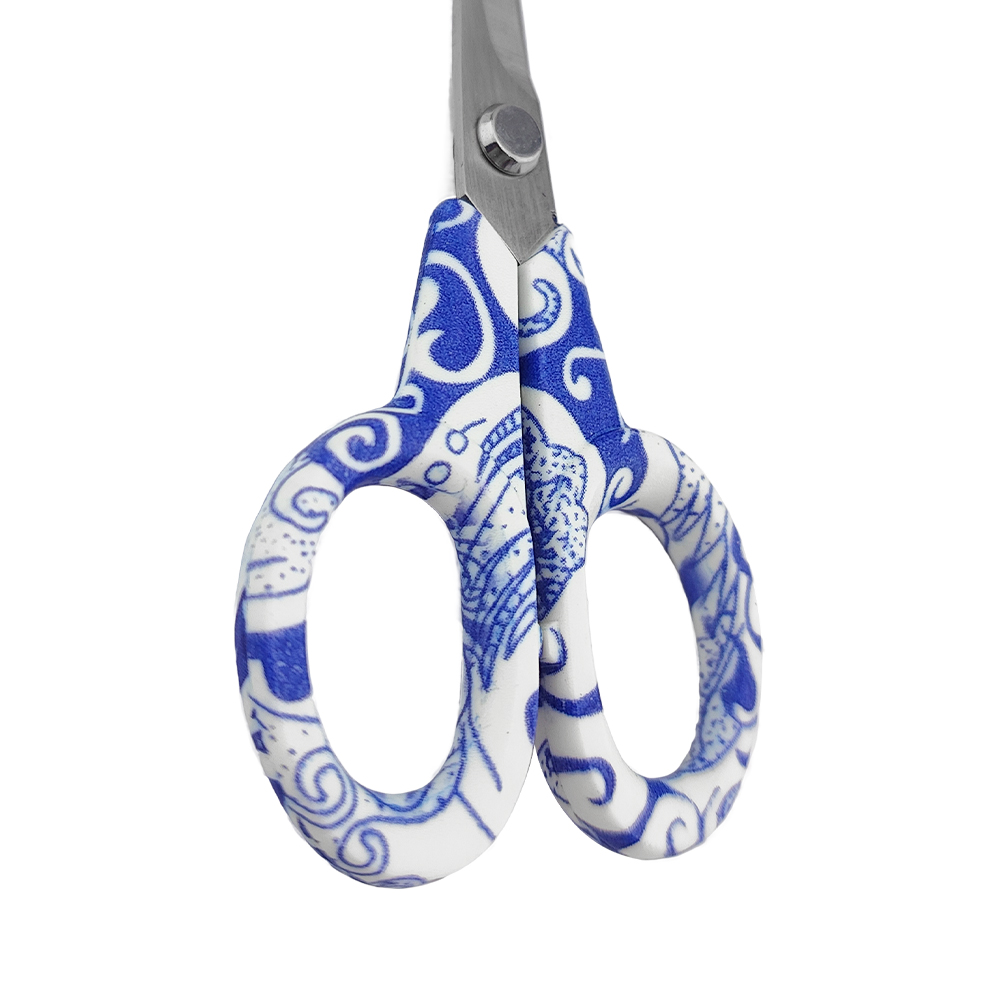
OEM sewing scissors are not chosen only for how they look on a product page. For retailers, sewing kit brands, craft distributors, and promotional buyers, the right pair must support clean cutting, comfortable handling, consistent finishing, and dependable presentation across repeated orders. The original article highlighted an elegant blue-and-white handle design, ergonomic finger loops, stainless steel blades, and use for fabric, thread, and paper patterns. Those are useful starting points, but a professional sourcing decision needs a wider checklist.

This guide explains how buyers can evaluate OEM sewing scissors for private-label, wholesale, and tailor-focused programs without relying on vague claims. It is written for teams comparing suppliers, building a product range, or preparing questions before sampling.
Key Takeaways
- OEM sewing scissors should be assessed by cutting performance, comfort, finish consistency, packaging options, and supplier communication.
- Decorative handles can support brand differentiation, but comfort and control remain essential for repeat use.
- Ask suppliers to confirm blade material, finishing process, logo options, packaging details, inspection methods, MOQ, lead time, and sample policy.
- Do not rely on photos alone; request samples and test them on the materials your customers actually cut.
What Makes OEM Sewing Scissors Different?
OEM sewing scissors are typically made for another brand, retailer, or distributor to sell under its own positioning. That can include a custom handle color, printed logo, retail card, gift box, barcode label, or a mixed assortment. In a private-label project, the buyer is responsible for defining what the product must achieve and how it should be presented to the end customer.
For sewing and tailoring use, scissors need to cut smoothly through common materials without chewing edges or causing hand fatigue. A decorative handle, such as the porcelain-inspired blue and white pattern described in the original article, can make the product more distinctive. However, buyers should verify whether that visual finish is consistent across production, resistant to normal handling, and aligned with the target price point.
Blade Performance: What to Check Before Ordering
The original article described stainless steel blades and clean, precise cuts. When sourcing, buyers should ask the supplier to confirm the actual blade material used and whether there are different material options at different price levels. Avoid assuming that all stainless steel scissors perform the same. Cutting feel depends on blade geometry, edge sharpening, pivot adjustment, blade alignment, and quality control.
Sample testing should include the materials your customers will use most often. For a sewing kit, that may include cotton fabric, polyester thread, felt, ribbon, and paper patterns. For a tailor-focused product, testing should include layered fabric and repeated long cuts. Record whether the scissors pull fabric, leave jagged edges, loosen at the pivot, or feel rough when opening and closing.
Handle Design, Comfort, and User Fit
Handle design is more than decoration. The original article noted ergonomic finger loops designed for long use. For buyers, the practical question is whether the handle shape suits the intended customer. A craft beginner, professional tailor, left-handed user, and gift-box buyer may all value different features.
When reviewing samples, test grip comfort for several hand sizes. Check whether the inner edges of the loops feel smooth, whether the handle coating has sharp seams, and whether the decorative pattern is applied evenly. If the product is intended for prolonged cutting, comfort can be as important as sharpness because strain may lead to returns or poor reviews.
OEM Customization Options to Discuss
Before requesting a formal quote, define the level of customization needed. Some projects only need a stock product with a branded package. Others require a specific handle color, logo placement, retail display, or bundled sewing kit. The more customization required, the more important it is to confirm costs, minimum order quantity, development timeline, and approval samples.
Useful questions for an OEM scissors supplier include:
- Which blade materials and handle materials are available for this model?
- Can the handle pattern, color, or surface finish be customized?
- What logo methods are available, and where can the logo be placed?
- What packaging formats are offered for wholesale, retail, or e-commerce shipment?
- What is the sample process before mass production?
- How are sharpness, alignment, appearance, and packaging checked before shipment?
Comparison Checklist for Buyers
| Evaluation Point | What to Check | Supplier Question |
|---|---|---|
| Cutting quality | Smooth cuts on fabric, thread, and paper patterns | Can samples be tested on buyer-specified materials? |
| Blade details | Material, edge finish, alignment, and pivot movement | What blade material and sharpening process are used? |
| Handle comfort | Finger loop size, smooth edges, grip stability | Are there alternate handle sizes or shapes? |
| Appearance | Pattern consistency, color match, surface defects | How is cosmetic quality controlled during production? |
| Branding | Logo placement, packaging artwork, barcode labels | Which private-label options are available? |
| Order terms | MOQ, lead time, sample fees, carton details | What commercial terms apply to this exact model? |
Wholesale and Retail Positioning
For wholesale buyers, the same scissors can be positioned in different ways depending on packaging and target channel. A decorative-handled model may fit craft stores, sewing gift sets, hobby kits, or boutique stationery assortments. A more utilitarian version may work better for tailor supply distributors or workshop use. The important step is to match the product promise to the real performance of the sample.
If the scissors are sold online, product content should be specific. Instead of relying on broad claims such as “professional grade,” describe the intended uses that were actually verified. For example, if the sample cuts common fabric and paper patterns cleanly, state that. If no formal testing has been completed, do not imply results that have not been confirmed.
Use and Care Guidance for End Customers
Even well-made sewing scissors perform better when used properly. Buyers adding instructions to packaging or product listings can help reduce misuse. Sewing scissors should generally be reserved for fabric and thread rather than heavy cardboard, wire, plastic ties, or adhesive materials. After use, the blades should be wiped dry and stored closed. If the pivot becomes loose or stiff, users should follow the supplier’s guidance for adjustment rather than forcing the tool.
Clear care instructions are especially helpful for private-label products because they support customer satisfaction without making unsupported durability promises. Ask the supplier whether any care notes are recommended for the specific model and material combination being ordered.
Practical FAQ
What should I test first when sampling OEM sewing scissors?
Start with cutting smoothness, blade alignment, comfort, and appearance. Test the scissors on the same fabric, thread, ribbon, or paper pattern materials your customers are likely to use.
Can decorative sewing scissors still be suitable for regular use?
Yes, if the blade performance, pivot movement, and handle comfort are suitable. A decorative handle can support retail appeal, but it should not replace practical testing.
What should buyers ask before placing a wholesale order?
Ask about blade material, handle material, customization options, packaging, MOQ, lead time, sample approval, inspection process, and how defects are handled.
Should I request a pre-production sample?
For private-label or customized orders, a pre-production sample is strongly recommended. It helps confirm logo placement, handle finish, packaging artwork, and cutting feel before mass production.
Are these scissors only for professional tailors?
Not necessarily. Depending on the final specification and testing results, OEM sewing scissors may suit hobby sewing, craft kits, retail gift sets, tailoring counters, or wholesale tool assortments.
