




OEM Sewing Scissors: Precision Crafting Essentials
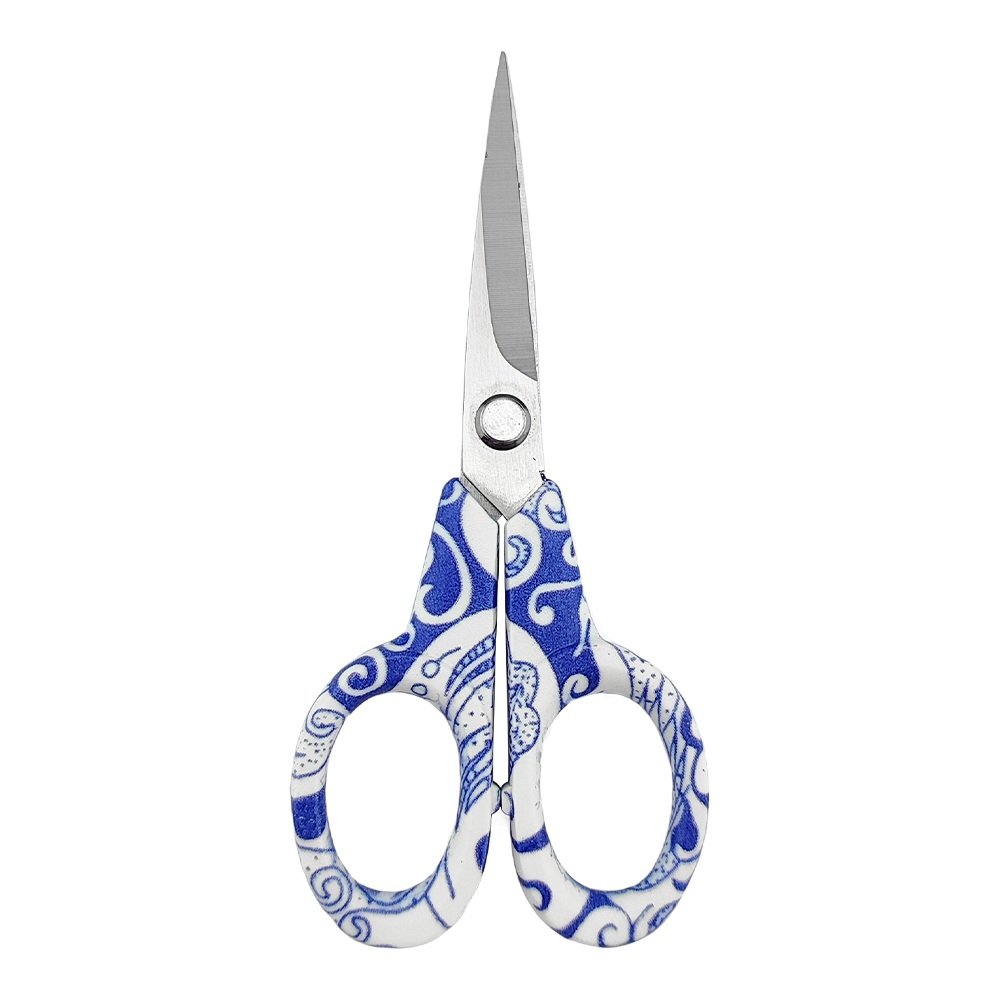
For sewing brands, craft retailers, tailoring suppliers and promotional product buyers, OEM sewing scissors are not only a cutting tool. They are a product that must feel reliable in the hand, cut cleanly across common materials and match the expectations of the target user. The original product described here is a pair of blue and white patterned precision scissors with stainless steel blades and ergonomically shaped handles. That gives buyers a useful starting point: the product has visual character, a craft-focused appearance and a practical role in sewing, tailoring and general creative work.

This rewritten guide focuses on how B2B buyers should evaluate similar OEM sewing scissors before placing wholesale or private-label orders. Rather than judging only by appearance, buyers should confirm cutting performance, comfort, finishing consistency, packaging options and the commercial details that affect repeat purchasing.
Key Takeaways
- OEM sewing scissors should be assessed by cutting consistency, handle comfort, finish quality and suitability for the intended user group.
- The blue and white patterned handle can help differentiate a craft or tailoring product line, but decoration should not replace functional testing.
- Stainless steel blades are explicitly noted in the original description; buyers should still ask the supplier about the exact grade, hardness target and edge retention expectations.
- For wholesale or private-label sourcing, confirm packaging, logo options, sample approval steps, inspection standards and after-sales handling before ordering.
What Makes These OEM Sewing Scissors Relevant for Buyers?
The scissors in the source article are presented as precision crafting scissors for sewing, tailoring, paper cutting and thread trimming. Their main visible feature is the blue and white patterned handle, which gives the product a decorative appearance compared with plain utility scissors. For retailers, this can matter because sewing scissors are often purchased as personal tools, giftable craft accessories or additions to a coordinated sewing kit.
From a sourcing perspective, however, visual appeal should be evaluated alongside practical use. A good OEM sewing scissors project should answer basic questions: Who will use the scissors? Are they intended for fabric cutting, detail trimming, paper crafts or general household sewing? Will they be sold as a single tool, included in a kit or packed under a private label? The clearer the use case, the easier it is to set acceptance criteria for samples and production.
Blade Performance: What to Check Before Ordering
The original article states that the scissors use stainless steel blades and are designed for clean, accurate cuts. Stainless steel is commonly chosen for household and craft scissors because it can offer corrosion resistance and practical maintenance benefits, but buyers should avoid assuming that all stainless steel blades perform the same. The blade geometry, edge finishing, pivot alignment and sharpening consistency all affect the final cutting experience.
When reviewing samples, test more than one material. For sewing and craft channels, buyers may want to cut cotton fabric, thread, felt, thin cardboard and paper. Check whether the scissors cut from the base of the blade to the tip without chewing, slipping or leaving frayed edges. Also inspect the blade tips, because sewing users often need control for small snips and detail work.
Handle Comfort and Decorative Design
The blue and white patterned handle is one of the most distinctive details from the original product description. It gives the scissors a crafted, porcelain-inspired look that may fit sewing boutiques, gift shops and creative hobby assortments. For OEM projects, this type of pattern can be valuable if the buyer wants a product that stands out on a shelf or in online product images.
Comfort still needs to come first. The original article describes the handles as ergonomically shaped, which suggests they are designed to reduce hand strain during longer projects. Buyers should test this with real users where possible. Ask whether the grip opening suits the target market, whether the edges of the handle feel smooth, and whether the product remains comfortable after repeated cutting. A decorative handle that looks good but causes pressure points will generate complaints in craft and tailoring channels.
Comparison Checklist for OEM Evaluation
| Evaluation Area | What to Review | Questions to Ask the Supplier |
|---|---|---|
| Blade material | Stainless steel is stated in the original description, but details matter. | What stainless steel grade is used? What hardness range is targeted? |
| Cutting performance | Test fabric, thread, paper and sample materials relevant to your buyers. | Can pre-production samples be tested before mass production? |
| Handle design | Check comfort, grip size, surface finish and pattern consistency. | Can handle colors or patterns be customized for OEM orders? |
| Finish quality | Look for burrs, uneven coating, loose pivots or inconsistent sharpening. | What inspection steps are used before shipment? |
| Packaging | Consider retail display, e-commerce protection and barcode needs. | What packaging formats and private-label options are available? |
| Commercial terms | Do not assume MOQ, lead time or pricing without confirmation. | What are the MOQ, sample cost, production lead time and payment terms? |
OEM and Wholesale Sourcing Guidance
Because this is an OEM sewing scissors topic, buyers should treat the product as part of a sourcing process rather than a one-time purchase. Start with a written product brief. Include the target selling channel, expected retail positioning, preferred handle appearance, packaging style, logo requirements and acceptable tolerance for cosmetic differences. If the product will be sold under your brand, define the inspection criteria before production begins.
- Request product photos, existing specifications and available packaging options.
- Order samples and test them with the materials your customers are most likely to cut.
- Confirm whether logo printing, label design or handle pattern adjustments are possible.
- Ask for the supplier’s standard quality control process and define your own inspection checklist.
- Confirm MOQ, lead time, carton details, spare parts policy and how defects are handled.
If the supplier is connected with a Yangjiang scissors factory or similar manufacturing base, buyers can ask about production specialization, but should not assume capability from location alone. Yangjiang is well known in the cutting tool industry, yet each supplier should still provide clear answers on materials, finishing, packaging and order management.
Use Cases: Matching Scissors to the Right Market
Professional sewing scissors and tailor scissors are used differently from simple office scissors. Sewing users often expect a smooth cut through fabric and a comfortable grip for repeated use. Craft users may care about appearance, giftability and versatility across fabric, paper and thread. Retailers selling to beginners may prioritize safe packaging and clear product instructions, while tailoring suppliers may focus more on cutting control and durability.
The blue and white patterned precision scissors may be a good fit for sewing kits, craft collections, boutique retail displays and private-label hobby lines. Buyers should confirm the final size, weight and blade length with the supplier, as these details are not provided in the original article. Product listings should describe only verified features to avoid returns and customer dissatisfaction.
Practical Care and Merchandising Notes
Even well-made sewing scissors can perform poorly if customers use them incorrectly. Retailers and brands can reduce complaints by adding simple care guidance to packaging or online listings. For example, customers should keep sewing scissors dry, wipe blades after use, avoid cutting hard wire or unsuitable materials, and store the tool safely to protect the edge and tips. If the scissors are primarily intended for fabric, say so clearly.
For online merchandising, include close-up images of the handle pattern, blade tips, pivot area and packaging. If possible, show the scissors cutting common materials. Avoid vague claims such as “best” or “professional grade” unless supported by your own testing and supplier documentation. Clear, accurate descriptions help buyers understand what the product does well.
FAQ: OEM Sewing Scissors
Are these scissors only for sewing?
The original description mentions sewing, tailoring, paper, thread and delicate fabrics. Buyers should confirm the intended application with the supplier and test samples on the materials their customers will use.
Can the blue and white handle pattern be customized?
The source article identifies the existing patterned handle, but does not state customization options. OEM buyers should ask whether colors, patterns, logos or packaging can be adjusted.
What blade material is used?
The original article states that the blades are stainless steel. Buyers should still ask the supplier for the specific grade, hardness target and maintenance recommendations.
What should be checked before a wholesale order?
Check sample cutting performance, handle comfort, finish consistency, packaging durability, labeling accuracy, MOQ, lead time and the supplier’s defect-handling process.
Are these suitable for private-label retail?
They may be suitable if the supplier can meet your branding, packaging and quality requirements. Confirm all OEM details in writing before approving production.
