




OEM Sewing Scissors: Precision, Design and Practical Sourcing Guidance
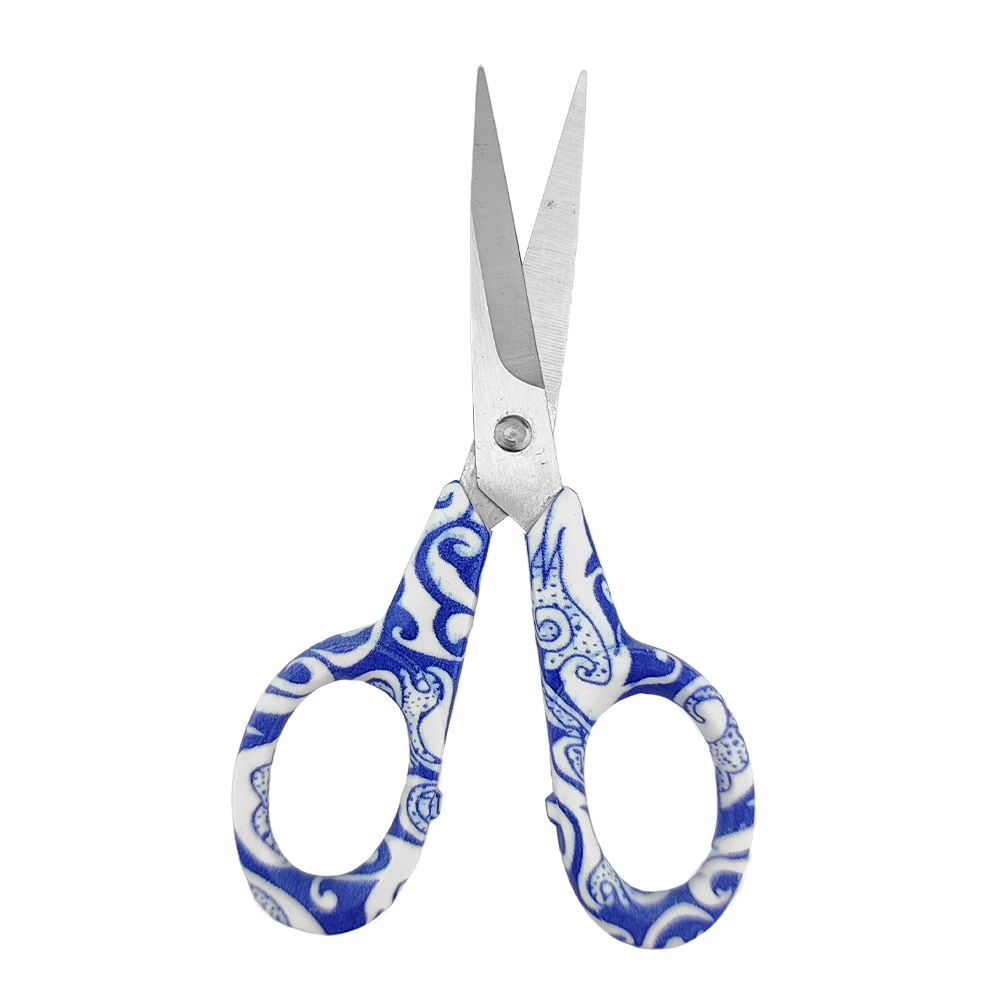
OEM sewing scissors are not selected only for sharpness. For importers, wholesalers, private-label brands and sewing accessory distributors, the right product must also match the target user, packaging plan, branding requirements and quality expectations. The Blue Abstract Scissors shown below are a useful example because they combine a distinctive blue and white handle pattern with the practical purpose of tailor and sewing scissors.

This guide explains how to evaluate a product like this for OEM sourcing without relying on vague claims. Instead of asking whether the scissors are simply “good,” buyers should check the handle comfort, blade material, sample consistency, packaging options and the supplier’s ability to answer technical questions clearly.
Key Takeaways
- Distinctive handle design can help sewing scissors stand out in retail, gift and craft channels.
- The original product description identifies stainless steel blades and an ergonomic handle shape, but buyers should confirm exact specifications with the supplier.
- For OEM orders, request samples, packaging mockups and written confirmation of branding options before bulk production.
- Do not judge tailor scissors only by appearance; cutting feel, blade alignment and comfort during repeated use matter for customer satisfaction.
What Makes These OEM Sewing Scissors Notable?
The most visible feature of the Blue Abstract Scissors is the handle. The blue and white abstract pattern gives the tool a decorative look that may appeal to sewing enthusiasts, craft retailers, gift sets and brands that want something more memorable than a plain handle. For a buyer building a private-label line, this kind of visual identity can be valuable when products are displayed online or in retail packaging.
The original article also describes the handle as ergonomically shaped. That matters because sewing scissors are often used for repeated cutting tasks, including trimming thread, cutting fabric pieces and preparing craft materials. A comfortable grip can reduce the feeling of strain during longer sessions, although every market has different hand-size preferences. For that reason, buyers should not rely on photos alone. A physical sample should be checked by the intended user group or purchasing team.
Blade Material and Cutting Expectations
The source description states that the blades are made from stainless steel. Stainless steel is commonly selected for household and craft cutting tools because it can provide a practical balance of usability, maintenance and appearance. However, the phrase “stainless steel” is broad. OEM buyers should ask the supplier which steel type is used, how the blade is hardened, what edge finish is applied and whether the same material will be used in mass production samples.
For professional sewing scissors, performance should be assessed across the materials your customers actually cut. A tailor may prioritize clean fabric cutting, while a craft user may also cut paper, ribbon or thread. Before confirming an order, prepare a simple sample test plan using your own materials. Check whether the scissors open smoothly, whether the tips meet correctly, and whether the blades cut cleanly from base to tip.
OEM Design Considerations for Private-Label Buyers
OEM sewing scissors are often purchased as part of a larger product program. A buyer may need custom colors, logo placement, retail packaging, barcode labeling or set combinations. The Blue Abstract Scissors already have a strong decorative handle, so the next question is how much customization is practical without affecting cost, lead time or consistency.
Useful questions to ask a supplier include:
- Can the handle pattern, color or finish be adjusted for a private-label order?
- Where can a logo be placed: blade, handle, packaging or insert card?
- Can the supplier provide artwork templates for packaging?
- Will pre-production samples match the final mass-produced goods?
- What inspection steps are used to check blade alignment, handle finish and packing accuracy?
A clear supplier should be able to explain available options and limitations. If a requested feature has not been produced before, ask for a sample rather than assuming it will work in production.
Comparison and Sourcing Checklist
The table below can help buyers compare OEM sewing scissors before placing a bulk order. It is written as a checklist because the most important details often come from supplier confirmation rather than product photos.
| Evaluation Point | What to Check | Questions for the Supplier |
|---|---|---|
| Handle design | Pattern clarity, comfort, grip shape and finish consistency | Can the color or pattern be customized? Will samples match bulk goods? |
| Blade material | Confirmed stainless steel type, edge finish and corrosion-care guidance | What steel specification is used? Is it the same for samples and production? |
| Cutting feel | Smooth opening, clean closing and cutting from base to tip | What inspection method is used for blade alignment? |
| OEM branding | Logo position, packaging artwork, labels and inserts | Can you provide mockups before production? |
| Packaging | Retail display needs, shipping protection and carton labeling | What packaging options are available for wholesale or retail channels? |
| Order terms | MOQ, lead time, sample cost and payment terms | What are the current commercial terms for this model? |
Why Yangjiang Matters in Scissors Sourcing
The original article references a Yangjiang scissors factory. Yangjiang is widely associated with knife and scissors manufacturing, so many international buyers search for suppliers from this region when looking for cutting tools. Even so, location alone should not be treated as proof of quality. A buyer still needs to verify product details, communication quality, sampling accuracy and order follow-through.
When contacting any Yangjiang scissors factory or trading partner, keep the inquiry specific. Provide the intended sales channel, target customer, preferred packaging type and estimated order quantity. If you need OEM sewing scissors for a premium sewing kit, your requirements may differ from a low-cost promotional item. The clearer your brief is, the easier it is for the supplier to recommend a suitable model or explain what can be customized.
Sample Review Tips Before Bulk Production
A sample review should go beyond checking whether the scissors look attractive. The blue and white abstract handle may be the first thing customers notice, but repeat purchases and positive reviews depend on everyday performance. Create a short review form and compare several samples, not just one.
- Check handle edges for rough areas or uncomfortable pressure points.
- Open and close the scissors repeatedly to assess smoothness.
- Cut the same fabric, thread and paper samples with each pair.
- Inspect whether the tips meet accurately.
- Confirm that packaging protects the blades during shipping.
- Compare sample weight and finish if you receive multiple pieces.
If the scissors will be sold as professional sewing scissors, involve someone who regularly cuts fabric. If they are intended for craft or household use, test them in those conditions instead. Product fit should be judged according to the real customer, not only the buyer’s desk review.
Practical FAQ
Are these scissors suitable for OEM or private-label programs?
They can be considered for OEM sourcing because the product has a distinctive handle design and is positioned as sewing or tailor scissors. Buyers should confirm logo options, packaging choices, sample terms and customization limits directly with the supplier.
What blade material is stated in the original product description?
The original description states that the blades are made from stainless steel. Buyers should still ask for the exact steel specification and confirm whether the same material is used in bulk production.
Can the blue abstract handle be customized?
The source article does not confirm customization details. If color, pattern or logo changes are important, ask the supplier for available options, artwork requirements and a pre-production sample.
What should wholesale buyers test before ordering?
Wholesale buyers should test comfort, blade alignment, cutting consistency, packaging strength and finish quality. It is also wise to compare samples from the same batch if possible.
What commercial details should buyers request?
Ask for current MOQ, sample cost, lead time, payment terms, packaging choices, carton information and inspection process. These details should be confirmed in writing before placing an order.
Final Sourcing Advice
The Blue Abstract Scissors are a good example of how OEM sewing scissors can combine practical cutting use with a more decorative appearance. For B2B buyers, the opportunity is not only the visual design but also the ability to build a reliable product program around it. Treat the handle pattern, stainless steel blade description and ergonomic shape as starting points for discussion. Then confirm the details that affect your market: material specification, sample consistency, packaging, branding and supplier communication.
A careful sourcing process helps prevent misunderstandings and supports a better customer experience. Whether you are buying for sewing shops, craft retailers, online stores or private-label tool sets, the best result comes from matching the scissors to the user and verifying every important detail before production.
