




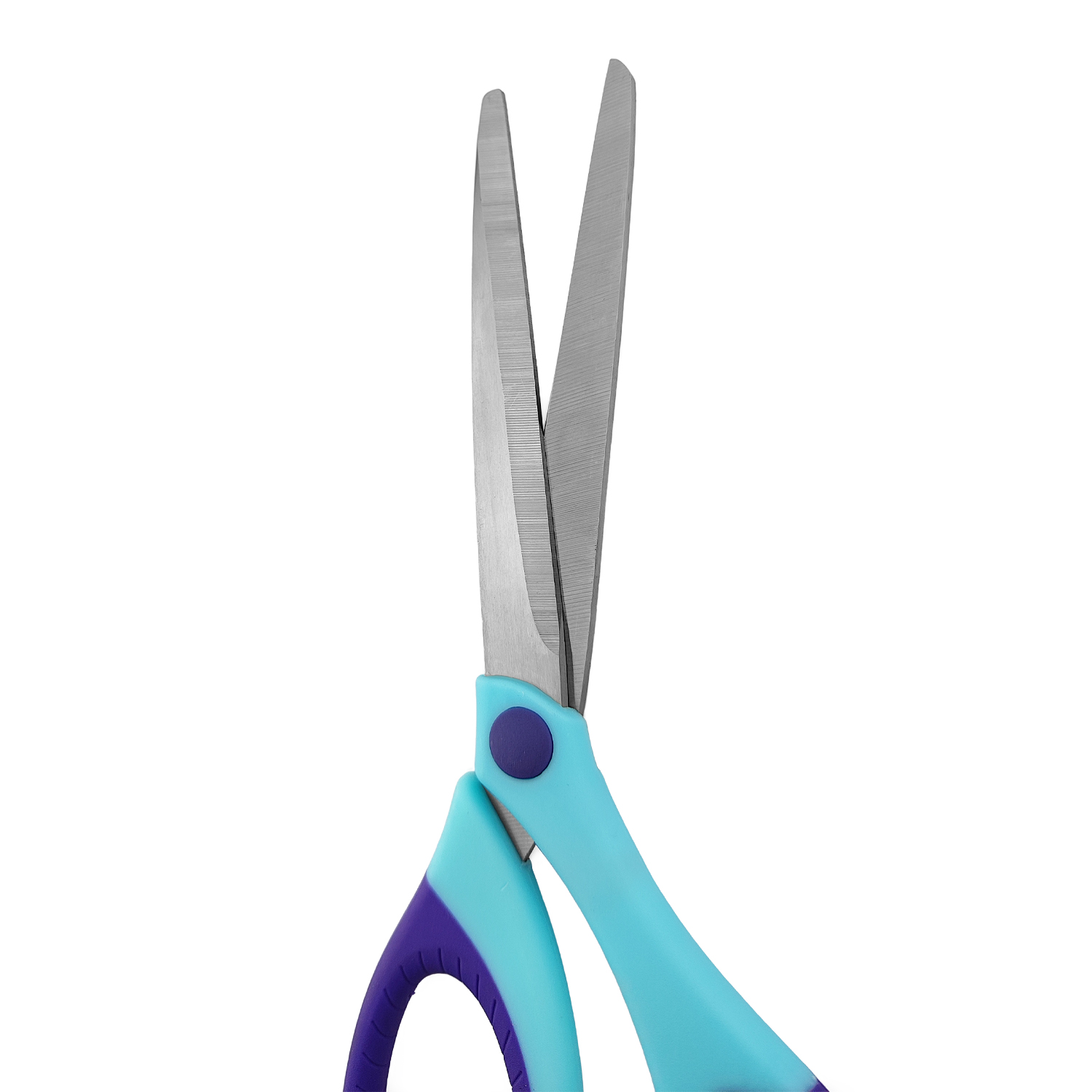
OEM Soft Grip Scissors: Ergonomic Design & Durability
OEM soft grip scissors are a common choice for household, office, school, craft, and light utility cutting programs because they combine familiar blade performance with a more comfortable handle feel. For importers, distributors, retailers, and private label brands, the main question is not simply whether the scissors look good in a catalog. The more important question is whether the design, materials, production consistency, packaging, and supplier communication can support repeat orders and customer satisfaction.
This guide explains how to evaluate OEM soft grip scissors from a sourcing perspective. It preserves the core benefits of soft grip handling and ergonomic design while focusing on the practical checks buyers should make before confirming a wholesale or private label order.
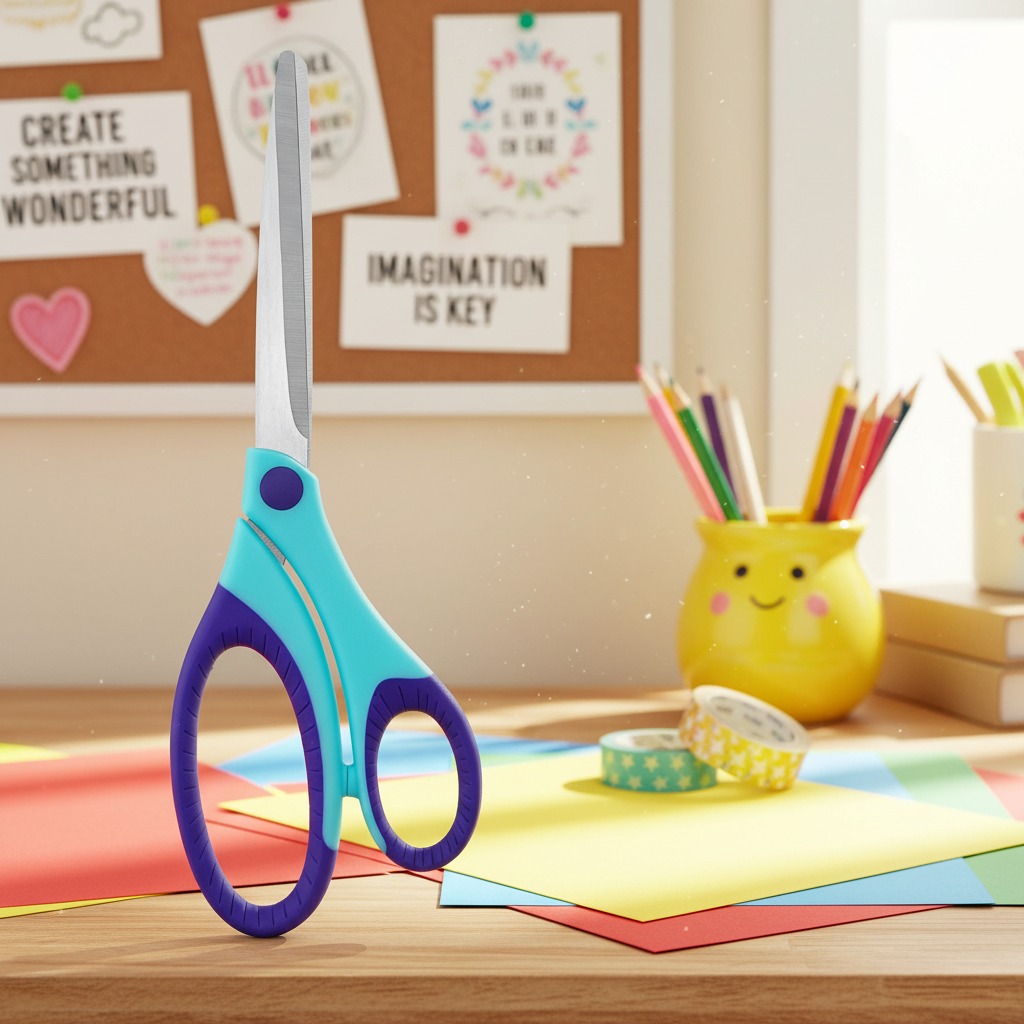
Key Takeaways
- Soft grip scissors are valued for comfort, especially during repeated household or craft cutting tasks.
- Buyers should verify blade material, handle material, sharpness, assembly quality, and packaging details directly with the supplier.
- Ergonomic design should be assessed by hand fit, grip texture, finger opening size, and ease of cutting motion.
- For OEM or private label orders, confirm artwork requirements, sample approval steps, lead time, carton details, and quality inspection criteria before production.
What Are OEM Soft Grip Scissors?
OEM soft grip scissors are scissors produced for a buyer’s brand, packaging, or product line according to agreed specifications. The term “soft grip” usually refers to a handle area designed to feel more comfortable than a plain rigid handle. In the original article, the soft grip feature is described as helping reduce hand fatigue during prolonged use, and the scissors are positioned for everyday cutting tasks.
In B2B sourcing, “OEM” can mean different levels of customization. Some buyers may only need existing scissors with branded packaging. Others may request handle color changes, logo placement, retail card design, barcode labeling, or assortment packing. More complex customization may require tooling or design development. Because capabilities vary by manufacturer, buyers should define their target product clearly before requesting a quotation.
Why Ergonomic Handle Design Matters
Comfort is one of the main reasons buyers look for soft grip scissors. A well-considered ergonomic scissors design can support a natural hand position, reduce pressure points, and improve control during cutting. This is relevant for household users, hobbyists, office staff, and anyone who uses scissors repeatedly rather than only occasionally.
When reviewing a sample, check more than appearance. Hold the scissors in the hand and open and close them several times. The handle openings should not pinch fingers, and the grip surface should help the user maintain control without feeling sticky or bulky. If the product will be sold for general household use, consider whether the handle size is suitable for the intended user group. If the line includes left-handed, children’s, craft, or heavy-duty models, each version should be evaluated separately.
Durability Factors Buyers Should Verify
The original article emphasizes durability and daily wear resistance, but buyers should avoid assuming durability from photos alone. Before placing an order, ask the supplier to confirm the blade material, handle material, pivot construction, surface finish, and recommended usage range. If the supplier claims stainless steel blades, a particular hardness, corrosion resistance, or special coating, request documentation or test information instead of relying on a general description.
Practical durability checks include blade alignment, screw or rivet tightness, smooth opening and closing, handle bonding, and cutting consistency. For household scissors, buyers may test paper, thin cardboard, packaging film, thread, or fabric depending on the intended category. The goal is not to use one sample as proof of mass production quality, but to establish expectations that can be written into the order and inspection checklist.
Comparison Checklist for Supplier Evaluation
| Evaluation Area | What to Check | Questions to Ask the Supplier |
|---|---|---|
| Blade performance | Sharpness, alignment, smooth cutting, tip finish | What blade material and finish are used? Are sample cutting tests available? |
| Handle comfort | Soft grip feel, finger opening size, non-slip texture | What handle materials are used? Can colors or grip patterns be customized? |
| Assembly quality | Pivot tightness, balance, opening and closing motion | How is in-process quality checked during production? |
| OEM options | Logo, color, packaging, barcode, assortment packs | Which customizations are available for the requested order quantity? |
| Packaging | Retail card, blister, sleeve, carton strength, labeling | Can packaging artwork templates and carton details be provided before ordering? |
| Order controls | Approved sample, inspection standard, defect limits | What is the sample approval process and how are quality issues handled? |
OEM Customization and Private Label Planning
For wholesale and private label programs, product selection should begin with the retail position. A value-oriented household line may prioritize practical design, competitive packing, and reliable supply. A craft or office line may focus more on handle comfort, color assortment, and presentation. A hardware or utility section may require different cutting performance expectations.
Prepare a simple specification sheet before contacting a household scissors manufacturer. Include target use, size range, handle color, logo placement, packaging type, inner pack, carton labeling, market requirements, and inspection points. If you do not know the final material or size, ask the supplier to recommend available models and explain the differences. Keep all claims on packaging conservative unless they are supported by supplier documentation and suitable for your market.
Sample Review Before Mass Production
Samples are essential for reducing sourcing risk. A photo can show the general look of soft grip scissors, but it cannot confirm the cutting feel, handle comfort, or assembly stability. Request samples that match the intended blade, handle color, logo, and packaging as closely as possible. If the first sample is only a reference sample, clearly record what will change for the production sample.
During sample review, buyers can use a simple checklist:
- Confirm that the product size and handle shape match the intended user group.
- Check the blade edges for burrs, rough tips, or uneven closing.
- Open and close the scissors repeatedly to evaluate smoothness.
- Test cutting on the materials relevant to the product listing.
- Review logo clarity, packaging artwork, barcode position, and warning text.
- Document approved samples with photos, measurements, and written notes.
Quality Control Points for Wholesale Orders
Once a sample is approved, the next step is to translate expectations into order requirements. This is especially important for OEM soft grip scissors because comfort and performance depend on several small details: blade alignment, handle molding, pivot assembly, packaging consistency, and final inspection.
Buyers should ask how the supplier controls incoming materials, in-process assembly, and final product checks. If third-party inspection is required, define the inspection standard before production begins. Typical checks may include quantity, appearance, dimensions, cutting performance, logo placement, packaging, carton marks, and drop or transport-related packaging review where applicable. Do not assume that all suppliers use the same inspection methods.
Choosing the Right Household Scissors Manufacturer
A reliable supplier is not only one that can quote a low price. For OEM projects, responsiveness and clarity are also important. A good supplier should be able to explain available models, customization limits, packaging options, sample timing, production timing, and quality control steps. If a buyer needs market-specific compliance documents, test reports, or special labeling, those requirements should be raised early and confirmed in writing.
It is also helpful to compare more than one model rather than selecting only from the first recommendation. Different handle styles may appeal to different retail channels. Some users prefer a larger grip; others prefer compact household scissors. The right choice depends on target customer, price point, retail packaging, and expected use.
Practical FAQ
What makes soft grip scissors different from standard scissors?
Soft grip scissors use a handle design intended to feel more comfortable and secure in the hand. The benefit is most noticeable during repeated cutting tasks, but comfort depends on the actual handle shape and material.
Can OEM soft grip scissors be customized with a private label?
Often, yes, but available options vary by supplier. Buyers should ask about logo placement, handle colors, packaging artwork, barcode labels, and any order quantity requirements before confirming a project.
What should buyers test before ordering in bulk?
Buyers should test cutting performance, blade alignment, handle comfort, opening and closing smoothness, packaging accuracy, and logo quality. Approved samples should be documented before mass production.
Should a buyer request material or compliance documents?
Yes, if those details matter for the target market or sales channel. Do not rely on assumptions. Ask the supplier what documents are available and whether additional testing is needed for your market.
Are OEM soft grip scissors suitable for all cutting tasks?
No single pair of scissors is suitable for every material. Define the intended use clearly, such as household paper cutting, craft use, office use, or light packaging tasks, and choose a model designed for that purpose.
