




OEM Stationery Scissors: Practical Sourcing Guide for Office and Retail Buyers
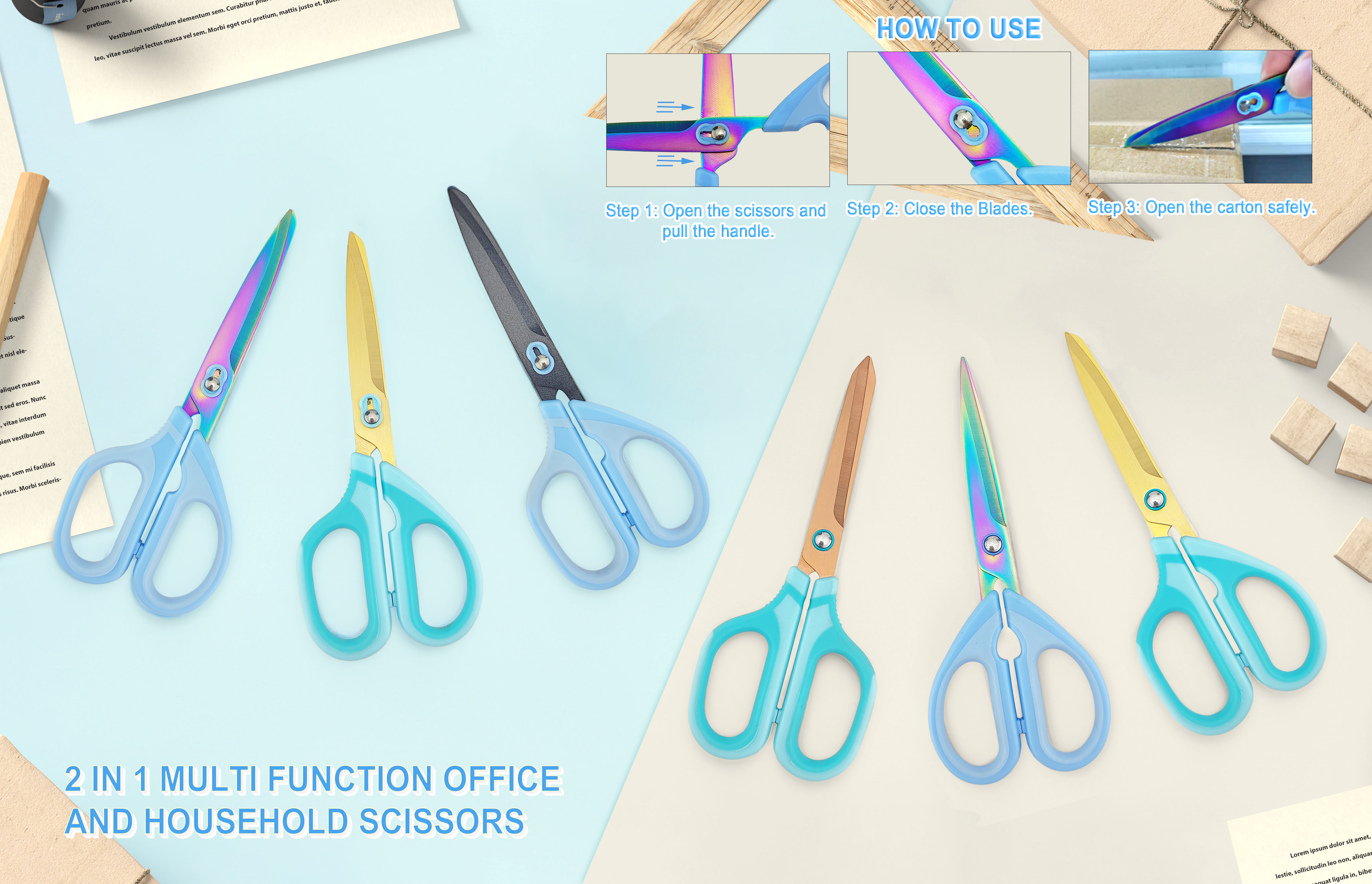
OEM stationery scissors are a familiar product, but sourcing them well requires more than choosing a color and placing a logo on the handle. For office supply distributors, school product buyers, promotional product companies, and retail stationery brands, scissors need to cut reliably, feel comfortable in the hand, ship safely, and match the intended price point. A good sourcing process helps buyers avoid common problems such as inconsistent blade alignment, weak packaging, uncomfortable handles, unclear labeling, or samples that do not match bulk production.
This guide explains how to evaluate OEM stationery scissors from a buyer’s perspective. It focuses on practical selection and supplier communication rather than exaggerated product claims. Commercial details such as minimum order quantity, lead time, available packaging, testing options, and customization limits should always be confirmed directly with the supplier before an order is approved.
Key Takeaways
- Define the end user first: office, school, craft, retail, promotional, or household use.
- Check cutting performance, blade alignment, handle comfort, and packaging durability before confirming production.
- Ask suppliers what customization is available for color, logo, packaging, and assortment planning.
- Do not rely only on product photos; request samples and compare them with final production expectations.
- Clarify safety, labeling, and compliance requirements for the destination market before shipment.
What OEM Stationery Scissors Usually Need to Deliver
Stationery scissors are everyday tools used for cutting paper, envelopes, labels, light craft materials, and general office supplies. The main expectation is consistent cutting without forcing the user to squeeze too hard. For B2B buyers, the product also needs to fit a defined sales channel. A low-cost office supply multipack, a school stationery set, a branded corporate gift, and a retail blister card item may all require different handle designs, packaging formats, and quality checkpoints.
Because the original product positioning refers to OEM stationery scissors with premium and ergonomic appeal, comfort and appearance are relevant factors. However, buyers should avoid assuming a specific material grade, blade thickness, safety certification, or performance standard unless the supplier confirms it in writing. If stainless steel blades, special coatings, child-safe tips, recycled packaging, or market-specific testing are required, they should be listed clearly in the inquiry and purchase documents.
How to Define Your OEM Scissors Project
Before contacting a stationery scissors factory or trading supplier, prepare a short sourcing brief. This saves time and reduces misunderstandings. A clear brief should describe the target user, approximate size range, preferred handle colors, logo placement, packaging type, intended market, and expected order schedule. If the scissors will be sold to schools or children, state that from the beginning because safety expectations may differ from standard office use.
Buyers should also decide whether they need a fully customized product or a private-label version of an existing model. Existing models can be faster to quote and sample, while custom molds or unique handle forms may involve additional development questions. Do not assume mold changes, exclusive designs, or color matching are included by default. Ask what can be customized, what requires additional cost, and what needs longer development time.
Supplier Evaluation Checklist
The following table can be used when comparing multiple OEM stationery scissors suppliers. It is intentionally practical: each point should be checked through samples, written confirmation, or production documentation.
| Evaluation Area | What to Check | Questions to Ask the Supplier |
|---|---|---|
| Cutting performance | Smooth opening, clean paper cuts, no obvious snagging | What materials are the scissors designed to cut in normal use? |
| Blade alignment | Tips meet properly and blades close evenly | How is blade alignment inspected during production? |
| Handle comfort | Grip shape, finger space, pressure during repeated cutting | Are different handle sizes or ergonomic handle options available? |
| Customization | Color, logo, packaging artwork, assortment planning | What customization methods are offered, and what are their limits? |
| Packaging | Protection in transit, retail display needs, barcode space | Can you provide packaging dielines and pre-production packaging samples? |
| Compliance and labeling | Market warnings, age grading, importer details if required | What testing or documentation can be arranged for the destination market? |
Quality Checks Before Bulk Production
Samples are essential, but buyers should treat them as the start of evaluation rather than the final approval. Test the scissors the way the end user will use them. For office programs, cut printer paper, envelopes, shipping labels, and light packaging materials. For craft or school use, check whether the handle remains comfortable during repeated cuts. If the product is intended for children, confirm whether the design and labeling are suitable for the age group and market rules.
Visual inspection also matters. Look for rough edges, loose fasteners, uneven handle color, weak printing, surface scratches, or packaging that opens too easily. If the scissors are sold in retail channels, the package must protect the product and present it clearly on the shelf. For wholesale office supply channels, carton strength, inner packing, and SKU identification may be more important than decorative packaging.
Packaging and Branding Considerations
OEM stationery scissors often need branding support, but branding should not reduce usability. A logo should be visible without interfering with grip comfort or safety information. Packaging artwork should show the product clearly and leave room for barcode, item number, importer information, warnings, and any market-specific text required by the buyer.
Common packaging questions include whether the supplier can support blister cards, paper cards, polybags, display boxes, or multipacks. Buyers should ask for actual packaging samples when possible, not just digital artwork. A package that looks acceptable on screen may fail during handling, stacking, or shipping. If sustainability is part of the buyer’s program, ask what packaging options are available and request documentation rather than relying on general environmental claims.
Commercial Questions Buyers Should Ask
Because commercial terms vary by supplier and project, buyers should request clear answers before issuing a purchase order. Important questions include:
- What is the minimum order quantity for existing models and for customized colors or logos?
- What sample options are available, and how closely will samples match mass production?
- What is the estimated production lead time after artwork and sample approval?
- Can the supplier provide carton dimensions, gross weight, and packing details for freight planning?
- What quality inspection process is used before shipment?
- Which documents, test reports, or labeling support can be provided if required by the destination market?
These questions help separate general product interest from a workable OEM project. They also create a record of expectations that can be referenced during production and inspection.
Practical FAQ
Are OEM stationery scissors only for office supply brands?
No. They can also fit school stationery ranges, craft kits, promotional campaigns, household assortments, and retail private-label programs. The right design depends on the user and sales channel.
Can buyers request custom colors and logos?
Many OEM projects involve color and logo customization, but availability depends on the supplier’s model, production process, and order quantity. Buyers should ask for confirmed options, artwork requirements, and sample approval steps.
What should be tested before placing a large order?
At minimum, check cutting smoothness, blade alignment, handle comfort, printing quality, packaging strength, and labeling accuracy. If the product is sold in a regulated market or to children, ask what additional testing may be needed.
Should buyers choose an existing model or develop a custom design?
An existing model is usually simpler for routine office, school, or promotional programs. A custom design may be useful for brand differentiation, but buyers should confirm development time, tooling questions, cost implications, and ownership terms.
Final Sourcing Advice
OEM stationery scissors look simple, yet small differences in blade fit, handle feel, packaging, and quality control can affect customer satisfaction. The best approach is to define the project clearly, request realistic samples, ask specific supplier questions, and confirm every commercial detail in writing. For buyers comparing a stationery scissors factory or supplier, the strongest partner is not simply the one with the most attractive product image, but the one that can explain options clearly and support consistent production from sample to shipment.
