




OEM Stationery Scissors Supplier: Precision & Design
Choosing an OEM stationery scissors supplier is not only a matter of finding a factory that can make a cutting tool. For importers, office supply brands, promotional product companies, and retail buyers, the right scissors should match the target user, packaging channel, brand positioning, and expected quality level. A simple office item can create repeat purchases when it cuts cleanly, feels comfortable, and arrives with consistent finishing.
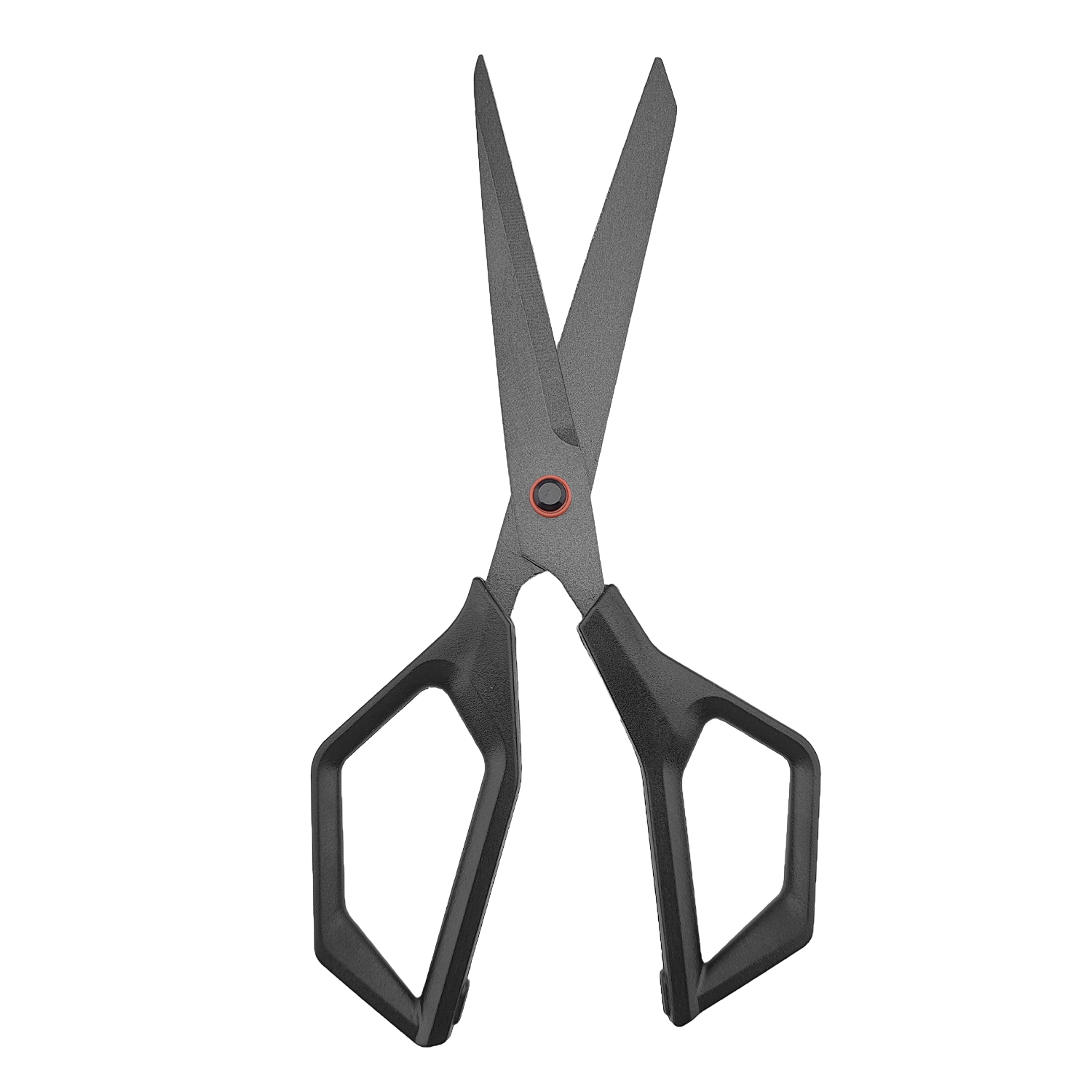
The original product concept highlights a modern black-on-black appearance, a red hinge detail, stainless steel blades, and handle geometry designed for comfort and control. Those are useful starting points, but B2B buyers still need to verify the commercial and technical details before placing an OEM or wholesale order. This guide explains what to review when sourcing stationery scissors for private label programs, office assortments, school supplies, craft kits, and retail shelves.
Key Takeaways
- Match the scissors design to the end user: office, school, craft, promotional, or retail gift set.
- Confirm blade material, handle material, size, finish, packing, and branding options directly with the supplier.
- Ask for samples before bulk production and check cutting performance on the materials your customers will use.
- Do not rely on appearance alone; comfort, alignment, edge consistency, and packaging durability affect customer satisfaction.
- Clarify MOQ, lead time, quality inspection process, and export documentation before confirming an OEM order.
What Makes Stationery Scissors Suitable for OEM Programs?
OEM stationery scissors are typically developed so a buyer can adapt the product to a brand, market, or sales channel. Customization may involve handle color, logo placement, blade finish, packaging artwork, retail barcode labels, or assortment planning. The available options depend on the supplier, tooling, production process, and order quantity, so buyers should ask what can be changed without opening new molds or extending lead time.
For office and retail lines, a successful design usually balances three things: clean cutting, comfortable handling, and dependable presentation. Scissors that look distinctive may attract attention online or in store, but they still need to perform well on common materials such as paper, envelopes, labels, craft sheets, and light cardstock. If a product is promoted for fabric or thicker materials, buyers should request evidence from sample testing rather than assuming suitability.
Design Details to Review Before Ordering
The existing product description points to a minimalist black structure with a red hinge, giving the scissors a contemporary look. For OEM buyers, this type of visual feature can help differentiate a product line, especially in competitive office supply categories. However, color matching and finish consistency should be checked across actual samples, not only digital photos.
Handle design is equally important. The source article describes open-ended, geometric handles intended to provide space, grip, and control. When reviewing a sample, ask several users to hold the scissors and test repeated cutting. A handle that feels comfortable for one hand size may not work for all users. If the product is intended for schools, offices, or craft rooms, consider whether the size and grip suit the intended age group and use environment.
Blade Material, Sharpness, and Cutting Performance
The original article states that the blades are made from stainless steel and are designed for sharpness and longevity. That is a useful product fact, but B2B buyers should still confirm the exact blade specification, hardness target if available, edge finish, and corrosion-resistance expectations with the supplier. Avoid putting unverified grade claims on packaging or listings unless the factory provides clear documentation.
Sample testing should be practical. Cut copy paper, folded paper, mailing labels, thin cardboard, and any target material relevant to the sales channel. Check whether the scissors cut cleanly from pivot to tip, whether the blades catch or separate, and whether the pivot loosens after repeated use. Also inspect the tip alignment, blade coating or polish, and any burrs around the cutting edge.
Supplier Comparison Checklist
Before selecting a stationery scissors supplier, compare candidates using consistent questions. The table below can be used during sample review and quotation discussions.
| Area to Check | What to Ask the Supplier | Why It Matters |
|---|---|---|
| Product specification | What are the blade material, handle material, size, weight, and finish? | Prevents unclear listings and mismatched samples. |
| Customization | Which colors, logo methods, and packaging formats are available? | Helps align the item with private label needs. |
| Samples | Can pre-production samples be reviewed before mass production? | Reduces risk before committing to a bulk order. |
| Quality control | How are sharpness, alignment, pivot strength, and appearance checked? | Supports consistent customer experience. |
| Commercial terms | What are the MOQ, lead time, payment terms, and carton details? | Clarifies cost planning and logistics. |
| Documentation | What export documents, test reports, or material declarations can be provided if required? | Supports market entry and buyer compliance review. |
OEM Branding and Packaging Considerations
For stationery scissors, packaging often matters as much as the tool itself. Retail buyers may need hanging cards, blister packs, paper sleeves, display boxes, or multipack formats. E-commerce sellers may prefer compact packaging that protects the tips and reduces damage during shipping. Corporate gift or promotional buyers may focus on visible logo placement and a clean presentation.
When discussing packaging, provide the supplier with artwork dimensions, barcode needs, language requirements, warning text requirements, and carton labeling instructions. If the product will be sold in multiple countries, confirm who is responsible for checking local labeling rules. A supplier can often help with production, but the buyer should not assume that packaging text is compliant without review.
Quality Checks for Bulk Stationery Scissors
Quality control should be planned before production starts. At minimum, buyers can create an approval sample and compare bulk goods against it. Important checks include blade alignment, smooth opening and closing, pivot firmness, handle surface quality, color consistency, logo position, packaging print accuracy, and carton strength.
- Approve a physical sample before confirming bulk production.
- Define acceptable color, logo, and finish tolerances in writing.
- Test cutting performance on the main materials your customers use.
- Inspect packaging for scuffs, weak seals, incorrect labels, or missing accessories.
- Keep a retained sample for future reorders and dispute prevention.
How to Communicate With an OEM Scissors Supplier
Clear communication shortens sourcing time. Instead of asking only for the lowest price, send a structured inquiry with the intended market, annual forecast if available, desired customization, packaging style, target order quantity, destination port, and quality expectations. If commercial details such as MOQ, price, production capacity, lead time, or certifications are important, ask the supplier to confirm them in writing.
Buyers can also ask whether the same scissors model can be supplied in different colors or packed as part of a stationery set. If a new handle shape or unique mold is required, ask about tooling cost, ownership, development time, sample approval steps, and reorder conditions. These questions help avoid misunderstandings after artwork or purchase orders have been issued.
Practical FAQ
Can OEM stationery scissors be customized with a brand logo?
Often, yes, but available logo methods depend on the handle material, surface, order quantity, and supplier capability. Ask for logo samples and confirm placement before production.
What should buyers test on a scissors sample?
Test cutting smoothness, blade alignment, pivot stability, handle comfort, tip safety, appearance, packaging fit, and performance on the exact materials your customers are likely to cut.
Should I claim a specific stainless steel grade in my product listing?
Only claim a specific grade if the supplier provides reliable documentation. If the source information only says stainless steel, keep the description accurate and avoid unsupported material claims.
What commercial details should be confirmed before ordering?
Ask about MOQ, unit price, sample cost, tooling cost if any, lead time, payment terms, packing method, carton dimensions, inspection process, and required export documents.
Are these scissors only for offices?
Stationery scissors are commonly used in offices, schools, craft rooms, and retail stationery sets. The best use depends on size, blade performance, handle comfort, and supplier-confirmed specifications.
