





OEM Student Scissors: Custom Design and Safety First
OEM student scissors are purchased for classrooms, stationery brands, school supply distributors, craft kits and promotional education programs. The search intent is usually practical: buyers want scissors that are suitable for young users, can be customized for a private label or project, and can be sourced with consistent quality from a capable supplier. Safety, comfort and durability matter because student scissors are handled often, stored in bulk and used by children with different levels of cutting ability.
The original article highlighted custom manufacturing, child-friendly design, rounded edges, ergonomic handles, blunt-tipped blades, vibrant colors, daily classroom use and branding options. Those are useful themes, but a strong sourcing decision needs more detail. This guide explains what to specify, what to ask a scissors factory, and how to review samples before placing an OEM order.
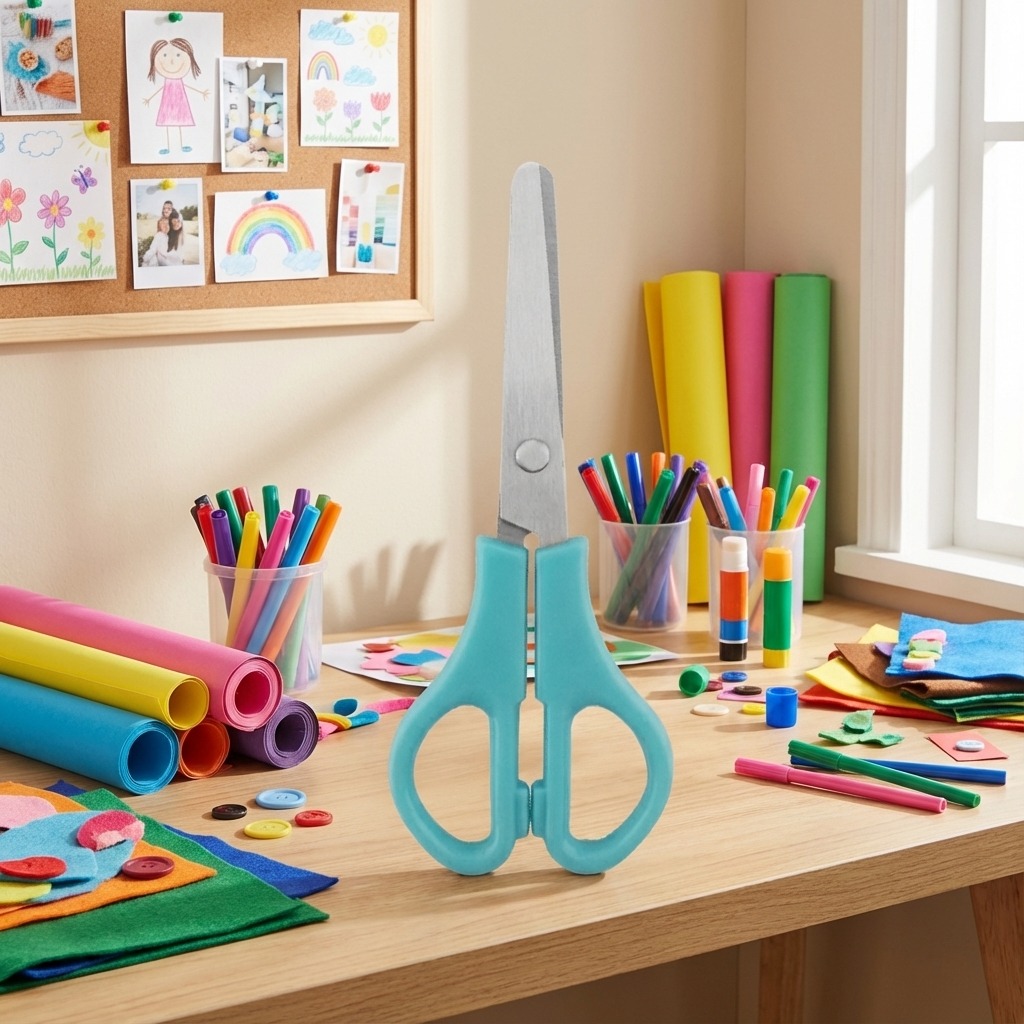
Key Takeaways
- For student scissors, safety-focused design should be defined in the brief, not assumed from the product name.
- Common OEM choices include handle color, grip shape, blade tip style, packaging and brand marking.
- Buyers should verify samples for cutting performance, edge finishing, handle comfort and consistency.
- Commercial details such as MOQ, lead time, packaging method and testing documentation should be requested directly from the supplier.
- A good sourcing process compares the product against the intended age group, classroom use case and sales channel.
What Makes Student Scissors Different from General Scissors?
Student scissors are not simply smaller household scissors. They are designed for controlled cutting tasks such as paper crafts, worksheets, light card stock and classroom projects. The important difference is the balance between cutting ability and safer handling. A pair that is too dull frustrates students and teachers; a pair that is too aggressive may be unsuitable for younger users.
For an OEM project, define the intended user group clearly. Are the scissors for early primary students, older school children, art classes, home craft kits or a general back-to-school retail range? This affects blade length, tip shape, handle opening, color choice and packaging. If the product will be sold through retail channels, buyers should also consider shelf presentation and labeling needs. If it will be used in schools, easy storage, classroom quantity packs and repeatable quality may be more important.
Safety-First Design Points to Specify
The source article mentions rounded edges and blunt-tipped blades. These are common student-scissor considerations, but they should be turned into clear specifications during sourcing. Ask the supplier what blade tip options are available, how edges are finished, and whether the selected design is appropriate for the target age group and use case.
Handle design is also part of safety. A comfortable grip helps reduce slipping and improves control. If the scissors will be used by children for repeated craft activities, check whether the handle openings suit smaller hands and whether the surface feels stable when held. For mixed classroom use, buyers may also want to discuss right-hand, left-hand or ambidextrous options, if available.
OEM Customization Options Buyers Commonly Review
Custom scissors manufacturing can support a private-label product line, school promotion, art kit or stationery assortment. However, customization should be practical rather than decorative only. Color can help organize classroom sets by grade or activity. Branding can help retail identification. Packaging can improve distribution efficiency and reduce confusion at the point of sale.
- Handle color: Request available standard colors and ask whether custom colors require special conditions.
- Grip shape: Compare comfort for the intended student age range.
- Blade tip: Discuss blunt, rounded or other available tip designs suitable for school use.
- Branding: Ask about logo placement, printing method and durability of the mark.
- Packaging: Consider single retail cards, classroom packs or kit-ready bulk packing.
- Assortments: If selling to distributors, ask whether mixed colors or grouped sets are possible.
Comparison Checklist for Evaluating Samples
Before confirming an OEM student scissors order, evaluate physical samples in the same conditions the product will face. Do not rely only on photos. Test the scissors with common classroom materials and have more than one person handle them, especially if the target users include different hand sizes.
| Evaluation Area | What to Check | Questions to Ask the Supplier |
|---|---|---|
| Blade tip and edge finish | Tip shape, smoothness, absence of rough burrs | What tip styles and finishing processes are available? |
| Cutting performance | Clean cutting on paper and common craft materials | What materials is this model intended to cut? |
| Handle comfort | Grip size, finger opening, stability in hand | Can the handle be adjusted for different age groups? |
| Customization | Color, logo, packaging and assortment options | What customization details affect MOQ or lead time? |
| Consistency | Sample-to-sample feel, alignment and finish | How is production quality checked before shipment? |
| Documentation | Available product information and test reports, if any | What documents can be provided for the target market? |
How to Source from a Scissors Factory or OEM Supplier
When the topic is OEM, the supplier conversation is as important as the product itself. Start with a clear buyer brief that lists the market, user age range, expected cutting tasks, preferred handle colors, branding needs, packaging format and order timeline. A detailed brief helps avoid vague sample discussions and reduces the risk of receiving a product that looks good but does not match the intended use.
Ask the factory or supplier direct questions rather than assuming details. Useful questions include: What student scissor models are already available? Which design elements can be customized? Are there existing packaging options? What is the sample process? What are the MOQ, lead time and payment terms? Can the supplier provide product photos, packaging dielines or previous non-confidential examples? What quality checks are performed during production and before shipment?
Buyers should also clarify export and market requirements. Do not assume that a product automatically meets rules for every country or sales channel. Instead, tell the supplier where the scissors will be sold and ask what documents, test reports or compliance support they can provide. Any legal or safety compliance decision should be confirmed by the buyer according to the destination market.
Quality Control Before Bulk Ordering
For school products, small defects can create large after-sales issues because items are often purchased in quantity. During sample review, check blade alignment, screw tightness, handle molding quality, smooth opening and closing, and cutting consistency. The scissors should open without excessive looseness and cut without tearing paper unnecessarily.
For bulk orders, buyers can request a pre-production sample and confirm it in writing. The approved sample should match color, logo, packaging and functional expectations. Before shipment, consider an inspection plan that checks random units for appearance, operation, packaging count and carton labeling. If the product is part of a school kit, test whether it fits the final kit packaging without damaging other items.
Packaging and Market Positioning
OEM student scissors may be sold in several ways: single retail units, classroom bulk packs, stationery sets, craft kits or promotional school supply bundles. Packaging should match the channel. A retail product needs clear presentation and barcode planning if required by the buyer. A classroom pack may prioritize easy counting and storage. A craft kit may need compact packaging and protection from movement inside the box.
Positioning should also be specific. Instead of describing every model as premium or professional, explain the intended use: beginner classroom cutting, everyday school craft, colorful stationery assortment or private-label back-to-school range. This makes product selection easier for distributors and end customers.
Practical FAQ
What should I include in an OEM student scissors inquiry?
Include target market, user age range, expected materials to cut, desired blade tip style, handle color, logo needs, packaging type, estimated order quantity and delivery schedule. Ask for available models and sample options.
Are blunt-tipped blades always the best choice?
Blunt or rounded tips are often considered for younger users, but the best choice depends on age group, cutting tasks and local market expectations. Ask the supplier to explain available tip options and review samples carefully.
Can student scissors be customized with a logo?
Many OEM projects include branding, but the exact method, position and durability should be confirmed with the supplier. Ask for artwork requirements and a branded sample before mass production.
What materials can student scissors cut?
Typical student use includes paper and light craft materials, but capability varies by model. Test samples with the actual materials used in your classroom set, craft kit or retail product.
What commercial details should buyers confirm?
Confirm MOQ, unit packing, carton packing, lead time, sample cost, tooling or customization fees if any, payment terms, inspection options and available documentation for the destination market.
Final Sourcing Advice
OEM student scissors should be selected with a safety-first mindset, but safety is only one part of a successful sourcing project. Comfort, cutting performance, customization, packaging and supplier communication all affect the final product. A strong brief, careful sample testing and clear commercial questions will help buyers choose a student scissors solution that fits classrooms, retail shelves or educational kits without relying on assumptions.
