





OEM Student Scissors: Safety and Creativity for Kids
OEM student scissors are a common item in classrooms, stationery aisles, craft kits, and back-to-school programs. For importers, wholesalers, education suppliers, and private-label brands, the sourcing goal is not simply to find a low-cost pair of scissors. The product must be suitable for young users, comfortable for repeated classroom use, consistent in quality, and practical to package and distribute.
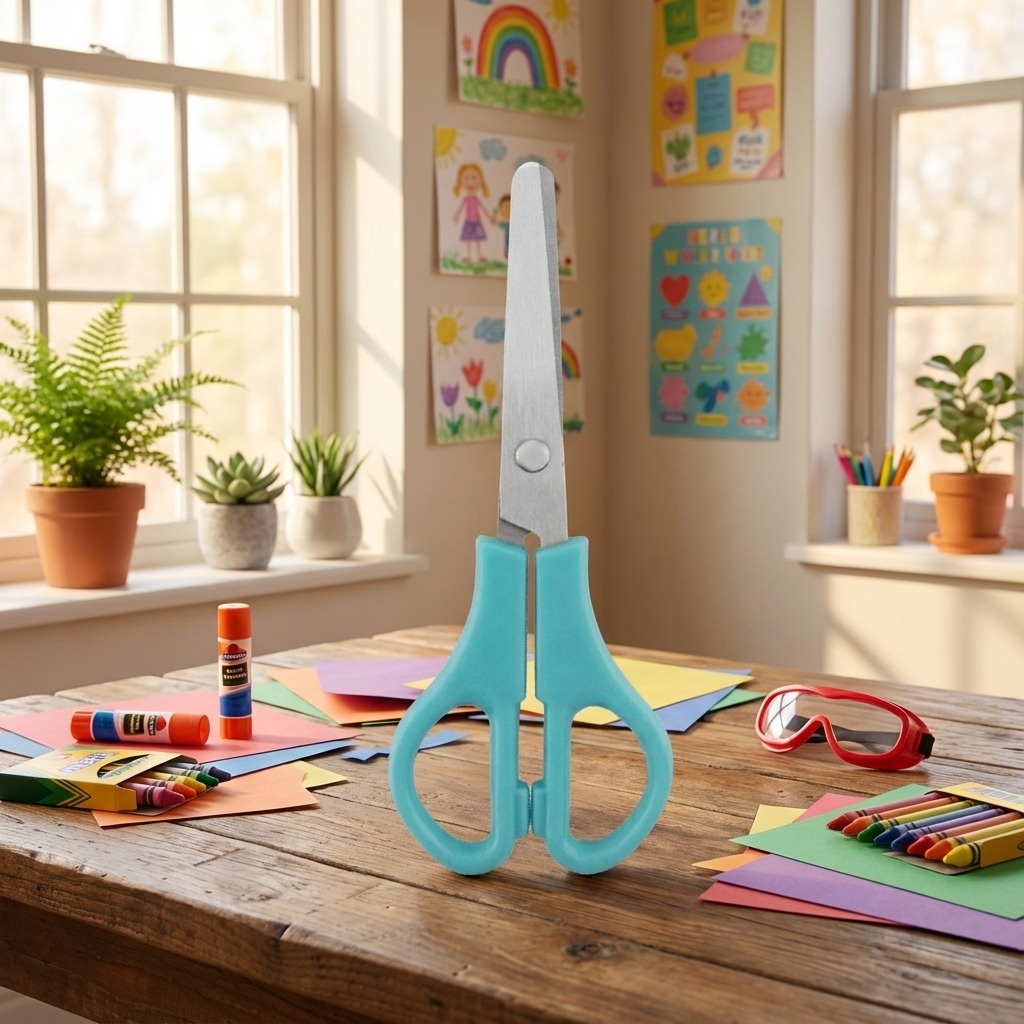
The original Bonet Houseware article highlighted the appeal of kid-friendly safety scissors, including rounded edges, smooth cutting for paper, teal ergonomic handles, and soft-touch handle material. This rewritten guide expands that idea into a practical B2B sourcing checklist for buyers comparing OEM student scissors from a scissors factory or custom scissors manufacturing partner.
Why OEM Student Scissors Remain a Strong School Supply Category
Student scissors sit at the intersection of safety, creativity, and repeat purchase demand. Schools use them for art projects, paper cutting exercises, and fine motor skill development. Parents buy them for homework, home crafts, and activity kits. Retailers often include them in seasonal school supply assortments, while educational distributors may require consistent replenishment throughout the year.
OEM production allows a buyer to define the product identity more clearly. Depending on the supplier's available capabilities, this may include handle color, packaging format, logo placement, set configuration, or display-ready presentation. However, buyers should confirm each option directly with the factory rather than assuming all customization is available for every model.
Safety-Focused Design Points to Review
When sourcing scissors for children, safety is the first filter. The original product description mentioned rounded edges and a kid-friendly design. Those are useful starting points, but a responsible buyer should evaluate the complete design rather than relying on a single claim.
- Blade tip and edge profile: Ask whether the sample has rounded tips and edges appropriate for student use.
- Cutting performance: Test common classroom materials such as paper, thin card, and craft sheets, while avoiding claims beyond verified use.
- Handle comfort: Review the handle shape and grip feel during repeated opening and closing.
- Hand orientation: Confirm whether the model is right-handed, left-handed, or suitable for both.
- Age positioning: Ask the supplier what user age range the design is intended for and request supporting product information.
For regulated markets, buyers should not rely on generic wording such as “safe for kids.” Instead, ask the supplier what documentation, testing, labeling, and market-specific requirements apply to the destination country.
Comparing Student Scissors Before Placing an OEM Order
A clear comparison table helps purchasing teams evaluate samples consistently. The table below can be adapted for internal supplier scorecards.
| Evaluation Area | What to Check | Questions to Ask the Supplier |
|---|---|---|
| Blade design | Rounded edges, smooth opening and closing, paper-cutting consistency | What blade options are available for this student scissors model? |
| Handle design | Grip comfort, size, color, and soft-touch feel if offered | Can handle color or material be customized for OEM orders? |
| Branding | Logo area, print durability, and packaging artwork placement | Where can a private-label logo be applied, and what file format is needed? |
| Packaging | Bulk pack, blister card, paper card, classroom set, or retail display | Which packaging styles are available, and can packaging be buyer-designed? |
| Quality control | Visual finish, cutting test, handle alignment, and carton inspection | What inspection steps are used before shipment? |
| Commercial terms | MOQ, lead time, sample cost, payment terms, and shipping method | What are the current order requirements for this exact model? |
Customization Options Buyers Should Confirm
Custom scissors manufacturing can support brand differentiation, but every customization has limits. A buyer should separate “nice to have” features from required specifications. Color is often one of the first requests; the original article referenced teal handles, which can be attractive for a gender-neutral school supply range. Still, color matching should be confirmed by physical sample or approved color reference.
Other possible discussion points include logo method, handle finish, packaging artwork, assortment colors, and whether the product is sold individually or in sets. If the scissors are intended for a large school tender, buyers may also need barcode labeling, carton marks, multilingual packaging, or special packing ratios. These details should be written into the purchase specification before mass production begins.
Quality Checks for Student Scissors Samples
Before approving an OEM order, request production-like samples and test them under realistic use conditions. The goal is to catch small problems early: uneven cutting, loose pivot points, uncomfortable handles, packaging weaknesses, or color inconsistency.
- Inspect the scissors visually for scratches, burrs, uneven edges, or handle defects.
- Open and close the scissors repeatedly to check smoothness and alignment.
- Cut several sheets of standard paper to evaluate consistency from tip to base.
- Ask multiple users to hold the scissors and comment on comfort and control.
- Review packaging strength, barcode placement, warning text, and carton labeling.
- Document approved samples with photos and written specifications.
If the product is for children, buyers should also ask the supplier what safety standards, test reports, or compliance documents are relevant for the target market. Do not assume that one document covers every country or sales channel.
Packaging and Channel Fit
Packaging should match the sales channel. A school distributor may prefer practical bulk packs for classroom use. A supermarket or stationery retailer may need hanging cards or display-ready packaging. An e-commerce seller may focus on protective packing, clear product photos, and compact shipping dimensions.
For OEM student scissors, packaging should communicate intended use clearly without making unsupported claims. If the product has rounded edges, a comfortable handle, or a soft-touch handle material, those points can be described when they are verified in the approved sample. Buyers should avoid exaggerated wording and focus on accurate, parent- and teacher-friendly information.
How to Evaluate a Scissors Factory or Supplier
A supplier conversation should move beyond price. Ask how the factory controls incoming materials, cutting performance, assembly consistency, and final packaging. Request photos or videos of the production process when available, but remember that commercial decisions should be based on samples, documents, and written order terms.
Useful questions include: What is the MOQ for this specific student scissors model? What customization is available at that quantity? How long does sampling take? What is the estimated production lead time after artwork approval? What inspection standard is used? Can the supplier provide packaging dielines? Which export documents are included? Are there any destination-market requirements the buyer should prepare for?
Key Takeaways
- OEM student scissors should be evaluated for safety-focused design, comfort, cutting consistency, and packaging suitability.
- Rounded edges, ergonomic handles, teal color, and soft-touch handle material were noted in the original product description, but buyers should verify all details with samples.
- Customization can include branding, color, packaging, and set configuration, depending on supplier capability and order terms.
- Ask direct questions about MOQ, lead time, inspection steps, and compliance documents before confirming an order.
FAQ: Sourcing OEM Student Scissors
What should buyers check first when sourcing student scissors?
Start with safety-related design, including blade tip shape, edge finish, handle comfort, and suitability for the intended user age. Then test cutting performance and packaging quality.
Can OEM student scissors be customized with a private label?
Often, OEM projects may include logo or packaging customization, but availability depends on the supplier, model, order quantity, and production method. Confirm details before quotation approval.
Are rounded-edge scissors always suitable for children?
Rounded edges are helpful, but they are not the only factor. Buyers should review the full product design, intended age range, labeling, and any market-specific safety requirements.
What packaging is best for school scissors?
It depends on the channel. Bulk packs may suit classrooms, while hanging cards or retail packs may be better for stores. E-commerce sellers should also consider shipping protection.
What information should be included in an RFQ?
Include target market, quantity, desired handle color, packaging type, logo needs, testing or documentation requirements, delivery schedule, and whether samples are required before mass production.
