





OEM Student Scissors: Safety, Style, and Sourcing Guide
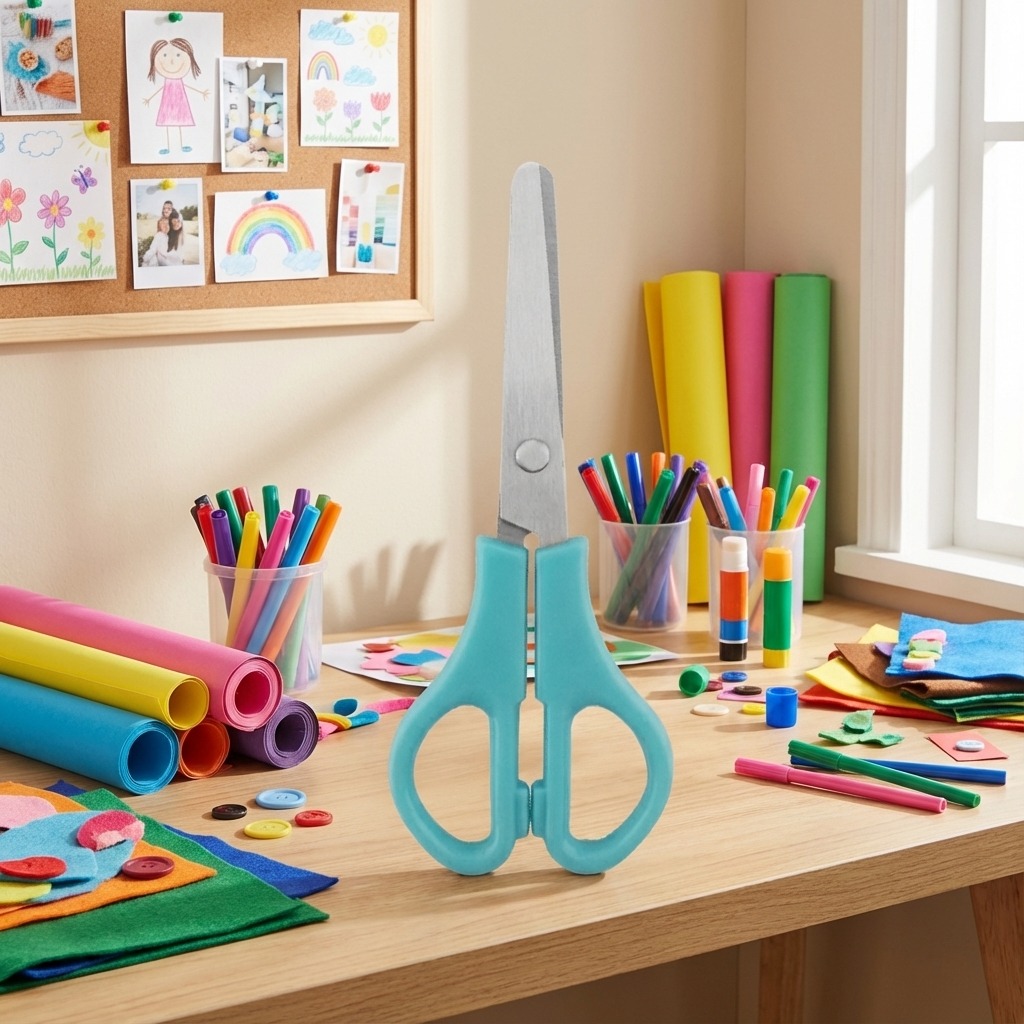
OEM student scissors are a common product category for school supply brands, stationery distributors, educational retailers, and craft kit companies. The search intent is usually practical: buyers want child-friendly scissors that can be customized, supplied consistently, and checked before bulk ordering. The original product article highlighted blunt tips, stainless steel blades, pastel turquoise handles, and non-slip plastic grips as examples of student-focused design. This rewritten guide explains how to evaluate those details without turning the purchasing process into guesswork.
Key Takeaways
- For student scissors, safety design should be evaluated before color, packaging, or branding.
- Blunt tips, comfortable handle loops, and stable cutting performance are important for classroom and home use.
- OEM buyers should request samples, artwork proofs, packaging details, and written quality criteria before confirming an order.
- Do not assume material grade, compliance status, MOQ, or testing results; ask the supplier for documentation.
What Makes Student Scissors Different?
Student scissors are not simply smaller office scissors. They are designed for younger users who may be learning grip control, cutting direction, and safe handling. For that reason, the product should balance cutting ability with reduced risk. Blunt tips are commonly preferred for school environments because they help reduce accidental poking during normal classroom activity. Handle shape is also important: small hands need enough space for fingers without forcing an awkward grip.
The original article described a model with stainless steel blades and non-slip plastic handles in a pastel turquoise color. These are useful reference points, but B2B buyers should confirm the exact specification for their intended order. For example, ask whether the blade material, handle material, color, and finish on the sample will match mass production. If the scissors will be sold as part of a school kit, also check how they fit inside pencil cases, blister cards, or boxed sets.
Safety and Ergonomic Features to Review
When sourcing OEM student scissors, safety is both a product design issue and a buyer communication issue. A supplier may offer several models with different blade lengths, handle sizes, and tip shapes. Before discussing logos or carton quantities, review the physical design carefully.
- Tip shape: Confirm whether the scissors have blunt, rounded, or pointed tips, and decide which is suitable for the target age group.
- Handle comfort: Check whether the loops are smooth, balanced, and comfortable for left or right hand use if that matters for your market.
- Grip stability: Non-slip plastic handles, when offered, can help young users keep better control during cutting tasks.
- Blade movement: Open and close the sample repeatedly to check for wobble, stiffness, or uneven contact between blades.
- Edge behavior: Test common classroom materials such as paper, thin card, and craft sheets based on the supplier’s stated use range.
If the scissors are intended for children, ask the supplier what age range the design is intended for and what warnings or labeling they recommend. Avoid adding safety claims to packaging unless they are supported by the correct documents for your sales market.
OEM Customization Options Buyers Commonly Need
OEM student scissors are often purchased for private label programs, back-to-school promotions, classroom packs, and craft sets. Customization may include handle color, logo placement, retail packaging, instruction inserts, and assortment planning. The original article mentioned color and size variation as part of OEM flexibility. In practice, every customization should be confirmed by sample and artwork approval.
Useful questions include: Can the supplier match a Pantone color or only offer existing colors? Where can a logo be placed without affecting grip comfort? Is the logo printed, labeled, molded, or added to packaging only? Can the supplier provide a packaging dieline for your designer? Are barcode placement and country-of-sale labeling handled by the buyer or the supplier? These questions help prevent delays after production has started.
Comparison Checklist for Selecting a Supplier
| Evaluation Area | What to Check | Questions to Ask the Supplier |
|---|---|---|
| Safety design | Tip shape, handle fit, smooth edges, controlled blade action | Which age group is this model designed for? |
| Materials | Blade and handle materials stated for the sample | Will mass production use the same materials as the approved sample? |
| Cutting performance | Paper, thin card, and craft material tests relevant to your market | What materials is this model intended to cut? |
| OEM branding | Logo method, handle color, packaging artwork, barcode position | Can you provide an artwork proof before production? |
| Quality control | Sample consistency, blade alignment, handle finish, packaging inspection | What inspection points are used before shipment? |
Sample Testing Before Bulk Orders
A sample is not just a visual reference. It should be used to test performance, comfort, and packaging suitability. For student scissors, buyers can create a simple internal test: check ten to twenty cutting cycles on paper, thin card, and any material named in the product brief. Observe whether the scissors cut cleanly, snag, loosen, or become uncomfortable. If the product is for a retail set, place the scissors in the final packaging mock-up to confirm fit and presentation.
For OEM orders, keep one approved sample sealed as a control sample. This gives both parties a shared reference for color, logo placement, handle finish, and general construction. If any details are changed after approval, request an updated sample or written confirmation before mass production.
Packaging and Wholesale Planning
Student scissors may be sold individually, in classroom packs, in stationery kits, or as part of seasonal back-to-school displays. Packaging should match the channel. Retail buyers may need hang cards, blister packaging, or branded paper cards. Institutional buyers may prefer simple bulk packaging that reduces waste and handling time. In either case, packaging should protect the tips, keep pairs separated enough to avoid surface damage, and display any required warnings clearly.
Because commercial terms vary by supplier and order, do not assume MOQ, lead time, carton size, or price structure. Ask for these details in writing, along with sample charges, artwork requirements, payment terms, production schedule, and shipment packing information. If your market has specific labeling or safety requirements, discuss them early and request supporting documents where applicable.
Practical FAQ
Are blunt-tip scissors always the best choice for students?
Blunt tips are often preferred for younger users and classroom settings, but the best choice depends on the age group, cutting tasks, and local requirements. Confirm the intended use with the supplier before ordering.
Can OEM student scissors be customized by color and logo?
Many OEM programs offer color and branding options, but availability depends on the supplier’s models and processes. Ask for color limits, logo methods, artwork proofs, and sample approval steps.
What should buyers test on a sample?
Check handle comfort, blade alignment, opening and closing smoothness, cutting performance on target materials, surface finish, logo placement, and packaging fit.
Should buyers request compliance documents?
Yes, if the scissors will be sold in a market with safety, labeling, or product testing requirements. Do not rely on general claims; ask which documents are available for the exact product and order.
How can buyers reduce OEM sourcing risk?
Use a written specification sheet, approve a physical sample, confirm packaging artwork, define inspection points, and ask unresolved commercial questions before placing a bulk order.
Final Sourcing Advice
OEM student scissors should be selected with the same care as any product used by children in schools or homes. Start with safety design, then evaluate comfort, cutting performance, customization, and packaging. The most reliable sourcing process is evidence-based: review samples, ask clear questions, keep approved references, and avoid unsupported claims. This approach helps buyers build a practical student scissors program for retail, wholesale, or educational supply channels.
