





OEM Student Scissors: Style and Safety for All Ages
Student scissors are a small product with a large role in classrooms, stationery aisles, art kits, and back-to-school programs. Buyers sourcing OEM student scissors usually need more than a low unit price. They need a product that feels comfortable in a child’s hand, cuts common classroom materials reliably, looks suitable for the target age group, and can be packed for retail, school supply tenders, or promotional programs.
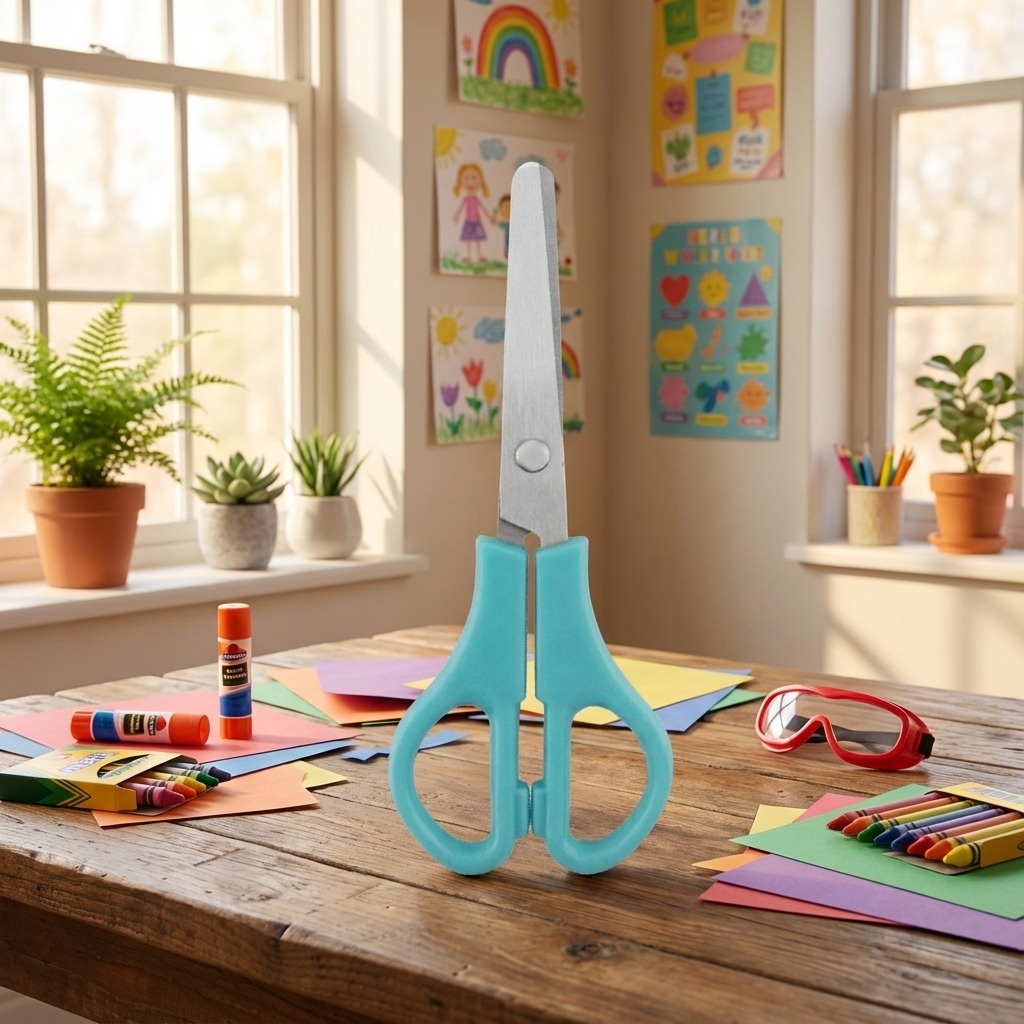
The original product shown features aqua blue handles, stainless-steel blades, and rounded tips. Those details are useful starting points for a safer, student-focused design. For OEM or wholesale purchasing, however, the strongest decision comes from asking the right questions about materials, usability, packaging, inspection, and customization before confirming an order.
Key Takeaways
- Rounded tips are important for student scissors, especially for younger classroom users.
- Handle comfort should be checked with the intended age group, not judged by appearance alone.
- Stainless-steel blades are commonly preferred for classroom scissors, but buyers should confirm blade thickness, finish, and cutting performance.
- OEM buyers should ask suppliers about customization scope, packaging formats, quality checks, lead time, and sample approval.
What Makes Student Scissors Different?
Student scissors are not simply smaller office scissors. They must balance safety, control, and cutting ability. A pair that is too dull can frustrate students and cause them to apply excessive force. A pair that is too sharp or pointed may not be suitable for younger age groups. This is why many school scissors use rounded tips, compact blades, and handles shaped for smaller hands.
For education and craft use, the main cutting materials are usually paper, thin card, worksheets, simple craft sheets, and similar classroom items. If a buyer plans to market the scissors for heavier craft materials, that requirement should be discussed clearly with the supplier. Do not assume that every student scissor is designed for fabric, foam, laminated paper, or thick board unless performance has been checked with samples.
Design Features Buyers Should Review
The product image presents a clean aqua blue handle design with rounded blade tips. Color is useful for retail appeal and classroom identification, but OEM buyers should evaluate the full design rather than focusing only on appearance.
- Tip shape: Rounded tips are a common choice for student scissors because they reduce the risk associated with sharp points.
- Handle shape: The grip should allow a natural opening and closing motion without pinching.
- Blade material: The original article identifies stainless-steel blades. Buyers should still ask the supplier to confirm the steel specification and surface finish.
- Opening resistance: Scissors should move smoothly, but not feel loose or unstable.
- Left-hand options: If selling to schools or large retailers, ask whether left-handed or ambidextrous versions are available.
Comfort is especially important for classroom use. A handle that looks ergonomic may still be too large, too narrow, or too stiff for the intended age group. Whenever possible, review physical samples with the user age range in mind.
OEM Customization: What to Ask Before Ordering
OEM student scissors often need to match a stationery brand, school supply program, or retailer’s private label. Customization may include handle color, printed or molded branding, barcode labels, blister cards, hang tags, display boxes, or multi-piece school kits. Because customization varies by factory and order type, buyers should avoid assumptions and confirm details in writing.
- Can the handle color be matched to a Pantone reference or approved sample?
- What branding methods are available on the handle, blade, card, or packaging?
- Are packaging artwork templates provided, and what file formats are required?
- Can the supplier provide pre-production samples for approval?
- What are the expected lead times for standard and customized production?
- What information is needed for carton marks, inner packs, and shipping labels?
If the product is intended for a regulated market or a specific school channel, buyers should also ask what documentation the supplier can provide. Avoid relying on general statements such as “safe for kids” without reviewing the actual requirements for the destination market.
Comparison Checklist for Sourcing Student Scissors
| Selection Point | Why It Matters | Questions to Ask a Supplier |
|---|---|---|
| Rounded tips | Helps make the design more suitable for student use | What tip shapes are available for each size? |
| Handle comfort | Affects control, fatigue, and classroom usability | Can samples be tested by the target age group? |
| Blade performance | Determines whether the scissors cut paper cleanly | What materials are used for cutting tests? |
| Customization | Supports private label and retail programs | Which colors, logos, and packaging formats are possible? |
| Packaging | Impacts shelf display, safety messaging, and logistics | Can packaging be adapted for retail, bulk, or school kits? |
| Inspection process | Reduces inconsistent movement, defects, or packaging errors | What checks are performed before shipment? |
Quality Checks That Matter in Bulk Orders
For wholesale and OEM orders, consistency is often more important than a single excellent sample. Buyers should establish a clear approval process before mass production. A practical process includes an initial sample, confirmed packaging artwork, a pre-production sample if customization is involved, and final inspection criteria.
Common inspection points include blade alignment, smooth opening and closing, handle finish, color consistency, tip shape, logo placement, packaging accuracy, and carton labeling. Buyers can also request cutting checks on the expected classroom materials. If there are requirements for age labeling, warning statements, or market-specific documentation, these should be confirmed before packaging is printed.
It is reasonable to ask a supplier what quality checks are normally performed. However, buyers should not assume a specific test standard, certification, or compliance result unless the supplier provides valid documents that match the product and destination market.
Packaging and Channel Planning
The right packaging depends on the sales channel. A school district or education distributor may prefer simple bulk packaging that is easy to store and distribute. A retail buyer may need individual blister cards or hanging cards with product information and barcode placement. A craft kit supplier may need the scissors packed with other stationery items.
Before finalizing packaging, consider the following:
- Will the scissors be sold individually, in a set, or inside a school kit?
- Does the packaging need to show the handle color clearly?
- Are there space requirements for labels, barcodes, or multilingual text?
- How should the scissors be protected during export shipping?
- Who approves final artwork and pre-production packaging samples?
Packaging decisions can affect cost, shipping volume, and retail presentation, so they should be discussed early in the sourcing process rather than after the product sample is approved.
Practical FAQ
Are rounded-tip scissors always safe for all ages?
Rounded tips can reduce risk compared with sharp points, but age suitability depends on the complete design, blade sharpness, handle size, supervision, packaging information, and applicable market requirements.
Can OEM student scissors be made in custom colors?
Many OEM programs include color customization, but availability depends on the supplier’s materials, tooling, and order details. Buyers should request color samples or a Pantone matching process.
What should buyers test before confirming a bulk order?
Check grip comfort, blade movement, cutting performance on intended materials, tip shape, handle finish, logo position, packaging accuracy, and carton labeling.
Are stainless-steel blades the best choice?
The original product identifies stainless-steel blades, which are commonly used for scissors. Buyers should still confirm the exact blade specification and whether it suits the intended cutting tasks.
What information should be included in an RFQ?
Include target size, handle color, branding needs, packaging style, destination market, expected order quantity, sample requirements, inspection expectations, and delivery timeline.
Final Sourcing Advice
OEM student scissors should be evaluated as both a classroom tool and a supply-chain item. The aqua blue handle, stainless-steel blades, and rounded tips shown in the original product provide a clear basis for a student-friendly design. For professional sourcing, the next step is to verify comfort, cutting performance, customization options, packaging, and inspection details through samples and written specifications. A careful approval process helps buyers avoid mismatched expectations and supports a more reliable school, retail, or wholesale program.
