




OEM Tailor Scissors: Practical Sourcing Guide for Precision Cutting Tools
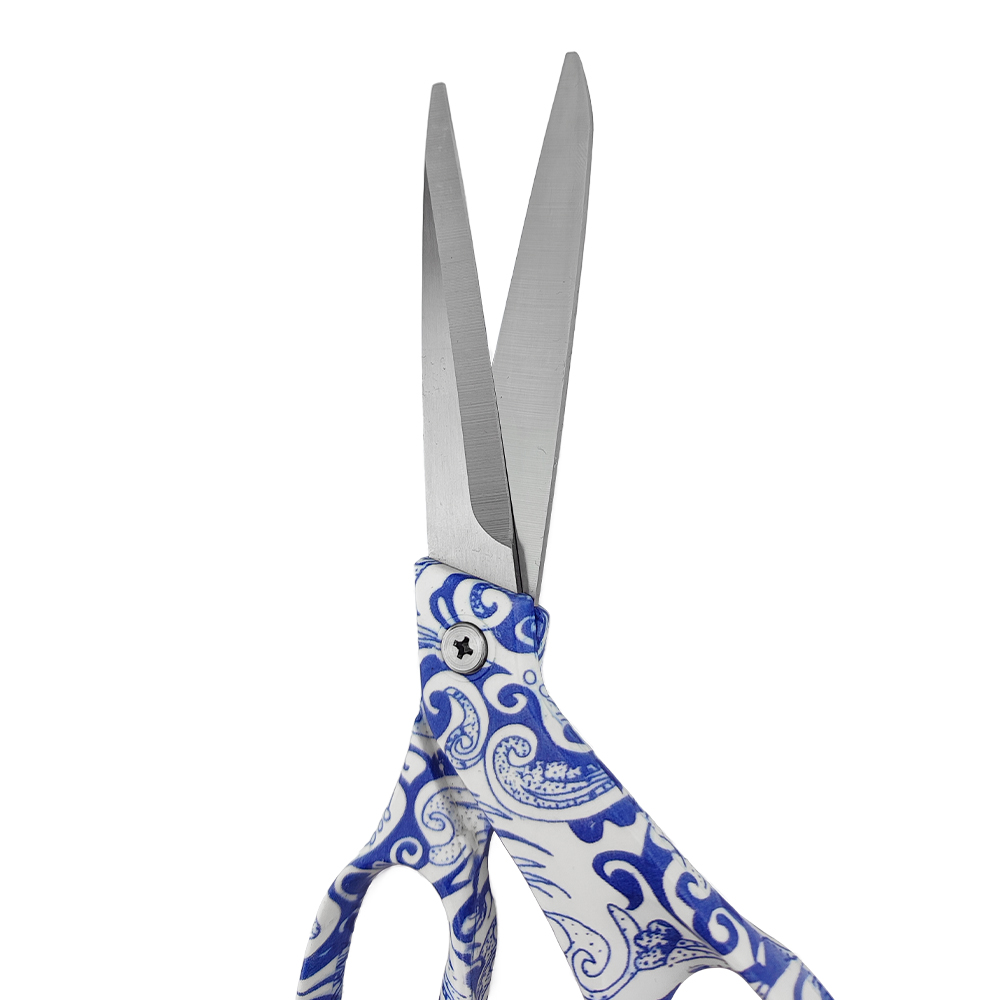
OEM tailor scissors are purchased for a practical reason: they must cut cleanly, feel stable in the hand, and represent a brand well after repeated use. The original product article introduced a pair of Blue Paisley Elegance Scissors with a decorative blue paisley handle design, stainless steel blades, and an emphasis on sharp cutting and comfortable handling. For buyers, distributors, sewing brands, craft retailers, and promotional product teams, the bigger question is how to evaluate a product like this before placing an OEM or wholesale order.
This guide explains what to check when selecting tailor scissors for private label, resale, gifting, or professional sewing use. It avoids assumptions about production capacity, certifications, pricing, or test results. Instead, it focuses on the practical questions a responsible buyer should ask any scissors manufacturer or supplier.
Key Takeaways
- Choose OEM tailor scissors based on cutting consistency, hand comfort, finish quality, and after-sales support rather than appearance alone.
- The blue paisley handle design can help a product stand out, but blade alignment and edge performance are more important for repeat use.
- Ask suppliers to confirm material details, sample availability, packaging options, inspection methods, lead times, and private-label capabilities.
- For B2B orders, request pre-production samples and clear quality criteria before confirming bulk production.
What Makes Tailor Scissors Different from General Scissors?
Tailor scissors are usually selected for fabric cutting, pattern work, craft projects, and detailed trimming. Compared with basic office scissors, buyers often expect a steadier hand feel, sharper cutting edge, and better control from pivot to tip. The original article highlighted clean cutting across delicate silk and thicker craft paper, but buyers should verify performance with their own material samples because cutting needs vary by market.
For a sewing-focused customer, the scissors should open smoothly and close without blade wobble. For a craft retailer, the appearance and packaging may matter more, but the cutting action still needs to satisfy everyday use. For professional or semi-professional users, a poor pivot, dull tip, or uncomfortable handle can quickly lead to returns or negative reviews.
Blade Quality and Cutting Performance Checks
The source article states that the product uses stainless steel blades and is designed for sharp, precise cutting. Stainless steel is commonly valued for corrosion resistance and everyday durability, but buyers should not assume the grade, hardness, coating, or edge-retention performance unless the supplier confirms it. When sourcing OEM tailor scissors, ask for written material information and review whether the blade choice matches the intended price level and use case.
Useful sample checks include cutting cotton fabric, synthetic fabric, paper, thread, and thin craft materials. The cut should be clean, not chewed or folded. Test both long cuts and short tip cuts. Also check whether the scissors cut smoothly near the pivot, through the middle of the blade, and at the tip. Inconsistent cutting along the blade length may indicate alignment problems or uneven sharpening.
Handle Design, Comfort, and Visual Appeal
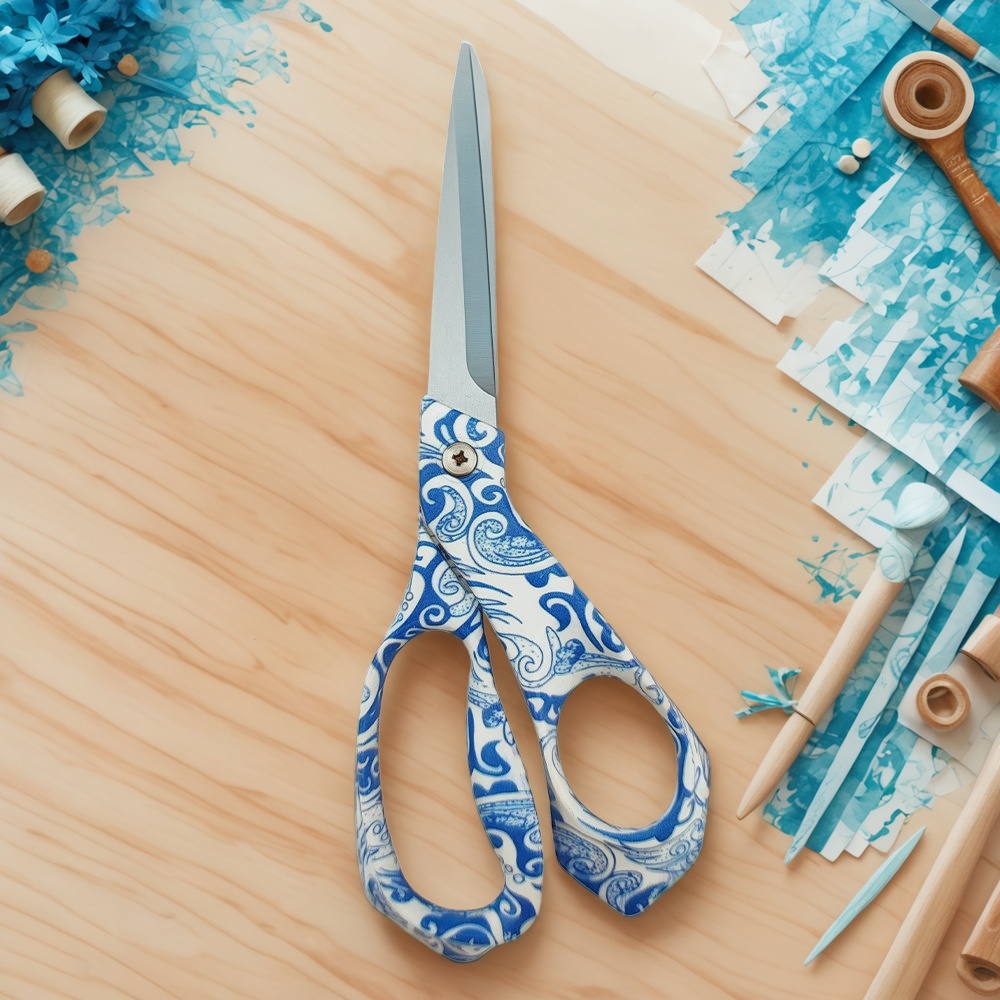
The Blue Paisley Elegance Scissors are described with an intricately detailed blue paisley handle design. This is useful for buyers who want a product that looks different from plain industrial scissors. A distinctive handle pattern can support gift sets, sewing kits, craft displays, or private-label collections where shelf appeal matters.
However, visual appeal should be reviewed together with ergonomics. The original article describes the handles as comfortable and easy to control. In B2B sourcing, this should be tested by different users, including people with smaller and larger hands. A handle that looks attractive but causes pressure points may not be suitable for long sewing sessions. Buyers should check finger-hole size, edge smoothness, surface finish, grip stability, and whether the handle coating or decoration feels secure.
Comparison Checklist for OEM Buyers
| Evaluation Area | What to Check | Questions to Ask the Supplier |
|---|---|---|
| Blade material | Stated stainless steel details, finish, edge sharpness | What blade material is used, and can it be documented? |
| Cutting action | Smooth opening, clean cuts, tip performance | Can samples be tested on our target fabrics or materials? |
| Handle comfort | Grip size, pressure points, surface smoothness | Are handle shapes, colors, or printed patterns customizable? |
| OEM branding | Logo placement, packaging, insert cards, labels | What private-label options are available for this model? |
| Quality control | Alignment, screw tightness, finish defects, packaging damage | What inspection steps are used before shipment? |
| Commercial terms | Samples, lead time, order quantity, payment terms | What are the current MOQ, sample cost, and delivery schedule? |
OEM and Wholesale Sourcing Questions
When the purchase is for resale or brand development, the supplier relationship matters as much as the product sample. A scissors manufacturer or trading supplier should be able to explain available customization options without making vague promises. Buyers should ask whether the handle pattern can be adjusted, whether logos can be added to the blade or packaging, and whether packaging can be prepared for retail display, online shipping, or gift presentation.
It is also important to clarify what is included in a quotation. Ask whether pricing covers individual packaging, carton markings, spare parts if applicable, inspection requirements, and export documentation. Do not assume minimum order quantity, production lead time, or certification status. These details should be confirmed for the specific model, destination market, and order date.
Packaging and Brand Presentation
Tailor scissors are often judged before the customer makes the first cut. Packaging should protect the blade tips, reduce movement during shipping, and make the product easy to understand. For retail, clear product naming and safe presentation are important. For e-commerce, packaging should withstand handling and help prevent cosmetic scratches. For promotional or gift use, a patterned handle such as blue paisley may work well with simple packaging that does not visually compete with the product.
Buyers should request packaging photos, dielines if custom packaging is needed, and a packed sample before mass production. If the scissors will be sold in a regulated market, ask the supplier what labeling information the buyer must provide and what compliance responsibilities remain with the importer or brand owner.
Use and Care Guidance for End Customers
Even well-made tailor scissors perform better when used correctly. If these scissors are marketed to consumers, include simple care instructions with the product. Recommend using fabric scissors mainly for fabric or sewing materials rather than cardboard, wire, or hard plastics. Wipe the blades dry after use, store the scissors closed, and keep the pivot area clean. If cutting becomes stiff, users should check whether lint or adhesive has collected near the screw.
- Use the scissors on suitable materials for the intended edge.
- Store them in a sleeve, box, or sewing kit compartment to protect the tips.
- Keep the blades dry and clean after cutting fabric, paper, or craft materials.
- Do not force the scissors through materials that exceed their intended use.
FAQ
Are OEM tailor scissors suitable for private label projects?
They can be, if the supplier offers branding, packaging, and inspection support for the selected model. Buyers should confirm logo methods, artwork requirements, sample timing, and order terms before production.
What should I test before placing a bulk order?
Test cutting performance, blade alignment, handle comfort, finish consistency, packaging strength, and carton protection. Use materials that match your customers' real applications.
Can I claim the scissors are professional grade?
Only make that claim if the product quality, target use, and supplier documentation support it. Marketing language should match actual performance and local advertising rules.
Is the blue paisley handle only decorative?
The blue paisley design primarily affects appearance and brand presentation. Comfort, grip stability, and finish quality should still be checked through sample review.
What commercial details should I ask Bonet or any supplier to confirm?
Ask about current MOQ, sample availability, lead time, customization options, packaging choices, inspection process, payment terms, and any documentation required for your market.
