




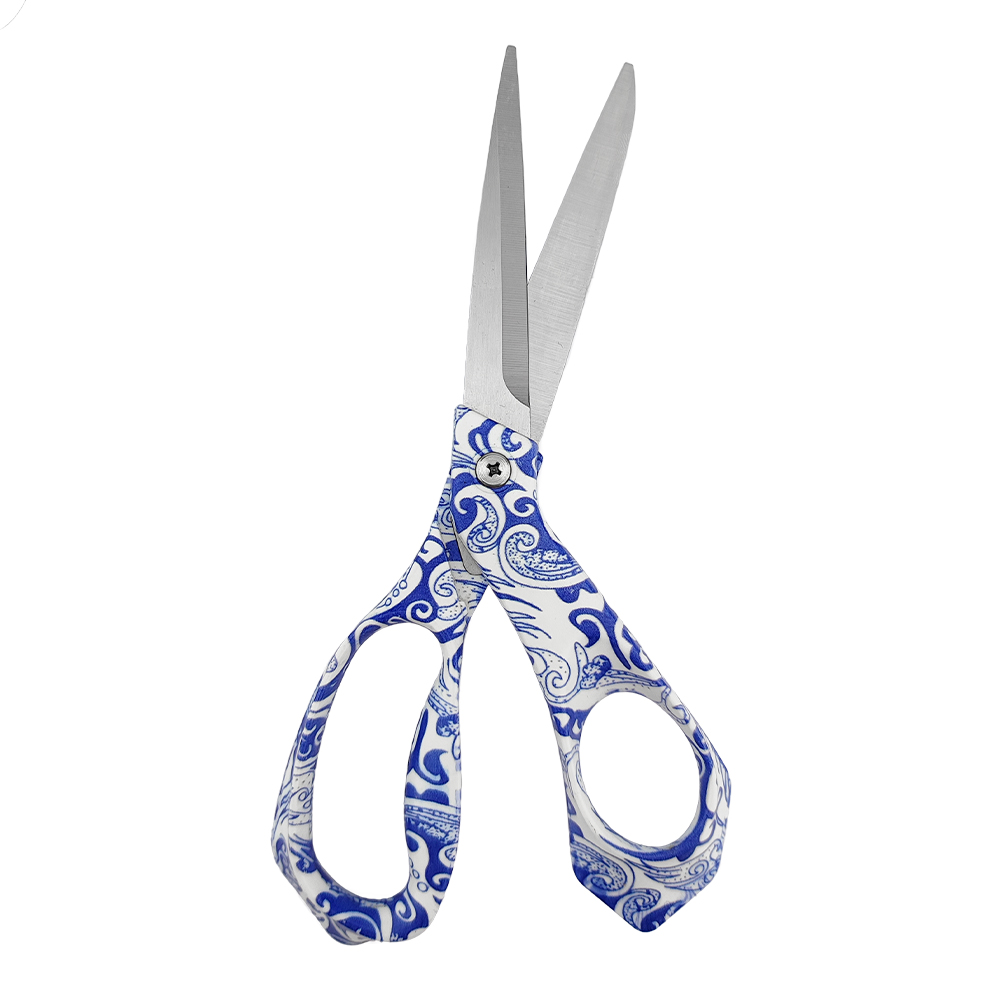
OEM Tailor Scissors: Sourcing Paisley Titanium-Plated Scissors
OEM tailor scissors are not only judged by how they look on a product page. For sewing brands, craft retailers, promotional buyers, and workshop suppliers, the real question is whether the scissors can deliver consistent cutting performance, comfortable handling, and reliable presentation across repeat orders. The original product reviewed here is a paisley pattern titanium-plated scissors design with stainless steel blades, ergonomic handles, and a cobalt blue pattern on a white background. Those are useful product facts, but a good sourcing decision also requires sharper questions about quality control, packaging, customization, and supplier communication.
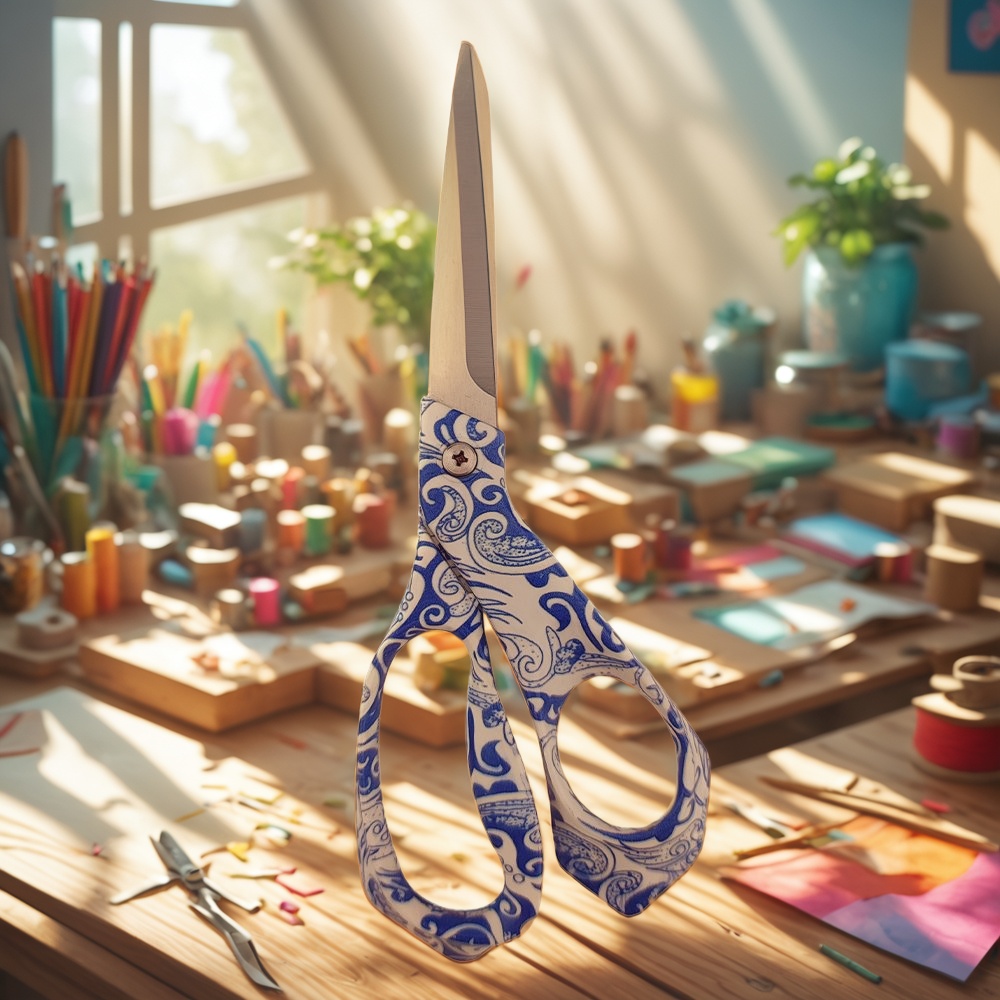
Key Takeaways
- The product concept combines a decorative paisley handle design with stainless steel blades and titanium plating.
- Buyers should verify cutting performance on the fabrics or materials used by their target customers.
- OEM projects should define artwork, packaging, inspection standards, and approval samples before production.
- Do not rely on appearance alone; blade alignment, handle comfort, and consistency matter more in repeat orders.
- Ask the supplier direct questions about available customization, order terms, test methods, and after-sales handling.
Product Overview and Search Intent
This article is for buyers researching OEM tailor scissors, especially those interested in a decorative option that can suit sewing kits, craft lines, tailoring accessories, and branded retail assortments. The source product is described as Paisley Pattern Titanium-Plated Scissors. The visible design uses a classic cobalt blue paisley pattern against a white backdrop, integrated into ergonomically shaped handles. That gives the item a more distinctive appearance than plain workshop scissors, which may help in giftable sewing products or retail displays.
However, for B2B sourcing, the design should be treated as one part of the buying decision. A scissors manufacturer or supplier should also be able to explain how samples are approved, how blade sharpness is checked, what packaging options are available, and whether the decorative finish can be produced consistently. If commercial details such as MOQ, lead time, or private-label options are not published, buyers should request them directly instead of assuming they are available.
Design Review: Paisley Handles and User Comfort
The strongest visual feature is the paisley handle pattern. For consumer-facing retail, this can help the scissors stand out in a sewing aisle or online listing where many tools look similar. The cobalt blue and white color combination also gives the product a clear identity, which may be useful for brands building a coordinated sewing or craft accessory range.
The original description states that the handles are ergonomically shaped and intended to reduce hand fatigue during long creative sessions. Buyers should still validate comfort with real users. Handle size, finger opening shape, edge smoothness, and weight balance can feel different depending on hand size and cutting habits. A buyer sourcing for professional tailors may prioritize long-duration comfort, while a craft retailer may focus on approachable handling for occasional home use.
Blade Performance: What to Check Before Ordering
The source article describes stainless steel blades with titanium plating. It also says this combination supports smooth, clean cutting and provides resistance to corrosion and wear. Those are useful claims to preserve, but buyers should confirm performance through samples rather than relying only on product copy. Tailor scissors are expected to cut cleanly through fabric without snagging, pushing material forward, or leaving uneven edges.
Before approving an OEM order, test the scissors on the materials most relevant to your market. For sewing and tailoring, that may include cotton, denim, lining fabric, felt, and lightweight synthetic fabric. For craft customers, paper, ribbon, and mixed hobby materials may also matter. Track whether the scissors cut from the pivot to the tip, whether the blades stay aligned, and whether the screw or pivot remains stable after repeated use.
OEM Sourcing Checklist for Tailor Scissors
| Checkpoint | What to Review | Questions to Ask the Supplier |
|---|---|---|
| Sample approval | Cutting feel, handle comfort, finish consistency, packaging sample | Can you provide pre-production samples for written approval? |
| Blade quality | Sharpness, alignment, tip cutting, smooth opening and closing | What inspection method is used for blade sharpness and alignment? |
| Handle design | Paisley print clarity, color consistency, grip comfort | Can the pattern, color, or logo placement be customized? |
| Packaging | Retail card, box, barcode area, safety protection | What packaging formats are available for OEM orders? |
| Order terms | MOQ, lead time, payment terms, shipment method | What are the current commercial terms for this model? |
| Quality handling | Defect standard, replacement process, inspection report | How are nonconforming products handled after delivery? |
How to Evaluate a Scissors Manufacturer
A reliable scissors manufacturer should be able to discuss the product in operational terms, not only visual terms. Ask how the blades are assembled, how the pivot is checked, how surface defects are classified, and how samples are compared with mass production. If you need the scissors for a branded retail line, also clarify whether logo printing, packaging artwork, color adjustments, or assortment planning are possible.
Buyers should avoid vague approvals such as “looks good” after receiving a sample. Instead, create a simple approval sheet that records the handle color, pattern position, blade finish, cutting test results, package layout, and any allowed tolerance. This helps both sides reduce misunderstandings before production begins.
Product Positioning for Wholesale and Retail Buyers
These OEM tailor scissors are best positioned as a decorative yet practical sewing and craft tool. The paisley handle gives the product gift appeal, while the stainless steel blades and titanium plating support the performance message. For retailers, the product may fit sewing accessory displays, craft kits, hobby tool sections, or seasonal gift assortments. For private-label buyers, it may work as part of a coordinated range that includes measuring tapes, pin cushions, thread snips, or sewing kits.
Because the original information does not provide dimensions, blade length, MOQ, certifications, or price, these details should not be assumed. Buyers should request a specification sheet and confirm whether the model matches the intended sales channel. A product for professional tailoring may require different expectations from one sold for occasional household crafting.
Use and Care Guidance for End Customers
Retailers and wholesalers should also think about the instructions that will reach the end user. Clear use-and-care guidance can reduce complaints and help customers get better results. For example, tailor scissors should generally be kept clean and dry, stored safely, and used on appropriate materials. If the scissors are marketed for fabric, customers should avoid using them on hard materials that may affect blade performance.
- Wipe the blades after use to remove lint, adhesive, or moisture.
- Store the scissors in a sleeve, box, or safe drawer to protect the tips.
- Use the scissors on suitable fabric or craft materials based on supplier guidance.
- Do not force the blades through materials that feel too thick or resistant.
- Check the pivot area if cutting starts to feel loose, rough, or uneven.
Practical FAQ
What makes these OEM tailor scissors different from plain scissors?
The main difference is the decorative paisley handle design combined with stainless steel blades and titanium plating. This makes the product suitable for buyers who want both visual appeal and practical cutting use.
Can the paisley pattern or packaging be customized?
The source article does not confirm customization options. OEM buyers should ask the supplier whether pattern colors, logo placement, packaging artwork, barcodes, and retail labeling can be adjusted.
What should buyers test before placing a wholesale order?
Buyers should test cutting smoothness, blade alignment, handle comfort, finish consistency, packaging durability, and performance on the materials their customers are likely to cut.
Are the blades stainless steel?
Yes, the original article explicitly describes the blades as stainless steel with titanium plating.
What commercial details should be requested from the supplier?
Ask for MOQ, lead time, sample cost, packaging choices, artwork requirements, inspection standards, payment terms, shipping options, and the process for handling defects or shortages.
Final Sourcing Advice
The Paisley Pattern Titanium-Plated Scissors can be a strong candidate for buyers who want OEM tailor scissors with a more distinctive retail appearance. The cobalt blue paisley design, ergonomic handle concept, stainless steel blades, and titanium plating give the product a clear story. Still, the best sourcing decision comes from documented samples, practical cutting tests, and clear supplier communication. Treat the article description as a starting point, then confirm every commercial and technical detail before placing an order.
