




OEM Tailor Scissors: How to Source Quality from a Scissors Manufacturer
Finding the right partner for OEM tailor scissors can shape how your brand is perceived by tailors, sewing studios, craft retailers, and home users. A pair of scissors may look simple, but buyers know that cutting feel, blade alignment, handle comfort, packaging, and consistency across batches all matter. For private-label and wholesale sourcing, the goal is not only to find an attractive product, but to verify whether the manufacturer can deliver repeatable quality.

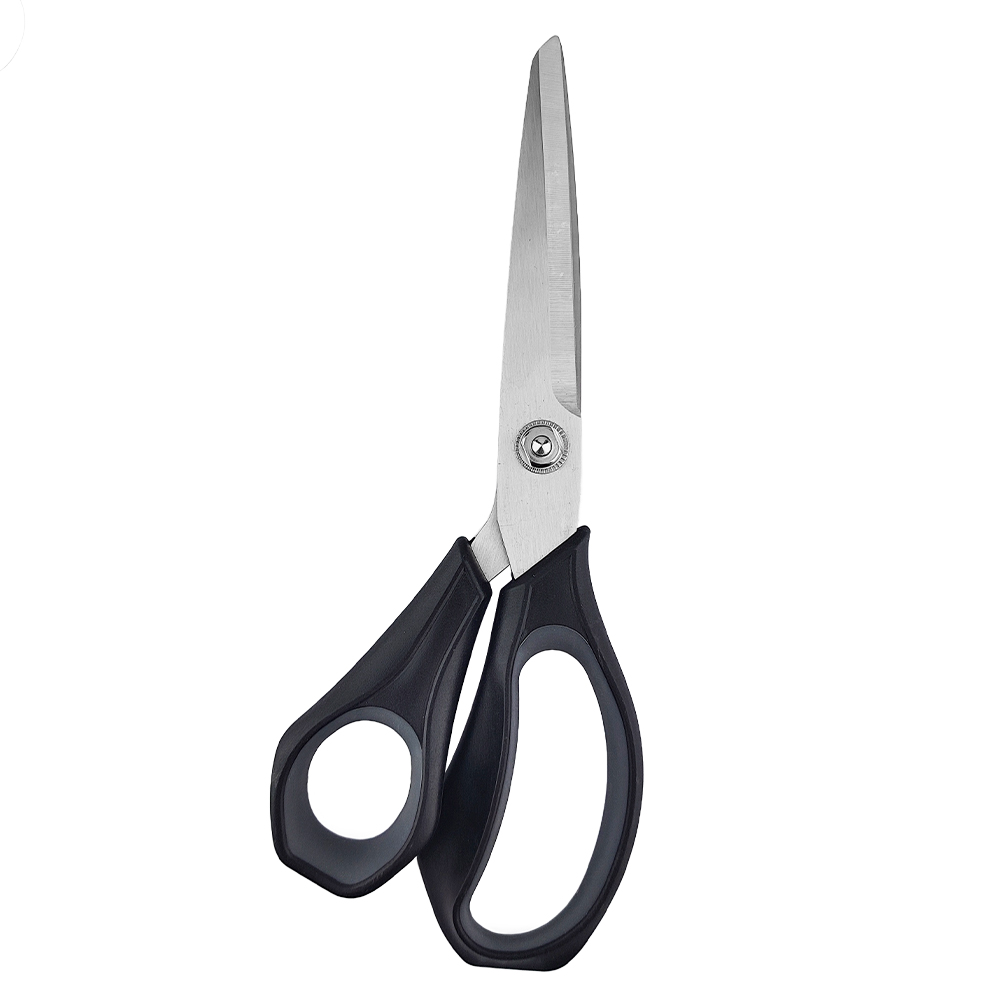
The original product information highlights a pair of household tailor scissors with stainless steel blades, matte black ergonomic handles, a soft-touch coating, a lightweight feel, and smooth cutting action. Those are useful starting points. However, professional sourcing requires buyers to go further: request samples, test on target materials, confirm specifications in writing, and agree on inspection standards before production.
Key Takeaways
- OEM tailor scissors should be evaluated by cutting performance, blade alignment, comfort, durability, and batch consistency.
- Do not rely only on product photos; request samples and test them on the actual fabrics or materials your customers use.
- Ask the supplier to confirm blade material, handle material, packaging options, logo methods, inspection process, MOQ, lead time, and replacement policy.
- For wholesale or private-label orders, define acceptable defects and packaging requirements before placing a bulk order.
What Makes Tailor Scissors Different from General Scissors?
Tailor scissors are expected to cut fabric cleanly without dragging, chewing, or shifting the material. Compared with basic household scissors, they are often used for longer sessions and more precise cutting lines. That makes blade sharpness, edge retention, and hand comfort especially important.
For sourcing teams, the term “tailor scissors” should be clarified with the supplier. Are the scissors intended for fabric cutting, light cardboard, thread trimming, craft work, or general household use? A product that performs well on paper may not satisfy sewing professionals if it struggles with layered fabric. Clear use cases help the manufacturer recommend the right blade shape, handle size, and packaging position.
Blade Quality: What Buyers Should Verify
The original article states that the scissors use stainless steel blades and are precision-honed for clean cutting. Stainless steel is widely used because it can offer corrosion resistance and practical durability, but buyers should avoid assuming a specific grade unless the supplier confirms it. Ask the manufacturer what stainless steel is used, how the blades are hardened or finished, and what testing is performed after assembly.
During sample evaluation, cut multiple materials your customers are likely to use. For a tailor or sewing audience, this may include cotton fabric, denim scraps, felt, lining fabric, and thread. For a household audience, you may also test paper, ribbon, and light cardboard. Note whether the scissors cut cleanly from base to tip, whether the blades separate under pressure, and whether the pivot becomes loose after repeated use.
Handle Comfort and Ergonomic Fit
The source article describes matte black handles with an ergonomic shape, soft-touch coating, secure grip, and lightweight construction. These are important features because many users judge scissors by how they feel after several minutes of cutting, not only by the first cut.
When reviewing an OEM sample, test the handle with different hand sizes if possible. Check whether the finger loops create pressure points, whether the coating feels secure when hands are dry or slightly damp, and whether the handle material has sharp seams. For professional or semi-professional buyers, comfort can reduce fatigue and improve cutting control during longer sessions.
OEM Customization Questions to Ask
OEM sourcing often includes changes to color, logo, packaging, barcode labels, instruction inserts, or product bundles. Before discussing price, define what is essential and what is optional. A buyer should ask which parts can be customized, what costs apply, and whether a pre-production sample will be provided for approval.
- Can the supplier apply a logo to the blade, handle, packaging, or insert card?
- What packaging formats are available, such as blister card, paper box, hanging card, or retail sleeve?
- Can the supplier provide neutral packaging for wholesale distribution?
- What are the MOQ, lead time, sample cost, and tooling or setup charges?
- How are color, finish, and packaging artwork approved before mass production?
These questions help prevent misunderstandings. If the supplier cannot confirm a requirement, treat it as unresolved rather than assumed.
Comparison Checklist for Evaluating Suppliers
| Evaluation Point | What to Check | Why It Matters |
|---|---|---|
| Blade performance | Cut fabric, paper, thread, and light cardboard samples | Confirms whether the scissors suit the intended users |
| Blade alignment | Inspect tip contact, pivot tension, and smooth opening | Reduces uneven cutting and premature wear complaints |
| Handle comfort | Test grip, coating, size, and pressure points | Improves usability during repeated cutting tasks |
| Customization | Confirm logo, color, packaging, and artwork limits | Supports private-label and retail channel requirements |
| Quality control | Ask about inspection steps and acceptable defect standards | Helps maintain consistent quality across bulk shipments |
| Commercial terms | Clarify MOQ, lead time, payment terms, and after-sales handling | Reduces sourcing risk before committing to production |
Sample Testing Before a Bulk Order
A sample should be tested in a structured way. Open and close the scissors repeatedly, listen for grinding or stiffness, then cut the same materials several times. Record where performance is strong and where it drops. If you are sourcing for a retail brand, compare the sample with similar products in your target price tier.
It is also useful to photograph any issues and send clear feedback to the supplier. For example, “the scissors pull on two layers of denim near the tip” is more actionable than “not sharp enough.” If the product is revised, request another sample and check whether the change affects other features such as handle balance or pivot smoothness.
Packaging, Labeling, and Retail Readiness
Packaging is not only a visual decision. It protects the blade, communicates the intended use, and helps retailers manage inventory. Ask whether the blade tips are protected, whether the package can hang on a display hook, and whether the barcode or product label position meets your distribution needs.
If you sell in multiple markets, do not assume language, warnings, or labeling requirements. Ask your compliance or import team what must appear on the package, then confirm whether the supplier can print or apply those elements accurately. The supplier should not be expected to guess your market-specific requirements.
Quality Control and Supplier Communication
For OEM tailor scissors, quality control should be discussed before the purchase order. Buyers can ask how incoming materials are checked, how blades are inspected after sharpening, whether pivot tension is tested, and how finished goods are sampled before packing. If third-party inspection is needed, confirm whether the supplier can support it.
Clear communication is also part of quality. Share drawings, artwork, reference samples, and written specifications. Confirm every agreed point in a purchase order or specification sheet. This includes product name, blade material as confirmed by the supplier, handle color, packaging type, carton requirements, inspection criteria, and shipping marks.
Practical FAQ
What should I test first when receiving OEM tailor scissors samples?
Start with cutting performance on your target materials. Then check blade alignment, pivot smoothness, handle comfort, packaging condition, and whether the sample matches the agreed description.
Can I assume all stainless steel tailor scissors perform the same?
No. Stainless steel type, blade thickness, heat treatment, edge finishing, and assembly quality can all affect performance. Ask the supplier for confirmed specifications and test samples directly.
What information should I give a scissors manufacturer for OEM pricing?
Provide expected order quantity, target use, size requirement, logo position, packaging type, artwork needs, destination market, and any inspection or labeling requirements.
How can I reduce risk before placing a wholesale order?
Approve a pre-production sample, define acceptable quality standards, confirm packaging details, ask about defect handling, and consider inspection before shipment.
Are matte black ergonomic handles suitable for every market?
They can be attractive and practical, but suitability depends on your customer profile. Test grip comfort, coating feel, and appearance against competing products in your sales channel.
Final Sourcing Advice
OEM tailor scissors should be sourced with the same discipline as any repeat-purchase tool. The product may appear straightforward, but small details decide user satisfaction: sharpness at the tip, smooth pivot movement, grip comfort, packaging protection, and consistency between samples and bulk goods. Use the stated product features as a starting point, then verify every critical detail with the manufacturer before committing to production.
