




OEM Tailor Scissors Supplier: Quality Cutting Tools for Tailors
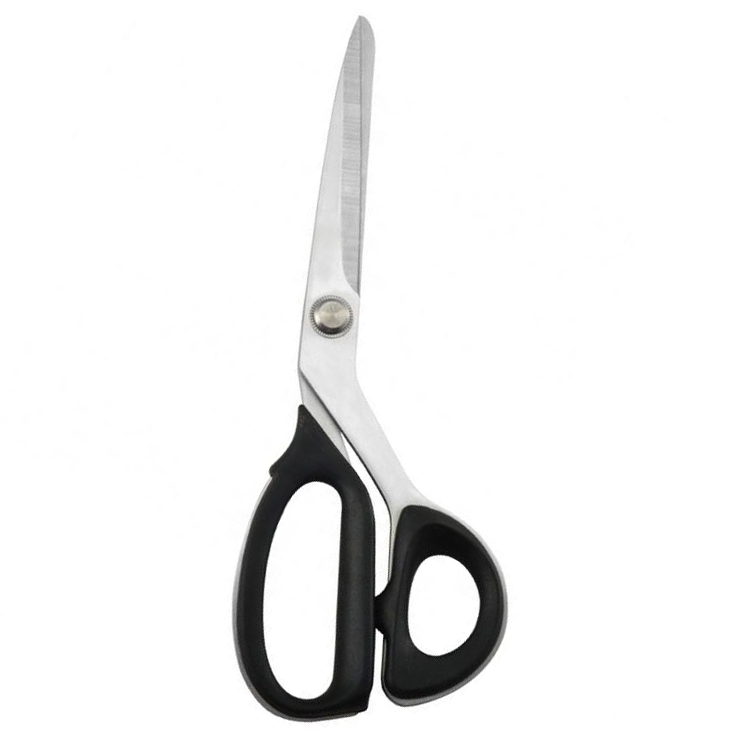
Choosing an OEM tailor scissors supplier is not only a matter of finding a cutting tool that looks suitable in a catalog. For sewing brands, fabric shops, craft retailers, uniform suppliers, and wholesale distributors, tailor scissors affect end-user satisfaction, repeat orders, and brand reputation. A pair of shears that cuts smoothly, feels balanced in the hand, and stays consistent from one shipment to the next can support a stronger product line. A poorly specified product can create complaints, returns, and avoidable inspection work.
The original product description highlights stainless steel blades, a black handle design, an adjustable tension screw, and a smooth pivot mechanism. Those are useful starting points, but B2B buyers should go further. Before placing an OEM or private-label order, ask how the scissors are made, what customization is possible, what inspection standards are used, and how the supplier controls consistency across batches.
What Tailor Scissors Need to Do Well
Tailor scissors are expected to cut fabric cleanly and with control. In professional tailoring and sewing environments, the user may cut long straight lines, trim seams, shape patterns, or handle layered materials. For craft and household buyers, the same scissors may also be used for general cutting tasks, including fabric, paper, packaging, or plastic sheet. Because use cases vary, buyers should define the target user before finalizing product details.
A good sourcing brief should describe the intended market, expected retail position, packaging format, branding needs, and any performance expectations. Avoid assuming that one model fits every channel. Scissors for sewing-kit inclusion may require a different balance of cost and finish than scissors sold individually to experienced tailors.
Core Product Features to Evaluate
The existing product information mentions stainless steel blades, an ergonomic black handle, an adjustable tension screw, and a pivot designed for smooth operation. When reviewing samples, examine each of these points in practical terms rather than relying only on product photos.
- Blade material and finish: Confirm what stainless steel is used, how the blade surface is finished, and how corrosion resistance is managed.
- Sharpness and edge consistency: Test cutting performance on the fabrics or materials your customers actually use.
- Handle comfort: Check whether the handle shape suits the hand size and cutting style of your target market.
- Tension adjustment: Verify whether the screw can be adjusted reliably and whether it remains stable after repeated use.
- Pivot smoothness: Open and close the scissors repeatedly to identify stiffness, looseness, scraping, or uneven movement.
OEM Supplier Selection Checklist
For OEM tailor shears, supplier selection should combine product quality review with commercial and production capability checks. Do not base a decision only on the lowest quote. A slightly cheaper pair of scissors can become expensive if quality problems lead to rework, rejected shipments, or damage to a private-label brand.
| Evaluation Area | What to Check | Questions to Ask the Supplier |
|---|---|---|
| Sample quality | Cutting smoothness, blade alignment, handle comfort, finish consistency | Can you provide pre-production samples made with the same materials and process as bulk goods? |
| Materials | Blade steel, handle material, screw and pivot components | What material options are available, and can you provide material documentation if required? |
| OEM customization | Logo, color, packaging, label, instruction insert | Which parts can be customized, and what artwork format is needed? |
| Quality control | Incoming inspection, in-process checks, final inspection | What inspection criteria are used for sharpness, alignment, appearance, and packaging? |
| Order terms | MOQ, lead time, payment terms, shipment method | What are the current MOQ, production lead time, and carton details for this model? |
| Compliance needs | Market-specific labeling or documentation | Can you support the documents required for the buyer’s destination market? |
Sampling and Testing Before Bulk Orders
Samples should be treated as part of the sourcing process, not as a formality. Review several units, not just one carefully selected sample. Test them over repeated cutting cycles and compare performance between units. If your target customers cut denim, canvas, garment fabric, quilting cotton, or synthetic materials, include those materials in your test plan.
Useful sample checks include cutting from blade base to tip, verifying whether the blades meet evenly, checking if the tips align, and confirming that the tension screw does not loosen quickly. Also inspect the handle surface for rough edges, uneven molding, or uncomfortable pressure points. If the scissors are intended for retail, review packaging durability and barcode placement as well.
Private Label and Packaging Considerations
OEM tailor scissors are often sold under a buyer’s own brand, so packaging and presentation matter. However, packaging should also protect the product and communicate practical information. A buyer may request a logo on the scissors, custom color options, a printed card, blister packaging, paper box, or other retail-ready formats. Before committing, ask the supplier what customization is available for the specific model and whether tooling, artwork setup, or minimum quantities apply.
Packaging should not make unsupported claims. If you want to state material, usage guidance, safety warnings, or care instructions, confirm the details with the supplier and ensure they are accurate for the product being shipped. Clear use-and-care notes can reduce misuse, especially when scissors are sold to home sewing and craft users.
Quality Control Points for Tailor Shears OEM
Because scissors are functional tools, appearance inspection alone is not enough. Buyers should define a quality standard before production starts. This can include acceptable surface finish, logo placement tolerance, blade alignment, cutting test method, tension feel, screw position, packaging condition, and carton labeling. If an outside inspection company is used, provide a checklist so inspectors know what matters most.
- Approve a sealed sample before mass production.
- Confirm all customized artwork and packaging files in writing.
- Request production photos or in-process updates when appropriate.
- Use a final inspection checklist that includes cutting performance.
- Keep records of issues and supplier responses for future orders.
Key Takeaways
- An OEM tailor scissors supplier should be evaluated on consistency, not only on initial appearance.
- Stainless steel blades, an ergonomic black handle, adjustable tension screw, and smooth pivot are useful features to verify through samples.
- Buyers should ask clear questions about materials, customization, MOQ, lead time, packaging, and inspection standards.
- Testing should match the real fabrics and cutting tasks expected in the target market.
- Accurate packaging claims and practical care guidance help protect both the buyer’s brand and the end user.
FAQ
What should I ask an OEM tailor scissors supplier first?
Start with the basics: available models, material options, customization methods, MOQ, lead time, packaging choices, and sample availability. Then ask how the supplier checks blade alignment, sharpness, and overall finish before shipment.
Can tailor scissors be customized for private-label programs?
In many OEM projects, buyers request custom logos, handle colors, packaging, or labels. The exact options depend on the supplier and model, so confirm feasibility, artwork requirements, and any setup conditions before ordering.
How should I test tailor scissors samples?
Test several units on the materials your customers are likely to cut. Check smoothness from base to tip, comfort during repeated use, tension stability, tip alignment, and whether the scissors leave clean edges on fabric.
Are stainless steel blades enough to guarantee quality?
No. Stainless steel is a useful material description, but overall quality also depends on blade geometry, heat treatment if applicable, edge finishing, pivot construction, handle comfort, and production consistency. Ask the supplier for details relevant to the exact product.
What information should be confirmed before bulk production?
Confirm the approved sample, material details, logo position, packaging artwork, inspection criteria, carton marks, order quantity, delivery schedule, and shipment terms. Written confirmation helps prevent misunderstandings during production.
