




OEM Tailor Shears Manufacturer: Quality & Customization
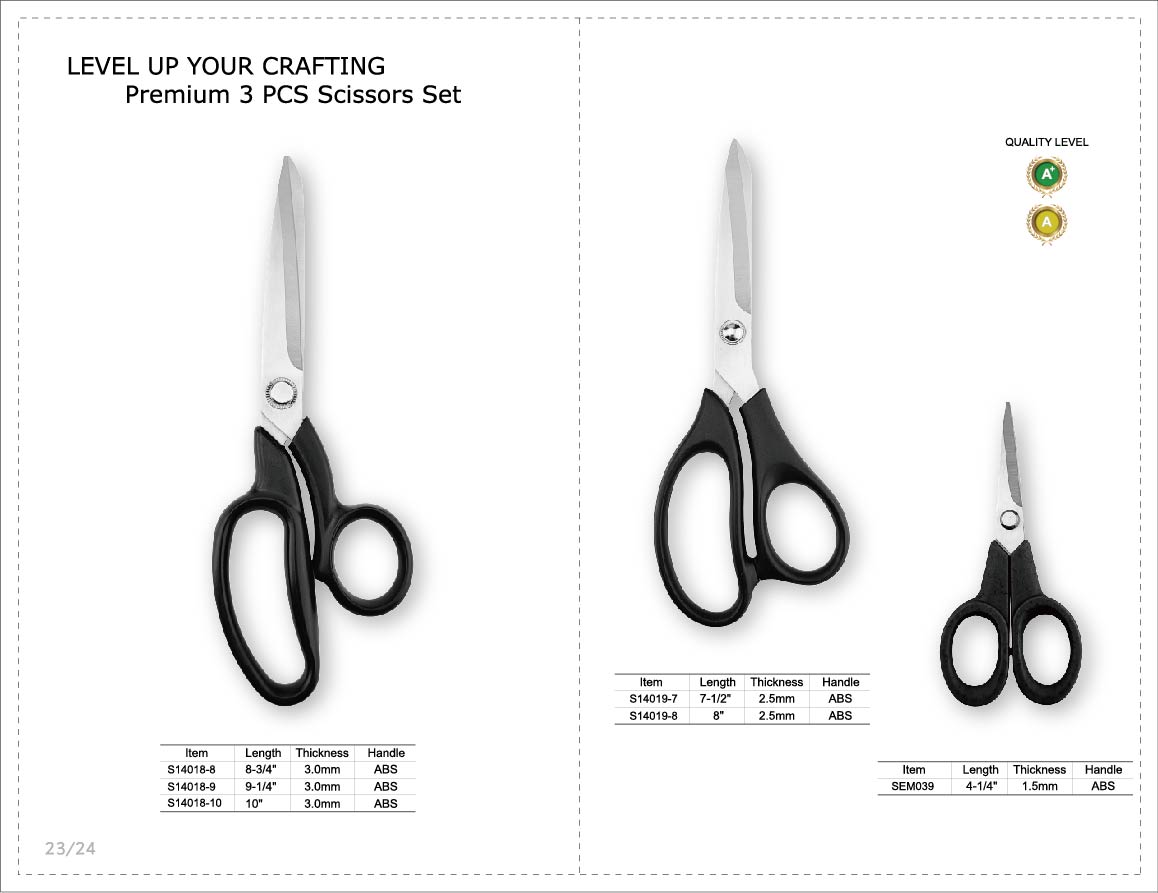
For brands in sewing, textile, craft, uniform, quilting, or professional tailoring channels, tailor shears are more than a simple cutting tool. They influence user confidence, repeat purchase, and how customers judge the reliability of a product line. Choosing an OEM tailor shears manufacturer therefore requires more than comparing catalog photos. Buyers need to understand customization choices, quality control expectations, communication habits, and the commercial questions that should be answered before production begins.
This guide explains how to evaluate an OEM partner for tailor shears without relying on vague claims. It focuses on practical sourcing criteria: what can usually be customized, which quality points should be checked, what information to request from a supplier, and how to compare samples before placing a larger order.
Key Takeaways
- OEM tailor shears sourcing should begin with the target user: professional tailor, quilter, crafter, student, or retail consumer.
- Customization can include logo placement, handle design, finish, packaging, blade shape, and material choice, but each detail should be confirmed with the manufacturer.
- Quality checks should cover blade alignment, edge sharpness, cutting smoothness, tension, handle comfort, and packaging protection.
- Buyers should ask suppliers about MOQ, lead time, sample policy, available materials, quality inspection process, and export documentation instead of assuming details.
- A clear specification sheet reduces misunderstandings and helps compare multiple OEM manufacturers fairly.
Start With the Market and User Scenario
Before discussing production, define who will use the shears and how often. Professional tailors may prioritize long cutting runs, steady hand feel, and reliable blade alignment. Quilters and sewing hobbyists may care about comfort, weight, and clean cutting through layered fabric. Retail gift or beginner sewing sets may need simpler positioning, clear packaging, and consistent appearance across units.
This positioning affects every sourcing decision. A heavy pair of shears may feel stable for some users but tiring for others. A bright handle color may work for consumer retail but not for a professional line. A premium-looking finish may raise perceived value, but it still needs to withstand normal handling and shipping. The better the buyer defines the use case, the easier it is for an OEM manufacturer to recommend realistic options.
Customization Options to Discuss With an OEM Supplier
The original advantage of OEM tailor shears is customization. However, customization should be treated as a controlled sourcing process, not just a request to add a logo. Common areas to discuss include blade size, blade shape, handle form, handle color, surface finish, logo method, packaging style, and whether the shears are intended for left-hand, right-hand, or general use.
Material selection is another important topic. The source article mentions high-carbon stainless steel as a quality consideration, but buyers should still ask the supplier which materials are available, what each option is suitable for, and whether the supplier can provide documentation or test information for the selected material. Do not assume a grade, hardness, coating, or durability level unless it is confirmed in writing.
Quality Standards That Matter in Tailor Shears
For tailor shears, quality is not only about looking polished. A sample should cut smoothly from the base of the blade to the tip. The two blades should meet evenly, and the pivot tension should feel controlled rather than loose or overly tight. The handle should not create sharp pressure points during repeated opening and closing.
Buyers should also check consistency between samples. If one pair feels smooth and another feels rough, ask how the manufacturer controls grinding, assembly, alignment, and final inspection. Packaging should protect the blades and tips during transport, especially if the product will move through wholesale, e-commerce, or retail distribution channels.
OEM Tailor Shears Supplier Comparison Checklist
| Evaluation Area | What to Check | Questions to Ask the Supplier |
|---|---|---|
| Customization | Logo, handle color, blade size, finish, and packaging options | Which options are standard, and which require tooling or extra setup? |
| Materials | Available blade and handle materials | Can you confirm the material options and provide supporting information? |
| Cutting Performance | Smooth cut, blade tip performance, fabric compatibility | How do you test cutting quality before shipment? |
| Assembly | Blade alignment, pivot tension, opening and closing feel | What inspection steps are used during assembly? |
| Commercial Terms | MOQ, sample cost, lead time, payment terms, packaging cost | What details change when the design or packaging is customized? |
| Export Support | Carton marking, labeling, documents, shipment coordination | Which export documents and labeling requirements can you support? |
How to Review Samples Before Ordering
Sample review should be structured. Test the shears on the fabrics your customers are likely to cut, such as cotton, denim, felt, lining fabric, or layered cloth. Use the full blade length, including the tip. Open and close the shears repeatedly to check whether the hand feel remains comfortable. Inspect the logo, finish, packaging, and any printed instructions for accuracy.
- Prepare a written specification sheet before requesting samples.
- Compare at least two or three sample options when possible.
- Record cutting results, comfort notes, and visible defects.
- Ask the supplier to explain any difference between sample quality and mass production quality.
- Confirm packaging, carton details, and labeling before approving production.
Commercial Questions Buyers Should Not Skip
Because OEM projects vary, buyers should not assume minimum order quantity, production time, pricing, tooling fees, or sample charges. Ask these questions early and request written confirmation. If the product requires a special handle mold, unique packaging, or a private label process, ask whether this affects lead time or repeat order consistency.
It is also useful to ask how the supplier handles pre-production samples, in-process inspection, and final inspection. If your market has specific compliance, labeling, or import requirements, raise them before production. A responsible supplier can tell you what they can support and what needs third-party confirmation.
Building a Clear Specification for OEM Production
A clear specification helps both buyer and manufacturer avoid costly revisions. Include product size, intended user, blade material requested, handle color, logo position, packaging format, barcode or label needs, carton requirements, inspection expectations, and approved sample reference. If any detail is undecided, mark it as a question rather than leaving it vague.
For brands building a long-term tailor shears line, the best OEM relationship is collaborative. The manufacturer should help translate market requirements into practical product decisions, while the buyer should provide clear feedback, realistic timelines, and target positioning. Quality and customization work best when both sides define the standard before production begins.
FAQ
What should I ask an OEM tailor shears manufacturer first?
Start with available blade sizes, material options, customization methods, MOQ, sample process, lead time, packaging choices, and quality inspection steps. These answers show whether the supplier fits your project.
Can tailor shears be customized beyond adding a logo?
Yes. Depending on the supplier, customization may include handle color, handle shape, blade size, finish, packaging, and branding details. Confirm what is standard and what requires extra cost or tooling.
How can I judge tailor shears quality from a sample?
Check cutting smoothness, blade alignment, tip performance, pivot tension, comfort, finish consistency, and packaging protection. Test on fabrics that match your target customer use.
Should I request material documentation?
Yes. If material grade, coating, hardness, or compliance matters to your market, ask the supplier what they can document and whether third-party testing is needed.
What makes a good OEM sourcing brief?
A good brief defines the target user, product size, material preference, branding requirements, packaging, expected quality checks, order quantity estimate, destination market, and timeline.
