




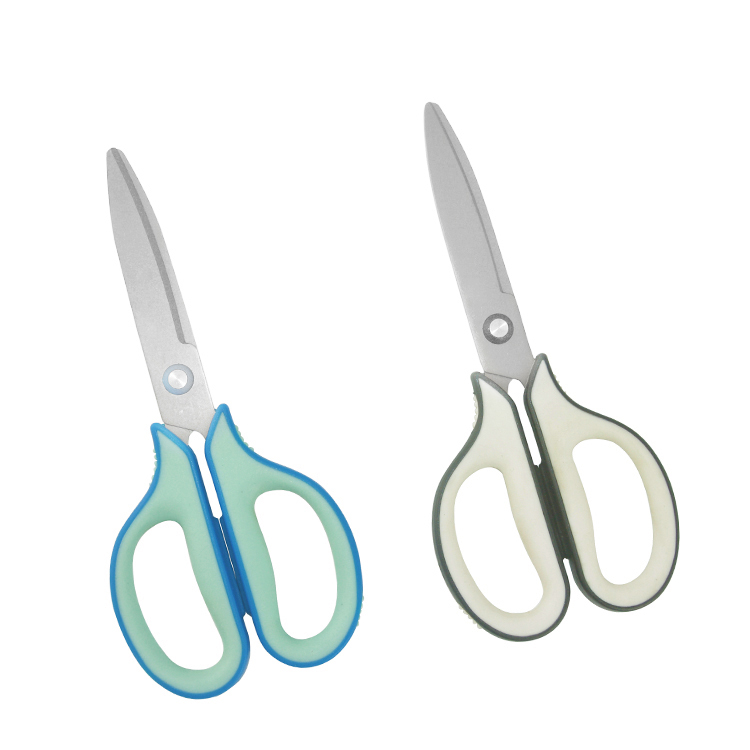
Office Scissors for Paper Cutting: Sourcing Guide for Buyers
Office scissors for paper cutting are small tools, but they affect daily efficiency in offices, schools, mailrooms, print shops, stationery retail, and promotional supply programs. A good pair should cut paper cleanly, feel stable in the hand, and withstand repeated use without becoming uncomfortable. For B2B buyers sourcing from China, the goal is not only to find an attractive unit price. It is to confirm whether the scissors match the intended user, packaging channel, and quality expectations.
The original product information highlights a 170mm office scissor with 75mm blades, ergonomic handles, a dual-color anti-slip grip, and high-grade stainless steel blades. Those are useful starting points, but buyers should still verify details such as material confirmation, edge durability, packaging, labeling, and consistency between samples and bulk orders.
Key Takeaways
- Match scissor size, blade length, and handle comfort to the main cutting task.
- For office paper cutting, clean alignment and comfortable grip often matter more than extra features.
- Ask suppliers to confirm blade material, handle material, packaging options, and inspection standards.
- Request samples before wholesale orders, especially if buying for retail, OEM, or promotional use.
What Makes an Office Scissor Suitable for Paper Cutting?
Paper cutting scissors should open and close smoothly, cut without tearing, and maintain control from the first cut to the tip. In an office environment, users may cut envelopes, copy paper, labels, presentation materials, packaging inserts, or lightweight craft sheets. The tool should be simple enough for everyday use but durable enough for shared workspaces.
A 170mm overall length is a practical office size because it is large enough for efficient straight cuts while remaining easy to store in a desk drawer, stationery tray, or retail pack. A 75mm blade length supports common paper cutting tasks without making the scissors feel oversized. However, buyers should consider whether their customers need compact scissors for pencil cases, standard office scissors, or larger scissors for mailroom and packaging work.
Ergonomic Handle and Grip Considerations
The source product describes ergonomic handles with a dual-color, anti-slip grip. This type of handle can help users maintain control, especially during repeated cutting tasks. For office buyers, handle comfort should be evaluated by more than appearance. A grip that looks soft may not perform well if the finger openings are too small, the edges are sharp, or the handle flexes under pressure.
When reviewing samples, test the scissors with different hand sizes and cutting angles. Check whether the thumb and finger loops feel balanced, whether the anti-slip surface is secure, and whether the pivot area remains stable. If the scissors will be sold under a private label or included in an office kit, ask the supplier whether handle colors can be matched to a brand palette and what color tolerance applies.
Blade Material, Cutting Performance, and Durability
The original article states that the blades are made from high-grade stainless steel. Stainless steel is commonly used for office scissors because it offers a practical balance of sharpness, corrosion resistance, and cost. Still, buyers should avoid assuming all stainless steel performs the same. Ask the supplier to identify the blade material specification, hardness target if available, and whether the blades are individually checked for alignment.
For paper cutting, performance is easy to test. Cut single sheets, multiple sheets, envelopes, and thin card stock if relevant to the target market. The blades should meet evenly, cut smoothly near the pivot, and continue cutting cleanly at the tip. If the scissors are also promoted for fabrics or kitchen tasks, confirm the intended use carefully. A general office scissor may handle light materials, but it should not be marketed for specialized applications unless the supplier can support that claim with suitable design and testing information.
Comparison Checklist for B2B Sourcing
| Selection Point | What to Check | Questions to Ask a Supplier |
|---|---|---|
| Size | 170mm overall length and 75mm blade length if matching the source product | Is this size fixed, or are other lengths available? |
| Grip | Ergonomic handle with dual-color anti-slip surface | What handle materials are used, and can colors be customized? |
| Blade | Stainless steel blade, sharp edge, proper alignment | Can you confirm the blade material and inspection method? |
| Cut Quality | Clean cuts on paper without tearing or snagging | Can samples be tested before bulk production? |
| Packaging | Retail card, blister, bulk pack, or office set options | What packaging formats and artwork requirements are available? |
| Order Control | Consistent finish, color, labeling, and carton packing | What AQL, pre-shipment inspection, or sample approval process is used? |
Common Applications in Offices and Retail Channels
Office scissors are used in administrative departments, schools, co-working spaces, craft corners, warehouses, and home offices. Retailers may position them as everyday stationery. Distributors may supply them to corporate procurement teams, educational buyers, or office product resellers. Because the same basic tool can serve many channels, the details of packaging and product description become important.
For an office supply catalog, focus on size, handle comfort, and paper cutting reliability. For a retail shelf, buyers may need visible packaging, barcode placement, safety information, and clear product naming. For promotional programs, color consistency and logo placement may be more important. For OEM sourcing, confirm artwork files, approval samples, carton marks, and whether replacement samples are required after any production change.
How to Evaluate Samples Before Ordering
Before placing a wholesale order, create a simple sample review process. This helps avoid relying only on photos or brief descriptions. Test at least several pairs, not just one, to check consistency.
- Inspect the handle for molding marks, sharp edges, loose parts, and color consistency.
- Open and close the scissors repeatedly to check smoothness and pivot stability.
- Cut one sheet of paper, then several sheets, and note any tearing or blade separation.
- Check the blade tips for clean closure and safe finishing.
- Compare the sample with packaging requirements, labeling, and carton needs.
- Record all agreed details in a purchase specification before confirming the order.
If buying from a factory or trading supplier, clarify whether the approved sample is a pre-production sample or a stock sample. Also ask how changes will be communicated if material, color, packaging, or production process must be adjusted.
Use and Care Tips for End Users
Even a well-made office scissor needs basic care. Keep scissors dry, especially after cutting damp materials or using them near kitchen or craft areas. Wipe the blades after contact with adhesive labels or tape because residue can reduce cutting smoothness. Store scissors closed and avoid using office scissors to cut wire, thick plastic, or materials beyond their design. Misuse can damage the blade edge or loosen the pivot.
For shared workplaces, consider assigning scissors by department or workstation. This reduces loss and helps users avoid using paper scissors for packaging straps or other rough tasks. If the scissors begin to snag paper, check for adhesive buildup first before deciding they are worn out.
FAQ
Are 170mm office scissors a good general size?
Yes, 170mm is a practical everyday size for paper cutting, desk use, and general office tasks. Buyers should still confirm the target users and packaging channel before ordering.
Can office scissors cut fabric?
The source mentions use on fabrics and other materials, but buyers should be careful. If fabric cutting is a selling point, ask the supplier to confirm suitability and test samples on the intended fabric type.
What should I ask a China supplier before buying wholesale?
Ask about blade material, handle material, available colors, packaging options, sample approval, inspection process, carton packing, lead time, and whether OEM branding is available.
How can I judge cutting quality quickly?
Cut single paper, multiple sheets, and thin card. The scissors should cut smoothly from pivot to tip without tearing, bending the paper, or leaving uncut sections.
Should I choose the lowest-priced office scissors?
Not without checking quality. A low price may be suitable for some channels, but buyers should compare sample performance, packaging, consistency, and after-sales communication before deciding.
