




Office Scissors Manufacturer: Practical Sourcing Guide for Workplaces
Choosing an office scissors manufacturer is not only about finding a basic stationery item at a low unit cost. For distributors, office-supply buyers, promotional product teams, and workspace procurement managers, scissors must be comfortable, consistent, safe to handle, and suitable for repeated daily use. A poorly selected product can lead to complaints about dull blades, uncomfortable handles, or sizes that do not match the intended task.
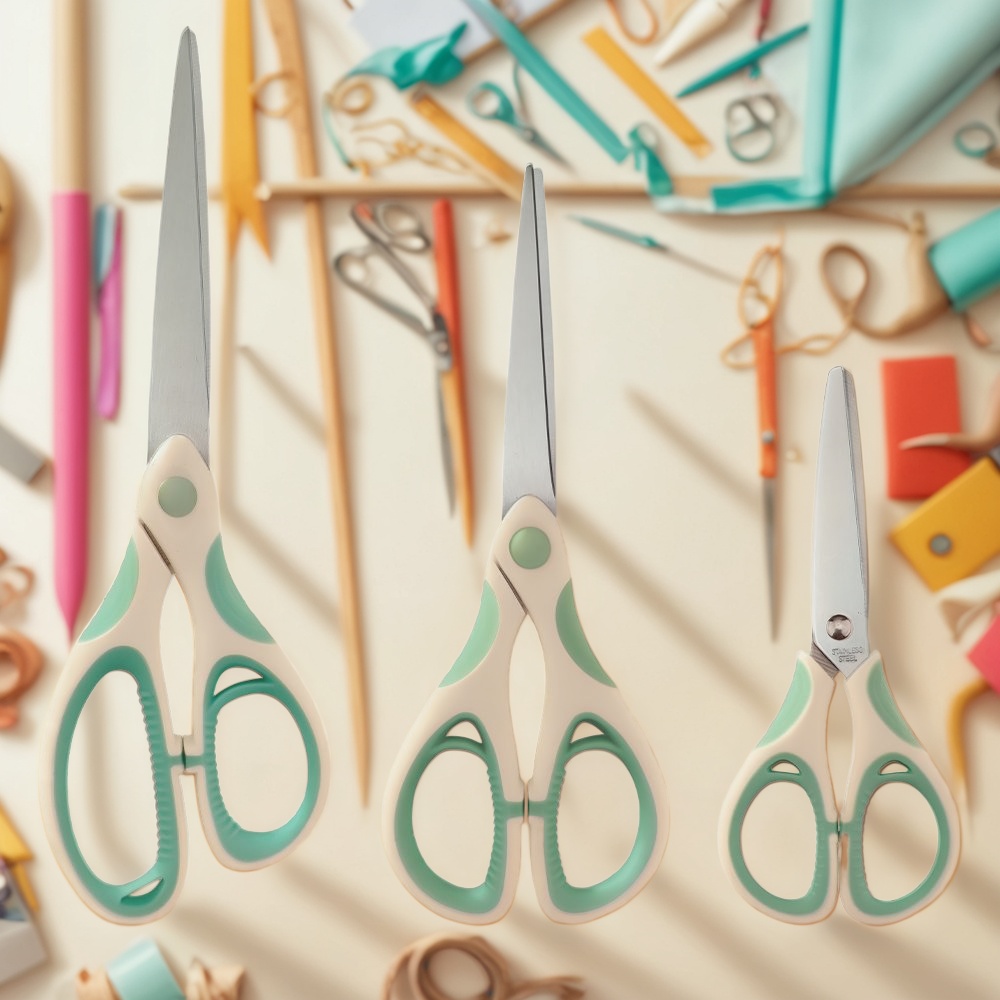
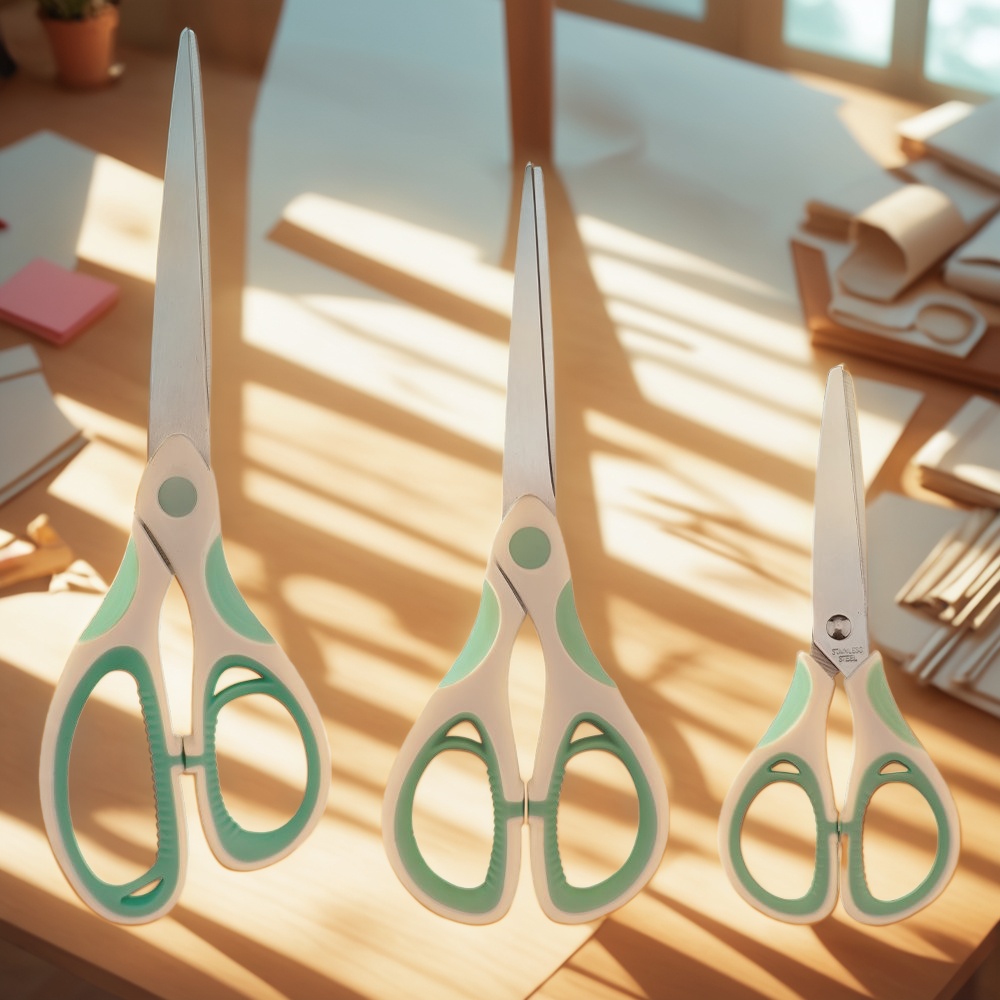
The original product concept highlights several useful features: office stationery scissors offered in three sizes, a mint green and white appearance, ergonomic handles, and high-grade stainless steel blades designed for smooth cutting through materials such as paper and fabric. This guide explains how to evaluate those features in a sourcing context and what questions to ask before placing a wholesale or OEM order.
Key Takeaways
- Match scissor size to the task: large for heavier cutting, medium for general office use, and small for detail work.
- Ask suppliers to confirm blade material, handle material, finish, packaging, and quality-control procedures in writing.
- Ergonomic handles matter for workplaces where scissors are used repeatedly throughout the day.
- Do not rely only on product photos; request samples and test them with the materials your customers actually cut.
What Makes Office Scissors Different from General Scissors?
Office scissors are used for many small but frequent tasks: opening mail, trimming printed documents, preparing presentation materials, cutting labels, handling craft activities, or supporting administrative work. Unlike specialized tailoring or industrial cutting tools, office stationery scissors need to balance comfort, versatility, durability, and cost control.
For a manufacturer or supplier, consistency is especially important. A buyer may order scissors for an office supply catalog, retail shelf, corporate stationery kit, school pack, or e-commerce listing. The product must feel reliable across repeated use and across multiple units in the same shipment. When evaluating samples, check whether the blades align cleanly, the pivot operates smoothly, and the handles feel stable without sharp edges or uncomfortable pressure points.
Understanding the Three-Size Stationery Scissors Set
The source product describes a premium set available in three sizes. This is useful because one scissor size rarely serves every office need. A large pair can be more practical for longer cuts or heavier projects. A medium pair often works as the everyday option for desks, copy rooms, and reception areas. A smaller pair can help with detail work, such as trimming labels, coupons, craft paper, or small packaging inserts.
For B2B buyers, a three-size set may be attractive for retail bundles, school-and-office kits, and online assortments. However, the best configuration depends on your sales channel. A corporate buyer may prefer a single general-purpose size for standardization, while a retailer may prefer a set that looks complete and giftable. Ask the manufacturer whether the sizes can be supplied individually, as a set, or with customized packaging if OEM service is required.
Comparison Checklist for Selecting Office Scissors
| Selection factor | What to check | Why it matters |
|---|---|---|
| Blade material | Confirm whether stainless steel is used and ask for the exact material description available from the supplier. | Blade quality affects sharpness, corrosion resistance, and cutting consistency. |
| Handle design | Review handle shape, finger space, surface finish, and comfort during repeated cutting. | Ergonomic handles can reduce hand strain during office or craft tasks. |
| Size range | Compare large, medium, and small options against intended use cases. | The wrong size can make cutting inefficient or uncomfortable. |
| Cutting performance | Test with paper, card, labels, packaging, and fabric if relevant to your customers. | Real-use testing is more reliable than judging from photos. |
| Appearance | Check color accuracy, such as mint green and white, across samples and production units. | Consistent appearance matters for retail presentation and brand perception. |
| Packaging | Ask about bulk packs, retail cards, sets, barcode labels, and carton details. | Packaging affects logistics, shelf display, and e-commerce fulfillment. |
Blade and Handle Features to Discuss with a Supplier
The original article refers to high-grade stainless steel blades and ergonomic handles. These are valuable starting points, but a professional buyer should still request details. Ask the supplier how the blade material is described on the specification sheet, whether the finish is polished or treated in another way, and how the pivot is assembled. If the scissors will be marketed for specific materials, such as paper or fabric, request cutting samples or conduct your own tests.
Handle comfort should also be reviewed carefully. A handle that looks attractive may not be comfortable for different hand sizes. The mint green and white design can help the product stand out in an office stationery range, but comfort and durability should be assessed alongside color. For extended office use, test whether the handle creates pressure on the thumb or fingers after repeated cutting.
How to Evaluate an Office Scissors Manufacturer
When sourcing from an office scissors manufacturer, treat the conversation as a structured evaluation rather than a simple price request. Start with the intended market: office supply wholesale, retail stationery, promotional gifts, school supplies, or corporate procurement. Then ask the supplier to recommend sizes, packaging, and order configuration based on that channel.
Useful questions include: What blade and handle materials are used? Are the three sizes available as separate SKUs? Can the color be adjusted for OEM projects? What packaging formats are available? How are samples prepared and approved before mass production? What quality checks are performed for blade alignment, pivot strength, handle finish, and carton packing? What information is needed for artwork, labeling, and shipping marks?
A reliable supplier should be able to provide clear product information without making unsupported claims. If certifications, test reports, or compliance documents are required for your destination market, ask for current documents and verify whether they apply to the exact product you plan to order.
Sample Testing Before Wholesale or OEM Orders
Samples are essential for office scissors because performance is tactile. A photo can show the color and general shape, but it cannot prove cutting smoothness or hand comfort. Test each sample with the materials your buyers are likely to use. For office environments, include copy paper, envelopes, thin card, adhesive labels, and packaging film. If your listing mentions fabric, test fabric types that are realistic for light office or craft use.
- Inspect visual quality, including color consistency and handle finish.
- Open and close the scissors repeatedly to check pivot smoothness.
- Cut straight lines and curved lines through common office materials.
- Compare the large, medium, and small sizes for control and comfort.
- Record any issues and confirm corrective actions before approving production.
Practical FAQ
What size of office scissors is best for general workplace use?
A medium size is usually the most versatile for everyday office tasks, while larger scissors suit longer cuts and smaller scissors are better for detail work. Buyers should test all available sizes before deciding.
Can office stationery scissors cut fabric?
The source product states that the scissors can cut materials such as paper and fabric. For wholesale purchasing, test the exact fabric types your customers may use and avoid overstating performance beyond the sample results.
What should I ask before ordering OEM office scissors?
Ask about material details, color options, packaging formats, artwork requirements, sample approval, production lead time, inspection process, and any documents needed for your market.
Are ergonomic handles important for office scissors?
Yes. In workplaces, scissors may be used repeatedly for document preparation, packaging, or craft tasks. A comfortable handle can improve the user experience and reduce hand fatigue.
Final Sourcing Advice
An office scissors manufacturer should be evaluated on more than appearance. The best sourcing decision combines blade performance, handle comfort, size selection, packaging suitability, and transparent supplier communication. Use the three-size concept, stainless steel blade description, ergonomic handle design, and mint green and white look as starting points, then confirm every commercial and technical detail through samples and written specifications before placing an order.
