




Office Scissors OEM: Custom and Wholesale Sourcing Guide
Office scissors are a simple product, but sourcing them for a brand, distributor, retailer, or corporate supply program still requires careful decisions. An office scissors OEM project may involve handle shape, color, packaging, blade performance, pivot stability, labeling, and delivery planning. The right supplier should help you turn a practical everyday tool into a consistent product that fits your market, without making unsupported assumptions about quality, compliance, or production capability.
This guide explains how to evaluate custom office scissors and wholesale scissors manufacturing options. It focuses on practical B2B sourcing questions, what to confirm before ordering, and how to compare suppliers before moving from sample approval to bulk purchasing.
Key Takeaways
- Office scissors OEM sourcing should start with use case, target customer, and required customization level.
- Ask suppliers to confirm materials, blade finish, handle material, packaging, MOQ, lead time, and quality checks in writing.
- Custom colors, ergonomic handles, and branded packaging can support differentiation, but they should be validated with samples.
- Wholesale purchasing works best when specifications, inspection criteria, and shipment terms are agreed before production.
What Office Scissors OEM Means for Buyers
OEM stands for Original Equipment Manufacturer. In office scissors sourcing, it usually means a supplier produces scissors according to a buyer’s requested design, branding, packaging, or specification. The buyer may request an existing model with private labeling, or a more customized product that includes a selected handle color, grip form, blade length, packaging card, or retail barcode.
For office-supply brands and importers, OEM sourcing can help create a product line that is more consistent than buying mixed open-market items. However, OEM does not automatically guarantee a specific material grade, certification, or performance level. Those details must be defined, tested, and documented during supplier communication.
Custom Office Scissors Options to Discuss
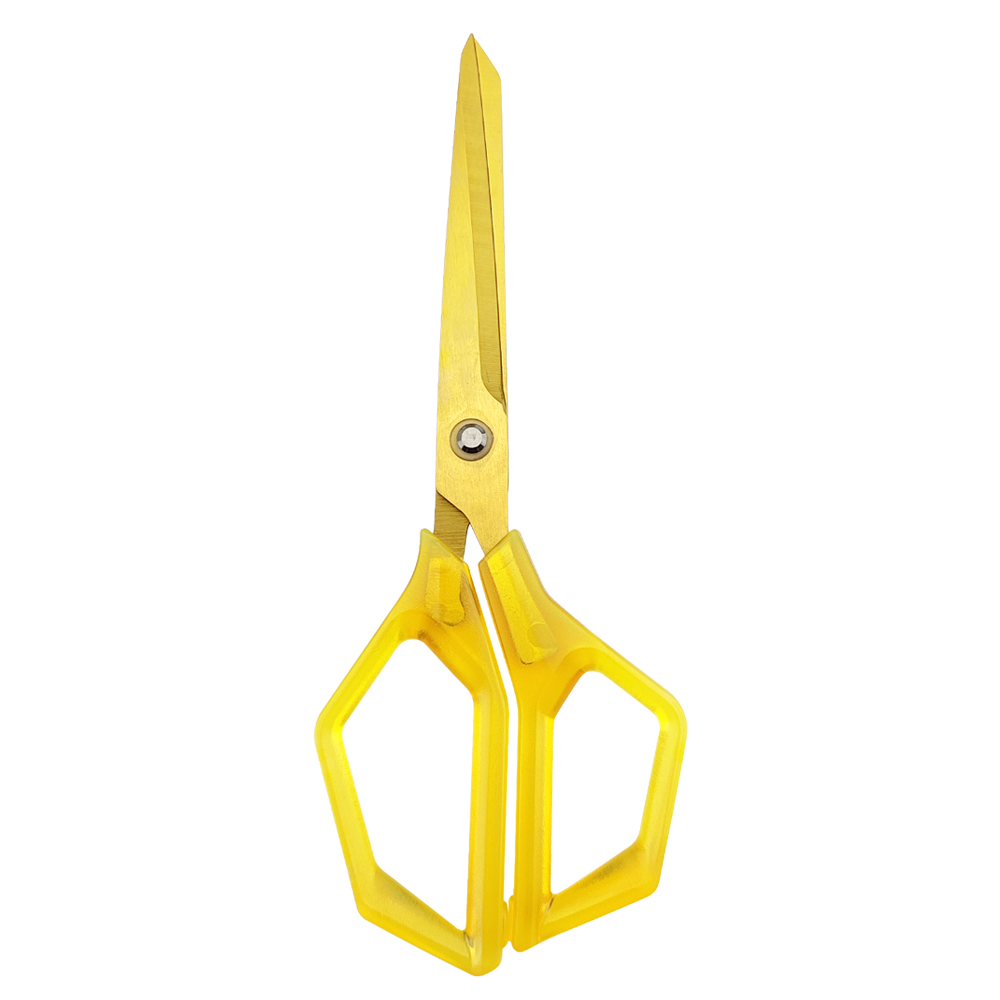
The original product description mentions custom office scissors, ergonomic handles, vibrant colors such as yellow, stainless steel blades, stable pivot screws, and sharp edges. These are useful design areas to discuss with a supplier, but buyers should verify the exact available options for the specific model they are considering.
Common customization points include:
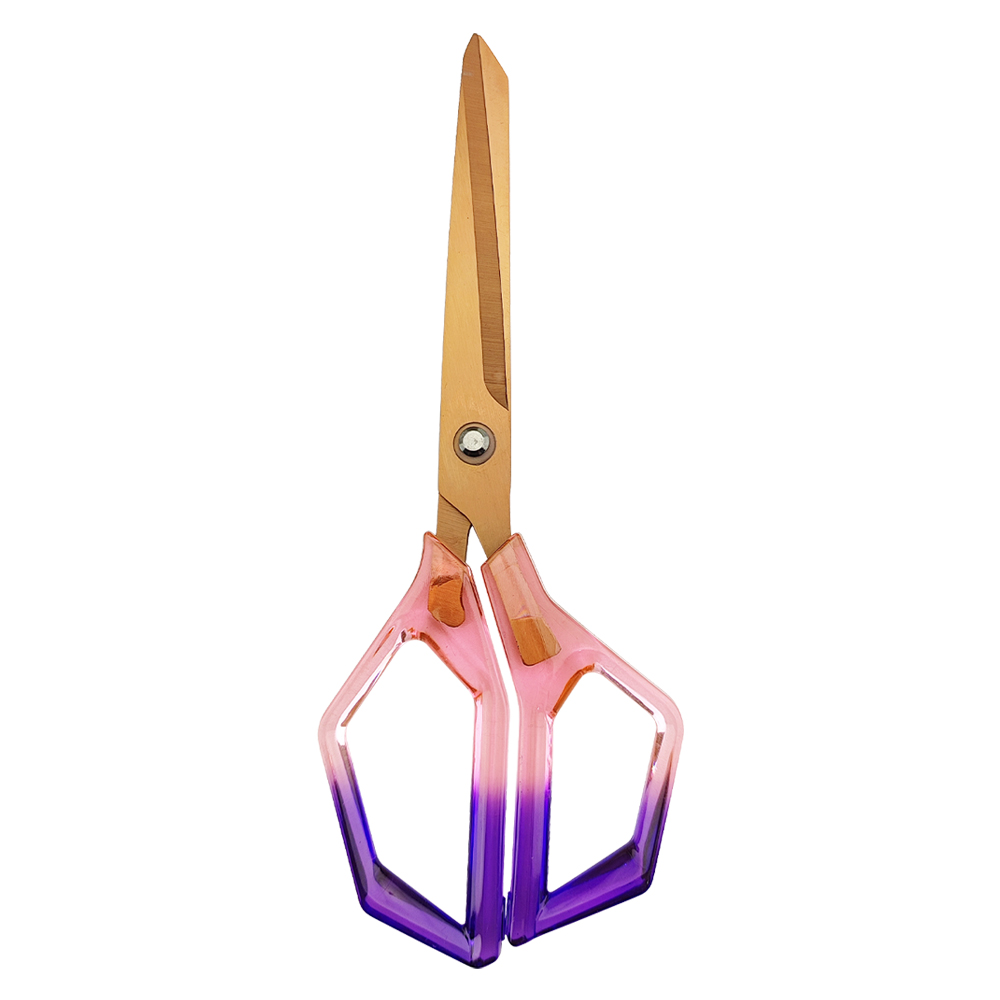
- Handle design: standard symmetrical handles, ergonomic shapes, soft-touch inserts, or special grip forms such as hexagonal-inspired handles where available.
- Color selection: single-color handles, two-tone designs, or brand-matched colors subject to supplier capability and color tolerance.
- Blade material and finish: ask the supplier to identify the steel type, hardness range if available, surface finish, and corrosion-resistance expectations.
- Pivot construction: confirm whether the scissors use a screw, rivet, or adjustable pivot and how tension consistency is checked.
- Packaging: bulk cartons, blister cards, paper cards, display boxes, or private-label packaging depending on the sales channel.
- Logo placement: handles, blade surface, insert cards, or outer cartons, with artwork requirements confirmed before sampling.
Wholesale Scissors Manufacturing vs. Fully Custom OEM
Not every buyer needs a fully customized product. Some distributors prefer wholesale scissors manufacturing because it can be simpler: select an existing design, add packaging or labeling, and buy in bulk. A brand launching a new office range may need deeper OEM customization. The table below compares the two approaches.
| Sourcing Route | Best For | Questions to Ask | Risk to Manage |
|---|---|---|---|
| Wholesale existing model | Fast replenishment, budget office supplies, distributor stock | What models are available now? What packaging can be changed? What is the current lead time? | Limited differentiation and possible changes between batches if specifications are not locked. |
| Private label OEM | Retailers and brands needing logo, color, or packaging control | What logo methods are supported? What are the MOQ and artwork requirements? | Color mismatch, packaging errors, or unclear approval process. |
| Custom design OEM | Brands targeting a specific user group or product range | Can the supplier support tooling, samples, design files, and revisions? | Higher development time, tooling questions, and more sample iterations. |
| Mixed assortment order | Office supply kits, promotional programs, or multi-SKU catalogs | Can the supplier manage SKU labeling, carton sorting, and consistent inspection? | Inventory confusion and inconsistent product identification. |
How to Evaluate an Office Scissors Supplier
A supplier conversation should go beyond price. For a product used in offices, schools, design studios, and craft settings, consistency matters. Buyers should request clear answers rather than relying on broad claims.
- Confirm product scope: Are the scissors intended mainly for paper, light fabric, craft use, or general office cutting?
- Request samples: Test comfort, cutting smoothness, pivot stability, blade alignment, packaging quality, and carton labeling.
- Ask for written specifications: Include dimensions, blade material, handle material, color reference, packing method, and acceptable tolerances where applicable.
- Clarify MOQ and lead time: Ask whether minimum order quantity changes for custom color, logo printing, or packaging.
- Discuss inspection: What does the supplier check before shipment? Can they support buyer inspection or third-party inspection if required?
- Review export documents: Confirm what commercial documents, carton marks, and shipment details the supplier can provide.
Quality Points Buyers Should Check in Samples
When comparing custom office scissors, use the same test process for every sample. Cut several sheets of office paper, thin cardboard if relevant, and fabric only if the supplier states that the model is suitable for that use. Check whether the blades meet cleanly from base to tip. Open and close the scissors repeatedly to feel for looseness, scraping, or uneven tension.
Handle comfort is also important. A bright color such as yellow may help visibility in an office or craft room, but comfort depends on shape, edge smoothness, opening size, and grip texture. If the product is for long work sessions, ask several users to test the sample rather than relying on one opinion.
Packaging, Branding, and Retail Readiness
For wholesale scissors, packaging can affect both presentation and logistics. A retailer may need hang-hole cards, barcode placement, multilingual labels, or carton quantities that match warehouse requirements. A promotional buyer may prefer simple bulk packaging. Before production, confirm artwork dimensions, printing method, color proofing process, and who approves the final packaging file.
Do not assume that a supplier’s standard package meets your market’s labeling expectations. If your market requires specific warnings, recycling marks, importer details, or language, ask your compliance adviser and provide the supplier with approved content.
Practical FAQ
What should I prepare before asking for an OEM quote?
Prepare target quantity, intended use, preferred size, handle color, logo needs, packaging type, destination market, and any inspection or labeling requirements. A reference photo or sample can also reduce misunderstanding.
Can office scissors be customized with brand colors?
Often yes, but it depends on the supplier, order quantity, material, and color-matching process. Ask for color standards, sample approval steps, and tolerance for batch variation.
How do I know whether stainless steel blades are available?
Ask the supplier to confirm the blade material in writing for the exact model quoted. If material grade matters to your market, request documentation or testing through an appropriate channel.
Is wholesale cheaper than OEM customization?
Wholesale existing models may be simpler and lower in development cost, while OEM customization may add costs for color matching, logos, packaging, or tooling. Compare total landed cost, not unit price alone.
Should I approve a sample before bulk production?
Yes. Keep an approved sample with signed specifications. It becomes the practical reference for production quality, packaging, color, and overall workmanship.
Final Sourcing Advice
Office scissors OEM can be a useful route for building a consistent product line, but the best results come from detailed communication. Define the use case, confirm the specification, test samples, and agree on packaging and inspection before production begins. Whether you choose a wholesale model or a more customized design, written requirements are the buyer’s strongest tool for reducing sourcing risk.
