




Office Scissors OEM: Versatile Tools for Every Task
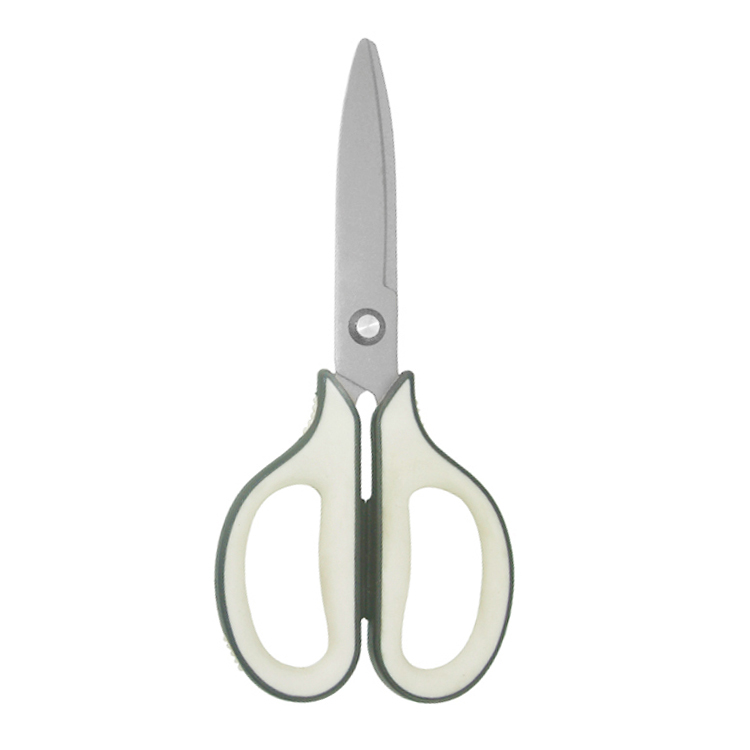
Office scissors may look simple, but for stationery brands, wholesalers, promotional buyers, and corporate supply distributors, they require careful OEM sourcing. A pair of scissors has to cut cleanly, feel comfortable in daily use, survive repeated handling, and match the buyer's packaging or brand positioning. The original product description highlights multi-purpose stainless steel scissors with high-grade stainless steel blades, ergonomic contoured handles suitable for left and right hands, a precision-engineered pivot, slightly curved blades, and an olive green and cream color palette. Those are useful starting points, but B2B buyers should still verify every detail through samples, documentation, and clear supplier communication.
This guide explains how to evaluate office scissors OEM options for practical office, school, craft, and administrative use without relying on vague claims. It focuses on product selection, supplier questions, sample checks, and quality considerations that help buyers reduce sourcing risk.
Key Takeaways
- Office scissors OEM sourcing should begin with real use cases: paper cutting, presentation prep, light crafting, or general stationery kits.
- Stainless steel blades, ergonomic handles, and smooth pivot action are important, but buyers should confirm performance with samples.
- Do not rely only on product photos; check cutting feel, blade alignment, handle comfort, finish quality, and packaging durability.
- For OEM or wholesale orders, ask suppliers about customization options, quality control process, lead time, packing method, and required documentation.
- Commercial details such as MOQ, pricing, certifications, and testing results should be requested directly from the supplier instead of assumed.
What Office Scissors OEM Means for Buyers
OEM sourcing means the buyer is looking for scissors that can be supplied under a requested brand, packaging format, color plan, or specification. In the office stationery category, this may include individual retail packs, bulk office supply packs, school kits, promotional sets, or private-label assortments. The goal is not only to find a sharp pair of scissors, but to find a product that can be repeated consistently across orders.
For office scissors, the buyer should define the intended user before discussing customization. A corporate stationery distributor may prioritize durability and neutral colors. A craft supply buyer may care more about cutting control and comfort. A school or office kit supplier may need a balanced product that is safe, economical, and easy to package. Clear use cases help the supplier recommend an appropriate model and avoid unnecessary design changes.
Product Features Worth Checking
The original product description states that the scissors use high-grade stainless steel blades designed to resist rust and maintain sharpness over time. Stainless steel is a common choice for office scissors because it supports everyday cutting tasks and is easier to maintain than materials that corrode quickly. However, buyers should not stop at the material statement. They should ask how the blade is finished, whether the edge is consistent across samples, and how the product performs after repeated cuts through common office materials.
The described ergonomic handles are contoured for comfort and suitable for both left and right hands. This is valuable for shared office environments where scissors may be used by multiple people. During sample testing, check whether the handle openings fit different hand sizes, whether edges feel smooth, and whether the grip remains comfortable during extended paper cutting or craft work.
The product is also described with a precision-engineered pivot and slightly curved blades. These features can support smoother cutting and more controlled movement, especially for documents, labels, and simple craft shapes. Buyers should test whether the pivot feels too loose, too tight, or uneven, because pivot quality has a direct effect on user experience.
Office and Craft Applications
Office scissors OEM products are commonly used for cutting documents, presentation materials, packaging, envelopes, labels, and general stationery items. They may also be used for light creative work such as paper crafts, DIY projects, or simple fabric cutting. The original article mentions both office tasks and crafting applications, so buyers should consider whether one model can realistically serve both needs.
A general-purpose pair may be suitable for paper, thin card, labels, and light craft materials. If the target market includes heavier craft use, the buyer should ask the supplier whether the model is intended for that workload and request sample testing against the actual materials. Avoid presenting a standard office scissor as suitable for demanding industrial or heavy textile use unless that performance is verified.
Comparison Checklist for OEM Evaluation
| Evaluation Point | What to Check | Questions to Ask the Supplier |
|---|---|---|
| Blade material | Stainless steel appearance, edge consistency, rust resistance claim | What blade material is used, and can it be documented? |
| Cutting performance | Clean cuts on paper, envelopes, labels, and light craft materials | Can samples be tested before order confirmation? |
| Handle comfort | Fit for left and right hands, smooth edges, fatigue during repeated use | Are handle colors, materials, or shapes customizable? |
| Pivot quality | Smooth opening and closing, stable blade alignment | How is pivot consistency checked during production? |
| Finish and color | Olive green and cream appearance, surface consistency, no rough defects | Can color matching be reviewed with physical samples? |
| Packaging | Retail pack, bulk pack, labeling, barcode, carton protection | What packaging options are available for OEM orders? |
Supplier Questions Before Placing an OEM Order
Good sourcing starts with specific questions. Instead of asking only for a price list, buyers should request information that connects product quality, customization, and delivery expectations. Important questions include:
- What materials are used for the blades and handles, and can they be confirmed in writing?
- Which parts of the scissors can be customized, such as color, logo, packaging, or assortment format?
- What is the sample process, including sample cost, timing, and approval method?
- What quality checks are performed for blade sharpness, pivot movement, appearance, and packing?
- What are the MOQ, production lead time, payment terms, and carton packing details?
- Are any test reports, compliance documents, or destination-market documents available if required?
These questions do not assume that every supplier offers the same service. They help the buyer identify whether the supplier can support the intended sales channel, whether retail packaging needs can be met, and whether the product can be repeated consistently after sample approval.
How to Review Samples
Sample review should be practical and repeatable. Start by checking appearance: blade finish, handle color, surface cleanliness, packaging, and any visible defects. Then test cutting performance on the actual materials your customers are likely to use. For office stationery, this may include copy paper, envelopes, thin card, adhesive labels, and presentation sheets. For craft positioning, include paper shapes and light craft materials.
Use several people to test handle comfort if possible. A scissor that feels comfortable to one buyer may not suit a shared office environment. Open and close the scissors repeatedly to check pivot movement. The blades should meet cleanly and should not wobble excessively. If the product is intended for left and right hand use, have both types of users test the sample.
Branding, Packaging, and Color Considerations
The olive green and cream color palette mentioned in the original product description gives the scissors a modern stationery look. For OEM buyers, color can support brand identity, but color decisions should be confirmed with physical samples rather than screen images. Lighting, plastic finish, and batch variation can change how colors appear.
Packaging should also match the sales channel. A retail stationery product may need clear product information and attractive display packaging. A corporate supply order may prioritize efficient bulk packing. A promotional gift set may require brand printing or coordinated colors. Before confirming artwork, buyers should ask for dielines, barcode placement guidance, packing method, and any labeling requirements for the destination market.
Practical FAQ
Are office scissors OEM products only for large stationery brands?
No. OEM office scissors can be relevant for wholesalers, office supply distributors, school kit suppliers, promotional product companies, and private-label retailers. The key is whether the supplier's MOQ, customization options, and documentation match the buyer's business model.
Can one pair of scissors be used for both office and craft tasks?
A general-purpose stainless steel office scissor can often handle paper, documents, labels, and light craft work. Buyers should test samples on the exact materials they plan to market the product for before making performance claims.
What should buyers verify before confirming an order?
Verify blade material, cutting performance, handle comfort, pivot smoothness, color, packaging, logo placement, lead time, MOQ, and available documents. Any important claim should be supported by supplier confirmation or sample testing.
Should buyers ask for certifications or test reports?
Yes, if required by the sales channel or destination market. Do not assume certification availability. Ask the supplier what documents are available and whether additional testing is needed for your market.
How can buyers reduce quality disputes?
Approve a physical sample, define inspection points in writing, confirm packaging details, and keep a clear record of color, logo, carton, and labeling requirements. Detailed approval reduces misunderstanding during mass production.
Final Sourcing Advice
Office scissors OEM sourcing is about matching a simple product to a clear business need. Stainless steel blades, ergonomic handles, left- and right-hand usability, a smooth pivot, and a clean color design can all support a useful office stationery product. Still, the final buying decision should be based on sample testing and direct supplier answers. Treat product claims as starting points, confirm the details that matter to your market, and build a specification that can be checked before every shipment.
