




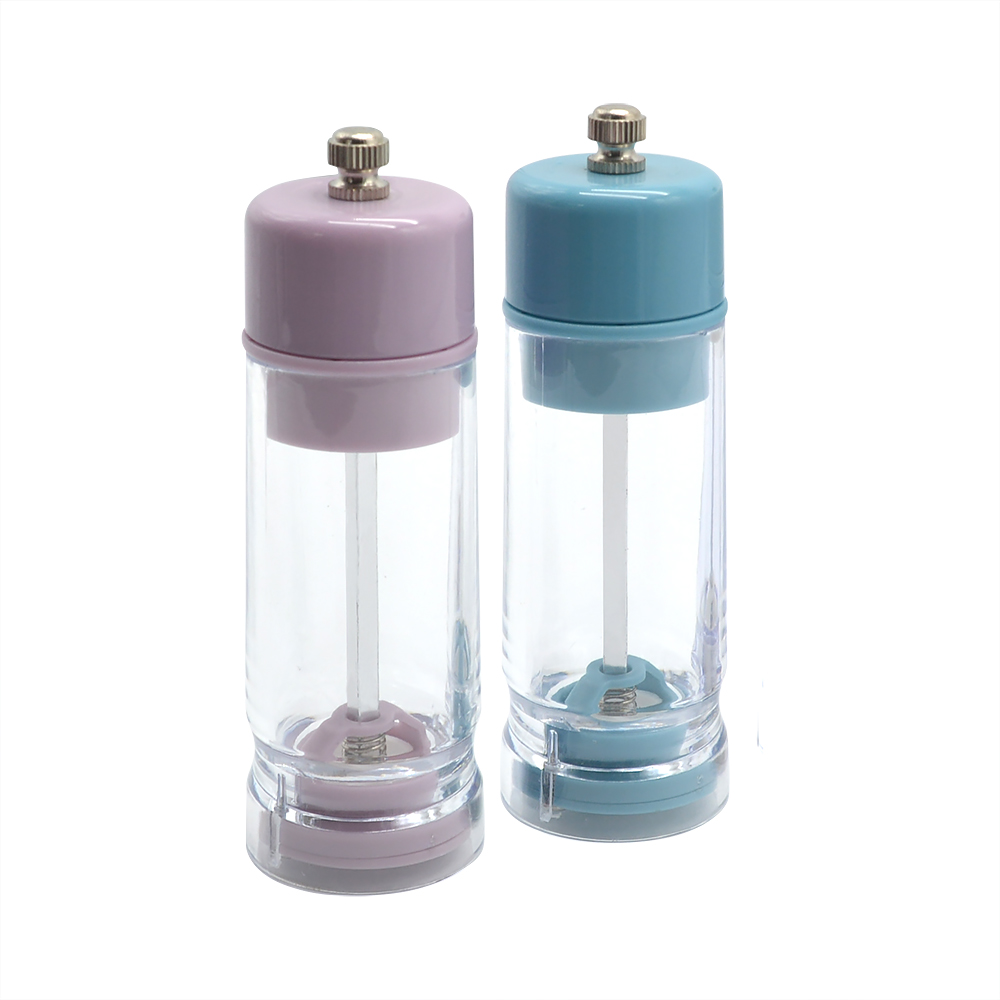
Pepper Grinder Manufacturing: From Production to Supply Chain
Pepper grinder manufacturing is a specialized part of the kitchenware industry where product performance depends on small but important details: the grinding mechanism, body design, assembly accuracy, packaging, and supplier quality control. For retailers, importers, hospitality buyers, and private-label brands, understanding how pepper mills are produced can make sourcing decisions more practical and less dependent on appearance alone.
The original product context highlights common market features such as ceramic grinding components, adjustable grinding mechanisms, transparent containers for checking spice levels, ergonomic designs, and Salt & Pepper Mill Set formats. These are useful starting points, but B2B buyers should go further by asking how each feature is built, inspected, packed, and supported throughout the supply chain.
Key Takeaways
- Pepper mill quality depends on the grinding mechanism, adjustment design, body material, assembly consistency, and packaging protection.
- Suppliers may offer similar-looking mills, so buyers should request samples and verify performance before placing larger orders.
- For OEM or wholesale projects, ask clear questions about customization, component sourcing, inspection methods, packaging options, and lead times.
- Transparent bodies, adjustable grinding, ceramic mechanisms, and ergonomic shapes are useful features only when they are executed consistently.
How Pepper Grinder Manufacturing Usually Works
A pepper grinder is simple to use, but manufacturing requires several coordinated steps. Production typically begins with product design and component selection. The supplier defines the mill shape, cap or top design, container body, grinding mechanism, adjustment parts, and packaging format. For a Salt & Pepper Mill Set, consistency between the two pieces also matters because buyers often expect the set to look balanced on a retail shelf or dining table.
Next comes component preparation. Depending on the design, a mill may include a transparent container, a top section, an adjustable nut or knob, internal shaft parts, and a grinding mechanism. The source article mentions ceramic grinders and durable ceramic blades that resist corrosion. Buyers should still ask suppliers to explain the exact component specification, because not every ceramic mechanism performs the same way in daily use.
Assembly is where small errors can become customer complaints. If the mechanism is misaligned, the mill may grind unevenly, jam, or feel loose. If the adjustment part is poorly fitted, users may struggle to switch between fine and coarse grinds. A practical production process should include checks for smooth turning, secure assembly, appearance defects, and packing accuracy.
Important Components to Review Before Sourcing
When comparing pepper mill suppliers, buyers should avoid judging only by photos. Two mills can look similar but differ in grind consistency, filling convenience, or long-term usability. The following components deserve close attention during sample review:
- Grinding mechanism: Ask whether the mechanism is ceramic or another material, and request details on its structure and intended use.
- Adjustment design: Check whether fine, medium, and coarse settings are easy to control and repeat.
- Container body: A transparent body helps users monitor spice levels, but it should also feel secure and be easy to refill.
- Top and closure: The original article references a sleek white top; buyers should check color consistency, fit, and resistance to visible defects.
- Ergonomics: The mill should be comfortable to hold and turn, especially for hospitality or frequent-use settings.
- Set matching: For Salt & Pepper Mill Sets, verify that both pieces match in appearance, dimensions, and packaging presentation.
Supplier Roles in the Pepper Mill Supply Chain
Pepper mill suppliers connect production resources with brands, retailers, distributors, and foodservice channels. Some suppliers may focus on standard wholesale models, while others may support OEM or private-label projects. Their role can include sourcing components, coordinating assembly, arranging packaging, checking finished goods, and preparing shipments.
Because the source article mentions suppliers providing components such as ceramic grinders and transparent containers, buyers should ask how much control the supplier has over these parts. Are components produced in-house, purchased from partner factories, or assembled from multiple sources? None of these options is automatically better, but transparency helps buyers understand risk, communication speed, and consistency.
For OEM sourcing, clear documentation is especially important. Buyers should prepare drawings, reference samples, packaging requirements, barcode needs, color targets, and inspection standards. If those details are not confirmed early, delays or mismatched expectations may occur later in production.
Comparison Checklist for Evaluating Pepper Mill Suppliers
| Evaluation Area | What to Check | Questions to Ask the Supplier |
|---|---|---|
| Grinding performance | Fine-to-coarse adjustment, smooth turning, consistency | How is grind performance inspected before shipment? |
| Mechanism material | Ceramic or other mechanism details | Can you confirm the mechanism material and provide a sample for testing? |
| Body design | Transparent container, refill access, appearance | What materials and color options are available for this model? |
| Assembly quality | Alignment, loose parts, top fit, adjustment nut | What in-process and final checks are used during assembly? |
| Packaging | Retail box, set packaging, protection in transit | Can packaging be customized, and how is damage risk reduced? |
| Commercial terms | MOQ, lead time, customization scope | What are the current MOQ, sample timeline, production lead time, and payment terms? |
OEM and Wholesale Sourcing Questions
Before selecting a pepper mill supplier, create a sourcing brief. This helps the factory or trading partner quote accurately and reduces back-and-forth communication. A strong brief should describe the target market, price positioning, preferred set configuration, packaging style, and any required branding. Avoid vague requests such as “high quality” without measurable criteria.
Useful questions include: Can the supplier provide pre-production samples? What customization is possible for color, logo, packaging, or set combination? Are spare parts or replacement mechanisms available? How are transparent bodies protected from scratches during production and packing? What defect categories are used during final inspection? What information must the buyer provide before OEM development starts?
Buyers should not assume certifications, test reports, or compliance documents are available unless the supplier confirms them. If your market requires specific documentation, ask early and request current copies for review. If third-party testing is needed, clarify who arranges it, who pays for it, and how long it may take.
Quality Control Points During Pepper Mill Production
Quality control should cover both function and appearance. For function, mills should be tested for smooth rotation, adjustable grinding, secure closure, and ease of refilling. If the product is sold as a Salt & Pepper Mill Set, both pieces should be checked together so that the set feels consistent to the end user.
Appearance inspection should include surface scratches, color variation, transparent body clarity, top alignment, and packaging cleanliness. Even if the grinder works well, poor retail presentation can lead to returns or reduced buyer confidence. For shipment preparation, buyers should ask about carton strength, inner protection, labeling, and drop-related packaging considerations without assuming a specific test has been completed.
FAQ
What makes a pepper grinder suitable for wholesale sourcing?
A suitable wholesale pepper grinder should combine stable grinding performance, consistent assembly, practical packaging, and repeatable production quality. Buyers should verify these points through samples and supplier inspection details.
Are ceramic grinding mechanisms always better?
The source product context mentions ceramic grinders and ceramic blades, which are valued in many pepper mill designs. However, performance depends on the specific mechanism, assembly, and intended use, so sample testing is still necessary.
What should OEM buyers confirm before production?
OEM buyers should confirm product design, color, logo placement, packaging artwork, sample approval process, inspection criteria, MOQ, lead time, and any market-specific document requirements.
Why is a transparent container useful?
A transparent body lets users monitor spice levels without opening the mill. For buyers, it also creates a clear retail feature, but the material should be checked for clarity, fit, and resistance to visible scratches.
How can buyers reduce sourcing risk?
Start with a detailed brief, request samples, test the adjustment mechanism, compare suppliers with a checklist, confirm commercial terms in writing, and inspect goods before shipment whenever possible.
