




Plastic Children Scissors: Safe Crafting for Kids
Plastic children scissors are designed to help young learners practice cutting, crafting, and hand coordination with a lower-risk tool than standard household scissors. For parents, teachers, and activity organizers, the goal is not simply to buy a colorful item; it is to choose scissors that match a child’s ability, the project material, and the level of supervision available.
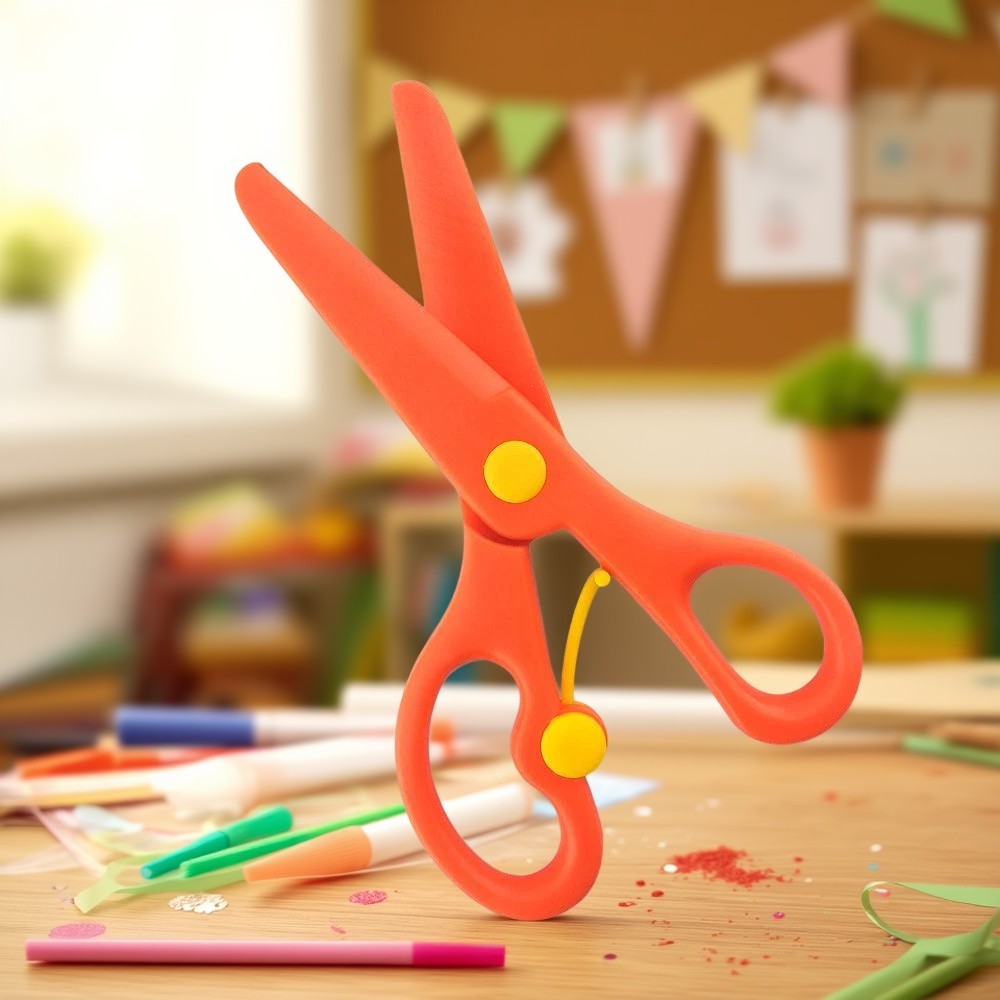
The plastic children scissors shown here feature a vibrant orange exterior with a yellow pivot point, rounded blade edges, dual finger holes, and a flexible yellow connector. The original product description also highlights an ergonomic design, durable plastic construction, a fuss-free grip, and suitability for both left-handed and right-handed users. Those features make this type of scissors relevant for paper crafts, school art projects, workshops, and home DIY activities.
Key Takeaways
- Plastic children scissors are best used for supervised craft activities, especially paper-based projects.
- Rounded blade edges, comfortable finger holes, and an easy grip can support safer early cutting practice.
- Choose scissors according to the child’s age, hand size, dominant hand, and the materials being cut.
- Even safety-focused scissors should be stored properly and used with adult guidance.
What Makes Plastic Children Scissors Different?
Children’s scissors are not just smaller versions of adult scissors. They are usually built around control, comfort, and reduced risk. Plastic construction can make the tool lighter, while rounded edges help reduce the chance of accidental pokes during normal craft use. The bright orange and yellow design also makes the scissors easy to spot on a desk, classroom table, or craft tray.
For young children, cutting is a developmental activity. It can help build hand strength, bilateral coordination, focus, and confidence. However, the wrong tool can cause frustration. If the grip is too stiff, the holes are uncomfortable, or the blades are too difficult to control, children may bend paper, tear materials, or lose interest. A well-chosen pair of kids craft scissors should support steady practice without making the task feel overly difficult.
Safety Features to Look For
The most important feature in children safety scissors is a design that reduces common craft-time risks while still allowing useful cutting practice. The product described in the original article includes rounded blade edges, which are intended to protect delicate fingers better than sharp pointed tips. It also includes dual holes that accommodate different finger sizes comfortably.
When comparing plastic children scissors, look at these practical safety points:
- Rounded tips and edges: Useful for reducing accidental poking during classroom or home activities.
- Comfortable finger holes: Children should be able to open and close the scissors without pinching.
- Manageable tension: The pivot or connector should allow smooth movement without feeling loose.
- Visible color: Bright colors make scissors easier to find and monitor during group activities.
- Hand compatibility: If scissors may be shared, check whether they work for both left-handed and right-handed users.
Safety scissors are still cutting tools. They should not be treated as toys, placed in mouths, used near faces, or used for materials beyond their intended craft purpose.
Best Uses for School, Home, and Craft Activities
Plastic children scissors are most appropriate for simple craft tasks where children cut paper, practice lines, create shapes, or assemble decorations. They can be used during classroom art sessions, weekend DIY activities, holiday card making, and guided workshops. For early learners, short cutting exercises are often better than long projects, because they allow practice without hand fatigue.
Suitable activities may include:
- Cutting straight lines on lightweight paper.
- Practicing curves, zigzags, and simple shapes.
- Trimming paper strips for collages.
- Creating classroom decorations with teacher supervision.
- Supporting fine motor skill practice during craft time.
Avoid asking children to cut thick cardboard, fabric, plastic packaging, wire, or other resistant materials unless the scissors are specifically designed for that use. Using the wrong material can damage the scissors, frustrate the child, or encourage unsafe force.
How to Choose the Right Pair
Before buying plastic children scissors, consider the user and the setting. A pair that works well for one child may not fit another child’s hand comfortably. The original description mentions an ergonomic design and dual holes for different finger sizes, both of which are useful features for children who are still learning controlled hand movement.
| Selection Point | What to Check | Why It Matters |
|---|---|---|
| Child’s hand size | Finger holes should feel comfortable, not tight or oversized | Improves control and reduces frustration |
| Dominant hand | Confirm whether the scissors suit right-handed, left-handed, or shared use | Helps children cut more naturally |
| Blade edge design | Look for rounded edges on children’s safety models | Supports safer supervised practice |
| Project material | Match scissors to paper crafts and light classroom tasks | Prevents misuse and poor cutting results |
| Group use | Choose visible colors and easy-clean designs | Useful for classrooms and workshops |
If purchasing for a classroom, it may be helpful to test a sample with a few students before ordering multiple pairs. Teachers can observe whether children can open and close the scissors easily, whether the grip is intuitive, and whether the scissors handle typical craft paper cleanly.
Use and Supervision Tips
Good cutting habits are just as important as the scissors themselves. Children should learn how to carry scissors closed, pass them handle-first, and keep them on the table when not in use. A short demonstration before each craft session can prevent many common problems.
Practical supervision tips include keeping scissors away from the edge of the table, limiting the number of tools handed out at one time, and collecting scissors immediately after the activity. For younger children, start with pre-marked cutting lines and simple shapes. As their control improves, introduce more complex patterns.
Adults should also set clear rules: scissors are for cutting approved craft materials only, not hair, clothing, books, or packaging. If a child is tired, upset, or distracted, pause the cutting activity and return to it later.
Care, Cleaning, and Storage
Plastic children scissors need basic care to remain useful. After craft sessions, wipe away paper dust, glue residue, or paint marks according to the materials used during the project. Do not soak or expose scissors to harsh cleaning methods unless the supplier’s care instructions allow it. If the pivot area becomes sticky, stop using the scissors until it is cleaned and moves properly again.
Store scissors in a dedicated craft box, classroom bin, or labeled container. Keeping them separate from adult scissors avoids confusion and helps children learn tool responsibility. Inspect them regularly for cracks, loose connectors, rough edges, or movement problems. Replace scissors that no longer open and close smoothly or show signs of damage.
FAQ
Are plastic children scissors completely safe?
No cutting tool is completely risk-free. Plastic children scissors with rounded edges can reduce common risks, but children still need instruction and supervision during use.
What age are kids craft scissors for?
The right age depends on the child’s coordination, attention, and the specific scissors. Always follow the product guidance from the supplier and supervise young users closely.
Can left-handed children use these scissors?
The original product description states that the dual holes make the scissors suitable for both left-handed and right-handed users. Buyers should still confirm comfort with the individual child, especially for frequent use.
What materials should children cut with plastic scissors?
They are best suited to simple craft materials such as paper used in school art projects and home activities. Avoid thick, hard, or slippery materials unless the product instructions specifically allow them.
How should classrooms manage children safety scissors?
Use a clear checkout and collection routine, demonstrate safe handling, store scissors in a visible container, and inspect them regularly for damage or poor movement.
Final Thoughts
Plastic children scissors can be a useful first cutting tool when they are matched to the child, the project, and the supervision setting. The orange and yellow model described here combines a bright design with rounded blade edges, dual finger holes, and an ergonomic plastic build. For parents and educators, the best choice is the pair that helps children practice safely, cut with confidence, and develop useful craft skills one project at a time.
