




Plastic Measuring Cup Manufacturer: B2B Sourcing Guide
Choosing a plastic measuring cup manufacturer is not only about finding a low unit cost. For wholesalers, retailers, restaurant suppliers, catering distributors, and private-label buyers, the right product must be easy to read, comfortable to use, consistent in production, and suitable for the intended sales channel. A measuring cup is a simple kitchen tool, but small details such as scale visibility, handle shape, spout design, nesting, and packaging can affect customer satisfaction and repeat orders.
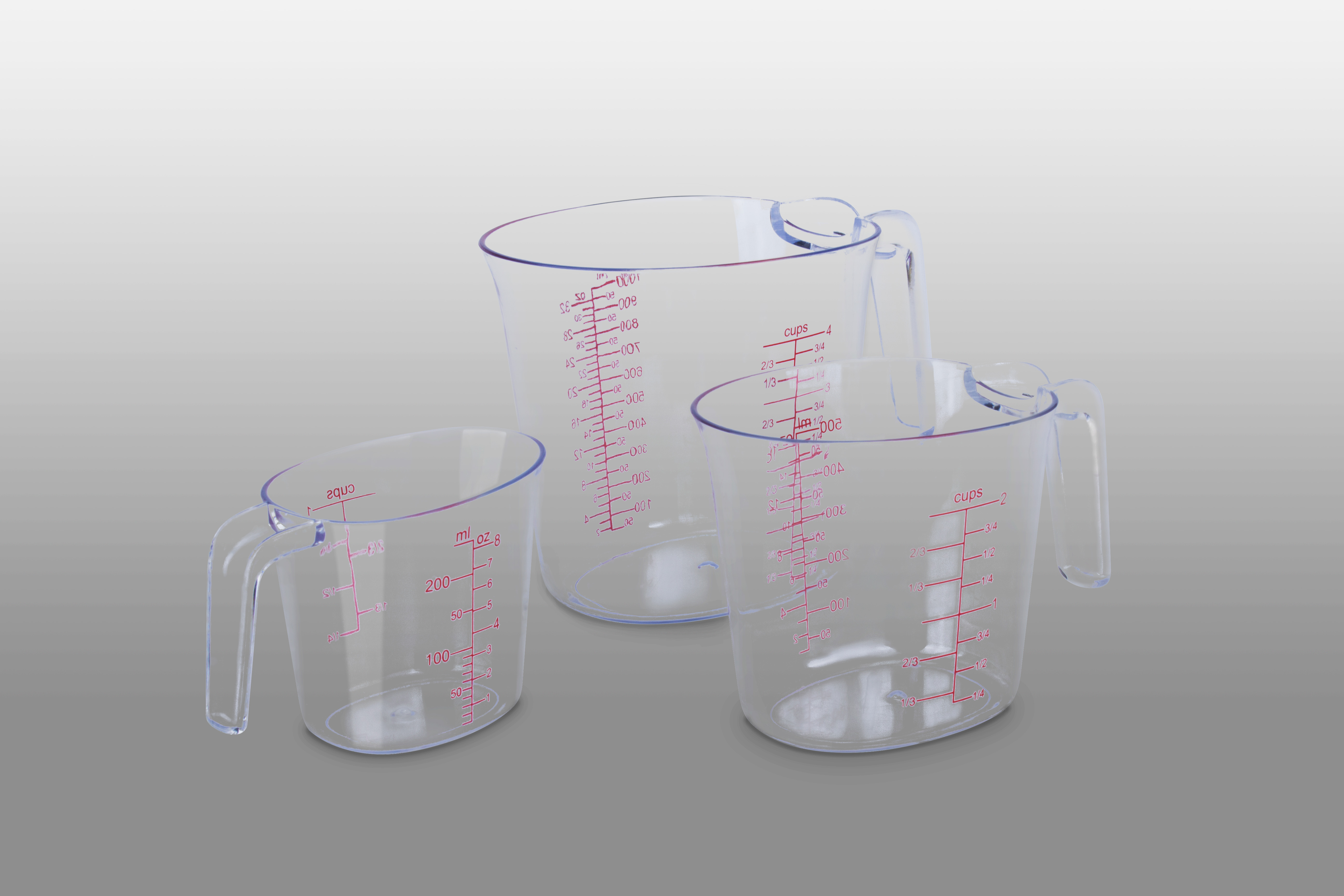
The Amber Precision Measuring Jug Set is an example of a practical product format for bulk purchasing. The set includes three sizes: 1000 ml, 500 ml, and 200 ml. Each jug is marked in milliliters and fluid ounces, making it useful for kitchens that work with both metric and US-style recipes. The amber tint, ergonomic handles, and drip-free spouts are useful product details to review when comparing suppliers or building a wholesale assortment.
Key Takeaways
- Confirm the exact cup sizes, measurement units, and marking method before placing a bulk order.
- Ask suppliers about packaging, carton configuration, customization options, and lead times instead of assuming standard terms.
- Review handle comfort, spout performance, scale readability, and nesting because these details influence end-user experience.
- For OEM or private-label projects, request samples and written specifications before approving mass production.
What Buyers Should Look for in a Plastic Measuring Cup Manufacturer
A reliable supplier should be able to explain the product clearly and provide consistent information about size range, materials used, markings, packaging, and order process. Avoid vague answers such as “standard quality” or “normal plastic” without supporting details. If the intended market has specific food-contact requirements, import regulations, or labeling obligations, ask the supplier what documents are available and verify them independently where necessary.
For B2B sourcing, communication speed matters, but technical clarity matters more. A good manufacturer or trading supplier should be able to answer practical questions: Are the measurement marks printed, molded, or otherwise applied? Are the units shown on one side or multiple sides? Can the set be nested for compact shipping? What packaging formats are available for wholesale cartons or retail shelves? These questions help you compare offers beyond the quoted price.
Product Details to Verify Before Ordering
The Amber Precision Measuring Jug Set includes 1000 ml, 500 ml, and 200 ml sizes. This three-piece structure is useful for different buyer groups: retailers can sell it as a complete household set, catering suppliers can offer it as a practical kitchen-prep tool, and promotional buyers can evaluate it for bundled kitchen programs if branding is available. The dual milliliter and fluid ounce markings make the set easier to use across recipe sources.
Because measuring accuracy is central to the product, request samples and test them with water before approving a production order. Check whether the lines are easy to see under normal kitchen lighting and whether the amber tint improves or reduces readability for your target customer. Also test the spout by pouring at different speeds. A drip-free spout is a useful design feature, but buyers should verify performance with real samples and realistic handling.
Comparison Checklist for Wholesale Plastic Measuring Cups
| Item to Check | Why It Matters | Question to Ask the Supplier |
|---|---|---|
| Size range | Determines whether the set fits household, catering, or retail needs. | Are the included sizes 1000 ml, 500 ml, and 200 ml, or can sizes vary by order? |
| Measurement markings | Clear markings reduce user error and returns. | Are the scales shown in milliliters and fluid ounces, and how are they applied? |
| Handle design | Comfort and grip affect daily use, especially with larger volumes. | Can you provide samples so we can test the ergonomic handle in use? |
| Spout performance | Poor pouring can cause spills and complaints. | Has the spout design been tested with liquids of different flow rates? |
| Packaging | Packaging affects shelf presentation, shipping efficiency, and breakage risk. | What retail and bulk carton options are available? |
| Customization | Important for OEM, private label, and distributor branding. | Can logo, color, label, or package artwork be customized, and what are the requirements? |
OEM, Wholesale, and Private-Label Considerations
If you are sourcing measuring cups for OEM or private-label use, build a written specification sheet before requesting a formal quotation. Include the required sizes, marking units, color preference, packaging style, barcode or label needs, carton marks, and any market-specific documentation you need to review. Do not rely on assumptions from product photos alone.
- Request a sample set and inspect the physical product.
- Confirm the measurement layout and readability.
- Ask whether packaging can be adapted for retail, e-commerce, or bulk distribution.
- Clarify minimum order quantity, production lead time, sample cost, tooling needs if any, and payment terms.
- Confirm whether the supplier can provide documentation relevant to your destination market.
Buyers should also ask how color consistency is controlled, whether the amber tint can be matched across production batches, and how finished goods are packed to reduce scratching or deformation during transport. These are normal sourcing questions and should be addressed before purchase order approval.
Quality Checks for Sample Approval
Sample review should be structured. Start with visual checks: look for rough edges, cloudy areas, unclear markings, unstable bases, or handles that feel weak. Then perform practical kitchen tests. Fill the 1000 ml jug and check whether it sits flat on a counter. Pour slowly and quickly to evaluate the spout. Hold the cup with wet hands to assess grip comfort. Compare the printed or molded scale against a known reference container if measurement accuracy is critical for your customers.
For a three-piece set, nesting and storage are also important. Retail customers and food-service users often prefer tools that store compactly. If the cups nest, check whether the markings rub against each other during packing or shipping. If they do not nest, review the carton volume because shipping cost can become a larger part of the landed cost.
Packaging and Channel Fit
A product that works for a restaurant supplier may need different packaging from a product sold through retail stores. Bulk buyers may prefer simple protective packing, while retailers may need a visible label, hang tag, color box, or shelf-ready presentation. E-commerce sellers should consider whether the set can survive parcel shipping with minimal damage and whether the package communicates the three sizes clearly.
Before finalizing the order, ask the supplier for carton dimensions, gross weight, pieces per carton, and packing method. These details help calculate freight, warehouse storage, and marketplace fulfillment costs. If you are comparing several plastic measuring cup manufacturers, landed cost is usually more useful than unit price alone.
Practical FAQ
What sizes are included in the Amber Precision Measuring Jug Set?
The set includes three sizes: 1000 ml, 500 ml, and 200 ml.
Are the cups marked in both metric and fluid ounce units?
Yes. The original product information states that the measuring jugs are marked in milliliters and fluid ounces.
What should I ask before ordering wholesale measuring cups?
Ask about sample availability, marking method, packaging options, carton details, lead time, minimum order quantity, customization, and any documentation needed for your market.
Can a plastic measuring cup set be used for private label?
It may be possible, but buyers should confirm logo, color, packaging, artwork, and order requirements directly with the supplier before planning a private-label launch.
How can I judge whether a measuring cup supplier is suitable?
Review samples, compare written specifications, check communication quality, and confirm all commercial details in writing. A suitable supplier should answer product and order questions clearly before production begins.
