




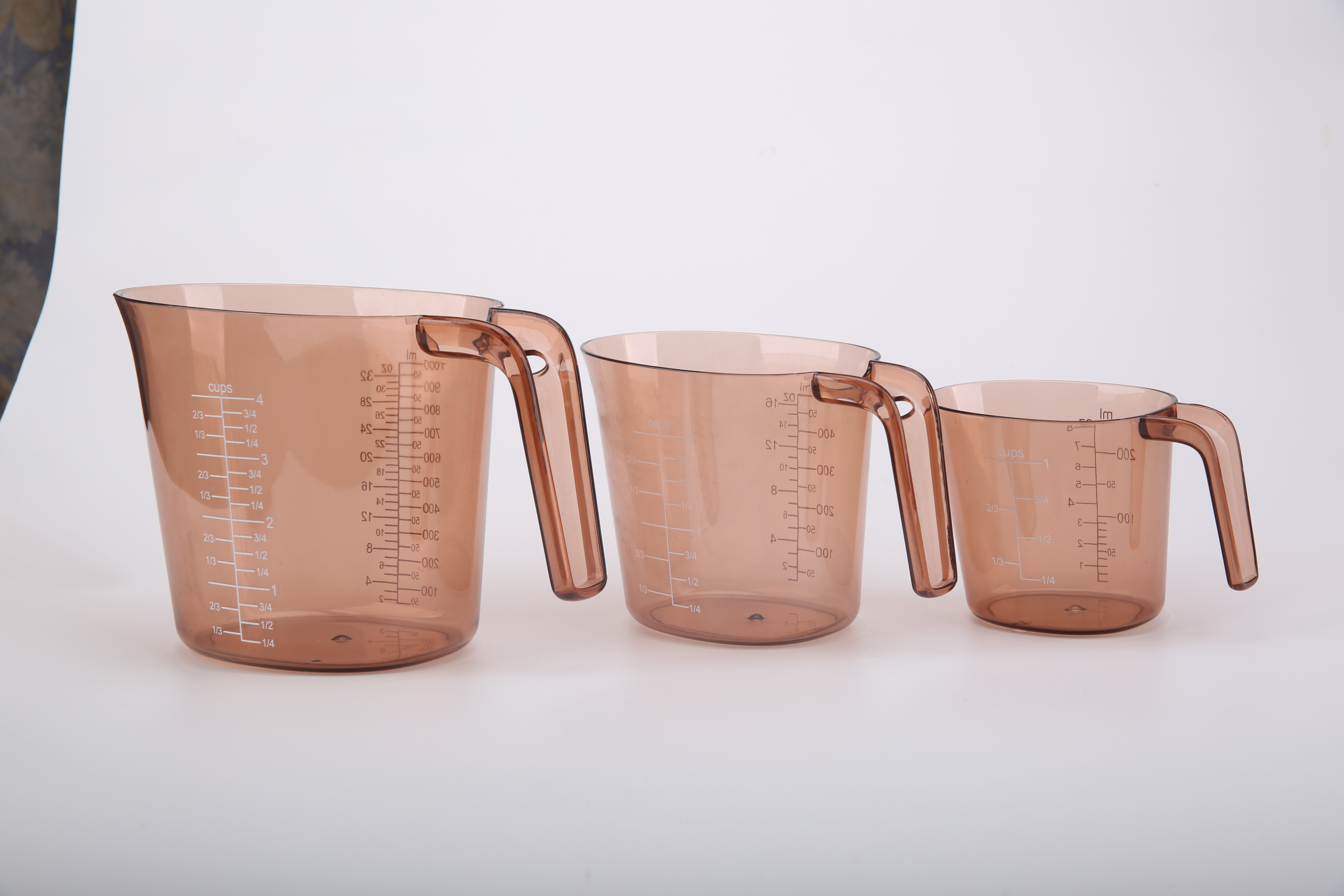
Plastic Measuring Cup Manufacturer: B2B Sourcing Guide
Choosing a plastic measuring cup manufacturer is not only about finding a low unit price. For retailers, kitchenware brands, distributors, promotional buyers and OEM programs, the right supplier must be able to deliver consistent measurement markings, practical packaging, stable production communication and products that match the target user. This guide focuses on how to evaluate plastic measuring cups for wholesale or private-label sourcing, using the Amber Essence Measuring Cup Set as a useful example of the type of product details buyers should review.
The original product description identifies the Amber Essence set as a three-piece plastic measuring cup set with a translucent amber hue. It also describes lightweight plastic, BPA-free plastic, metric and imperial markings from 200 ml to 1000 ml, easy-pouring design, ergonomic handles and stackable storage. Those are relevant features for many kitchenware assortments, but buyers should still verify every commercial and compliance detail directly with the supplier before placing an order.
Key Takeaways
- Confirm material, safety documentation and labeling requirements before ordering wholesale plastic measuring cups.
- Measurement markings should be clear, durable and appropriate for the markets where the product will be sold.
- For OEM or private-label projects, ask about customization options, artwork process, packaging choices and approval samples.
- Evaluate the supplier on communication, sample handling, quality control steps and after-sales support, not price alone.
What Buyers Should Look for in a Plastic Measuring Cup
A measuring cup is a simple product, but buyers should not treat it as a commodity without review. End users expect measurement lines to be easy to read, handles to feel secure and pouring to be controlled. If the product will be used daily in home kitchens, baking classes, meal-prep businesses or food-service support areas, small design issues can quickly create customer complaints.
Start with the intended retail position. A translucent amber measuring cup set may suit a more design-led kitchenware line, while a clear utility cup may suit food-service supply channels. A three-piece set can be attractive for retail shelves because it offers range and convenience, but buyers should confirm the exact cup sizes, nesting structure, carton packing and labeling details with the manufacturer.
Product Feature Checklist
Before confirming a purchase order, create a written checklist and use it for samples, pre-production approvals and incoming inspection. The table below shows common points to compare when evaluating a plastic measuring cup manufacturer.
| Check Point | Why It Matters | Questions to Ask the Supplier |
|---|---|---|
| Material statement | Supports product positioning and safety review. | What plastic is used, and what documents can be provided? |
| BPA-free claim | Claims must be supported for the sales market. | Can the supplier provide relevant test reports or declarations? |
| Measurement markings | Accuracy and readability affect customer satisfaction. | Are metric and imperial markings molded, printed or engraved? |
| Pouring design | Reduces spills during everyday use. | Can samples be tested with water and thicker ingredients? |
| Handle comfort | Important for wet hands and repeated use. | Is the handle shape fixed, or can it be adjusted for OEM projects? |
| Stackability | Impacts storage, shipping and retail display. | How does the set nest, and what is the packed size? |
| Packaging | Protects goods and communicates the brand. | What packaging formats are available for wholesale or private label? |
Reviewing the Amber Essence Measuring Cup Set
The Amber Essence Measuring Cup Set is described as a three-piece set with a warm translucent amber appearance. From a sourcing perspective, this color can help a product stand out from standard clear plastic kitchen tools. However, color consistency should be checked carefully across samples and production lots, especially if the product will be sold as part of a coordinated kitchenware range.
The original article notes metric and imperial measurement markings ranging from 200 ml to 1000 ml. For buyers, the important question is not only whether the markings exist, but also how easy they are to read under normal kitchen lighting. Ask for photos, physical samples and, when needed, measurement verification. If the item is intended for markets that prefer cups, ounces or milliliters, confirm that the scale layout matches customer expectations.
The set is also described as lightweight, stackable and designed with ergonomic handles. These are useful selling points, but they should be tested in hand. A cup that feels good when empty may behave differently when filled to 1000 ml. During sample review, test grip comfort, balance, rim shape and pouring control.
Supplier Evaluation for Wholesale and OEM Orders
When sourcing from a plastic measuring cup manufacturer, the supplier evaluation should include product, process and communication. A reliable supplier should be able to answer questions clearly and provide samples that match the quoted specification. If you need OEM or private-label service, clarify what can be customized before investing in artwork or packaging design.
- Request current product photos, sample availability and confirmed product dimensions.
- Ask whether color, logo, measurement markings or packaging can be customized.
- Confirm the quotation basis, including packing method, trade terms and lead time assumptions.
- Ask what quality checks are performed before shipment.
- Request supporting documents for any safety or material claims required in your market.
Avoid relying on vague statements such as premium quality or factory direct without documentation. For B2B sourcing, clear written confirmation is more useful than promotional language.
Packaging, Labeling and Retail Readiness
Packaging can affect both cost and customer experience. Measuring cup sets may be packed with a simple label, color box, hang tag, wrap card or customized retail packaging, depending on the channel. A wholesale buyer selling to supermarkets may need barcode placement, multilingual instructions or shelf-ready cartons. An online seller may care more about drop-test performance and protection against scuffing.
Ask the manufacturer whether packaging artwork templates are available and what file formats are required. If the product includes claims such as BPA-free, dishwasher suitability or food-contact use, do not add those claims to packaging unless they are supported by appropriate documentation for the destination market.
Quality Control Points Before Shipment
For plastic measuring cups, quality control should include appearance, marking clarity, nesting, handle finish and packing accuracy. Buyers should define acceptable limits in advance. For example, minor flow marks may be acceptable for some value channels but not for a premium retail line. Measurement lines that are faint, uneven or difficult to read should be treated as a functional issue, not just a cosmetic concern.
If your order is large or the product is new to your range, consider arranging pre-shipment inspection. The inspection checklist can include color comparison against approved samples, quantity verification, carton labeling, barcode scanning, packaging condition and basic fill tests.
Practical FAQ
What should I ask a plastic measuring cup manufacturer first?
Start with material, available sizes, measurement units, sample availability, packaging options and whether the product is ready stock or made to order. Then ask for documents that support any safety or marketing claims.
Are BPA-free plastic measuring cups always suitable for every market?
No. BPA-free is a useful claim only when it is supported by appropriate documentation. Regulations and customer requirements vary by market, so buyers should confirm what test reports or declarations are needed before selling.
Can measurement markings be customized for private-label orders?
Possibly, but it depends on the manufacturer, tooling and printing or molding method. Ask whether changes require new tooling, additional cost, longer lead time or minimum order quantities.
How can I compare two wholesale measuring cup quotes?
Compare the full specification, not only the unit price. Review material, size range, markings, packaging, carton quantity, customization, inspection standard, lead time, trade terms and documentation support.
What sample tests are useful before ordering?
Fill the cup with water, check the measurement lines, pour from different angles, hold it with wet hands, stack and separate the cups, and inspect the packaging. These simple tests reveal many practical issues before production.
Final Sourcing Advice
A plastic measuring cup set can be a strong addition to a kitchenware range when the product is practical, clearly marked and properly packaged. The Amber Essence Measuring Cup Set offers several described features that buyers often look for, including a three-piece format, translucent amber appearance, metric and imperial markings, handles and stackable storage. To make a sound B2B decision, verify the details through samples, written specifications and supplier documentation. The best manufacturer for your program is the one that can meet your product requirements, support your market obligations and communicate clearly from sample approval to final shipment.
