




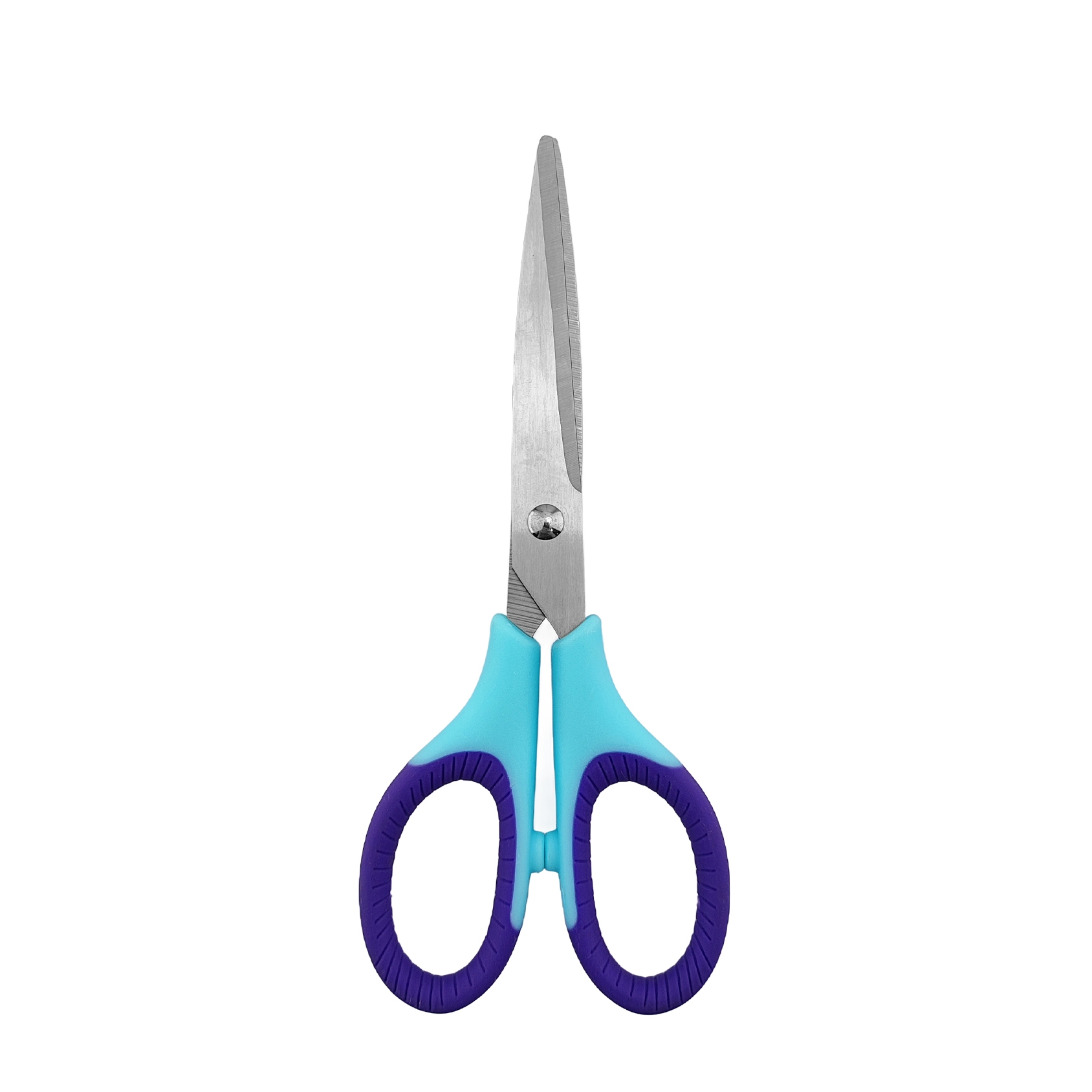
Precision Cutting: Chinese Manufacturer Scissors
Finding the right Chinese manufacturer scissors is not only about choosing a sharp tool. For importers, wholesalers, private-label brands and promotional product buyers, the decision should balance cutting performance, hand comfort, packaging, consistency and supplier communication. The original PrismEdge Precision Scissors article highlights a soft-grip household design with an aqua handle, deep indigo rubberized grip, stainless steel blades and an ambidextrous format. Those details make the product relevant for everyday home, school, office and craft use, but buyers still need a structured sourcing process before placing an OEM or wholesale order.

Key Takeaways
- Soft-grip scissors are often selected for household, school, office and craft channels where comfort matters.
- Ask the supplier to confirm blade material, hardness, surface finish and edge retention rather than relying only on catalog wording.
- Evaluate samples with realistic materials such as paper, thread, light fabric, gift wrap and packaging film.
- For OEM orders, clarify handle color, logo method, packaging, carton details, inspection criteria and lead time before confirming production.
- Do not treat one attractive product image as proof of manufacturing capability; request documentation, samples and production references.
What Makes This Scissors Topic Search-Relevant?
Searchers looking for Chinese manufacturer scissors usually have a practical buying intent. Some are comparing suppliers for a private-label household scissors line. Others are sourcing soft grip scissors for supermarkets, stationery stores, craft kits, online marketplaces or corporate gifting. The important question is not whether a pair of scissors looks modern, but whether the supplier can repeatedly deliver the same cutting feel, appearance and packaging quality across a commercial order.
The PrismEdge description points to several buyer-relevant features: ergonomic comfort, soft grip handles, stainless steel blades, clean cutting and ambidextrous use. These are useful starting points for a request for quotation. However, B2B buyers should convert each feature into a measurable question. For example, instead of accepting “durable blades,” ask what stainless steel type is used, how the blades are heat treated, and whether the supplier can share standard inspection methods.
Product Features to Verify Before Sourcing
A soft grip can improve user comfort, especially when scissors are used for gift wrapping, classroom work, paper crafts or repeated office tasks. The original article describes an aqua handle with a deep indigo rubberized grip, which suggests a consumer-friendly appearance. Still, color and grip texture should be verified through physical samples because photos may not show surface feel, firmness or long-term grip adhesion.
Blade performance also needs careful review. The source article states that the scissors use stainless steel blades and can cut paper, fabric and thread. For purchasing teams, that claim should lead to sample testing rather than immediate assumption. Test how the blades cut from the pivot to the tip, whether the edge catches on thin paper, and whether light fabric frays during use. Also check screw tension, blade alignment and whether the scissors open and close smoothly after repeated cuts.
Comparison Checklist for Supplier Evaluation
| Evaluation Area | What to Check | Questions to Ask the Supplier |
|---|---|---|
| Blade quality | Sharpness, alignment, finish and corrosion resistance | What stainless steel grade is used, and what edge inspection is performed? |
| Handle comfort | Grip texture, opening size, balance and hand fatigue | Can the handle color and rubberized grip be customized for OEM orders? |
| Cutting range | Paper, thread, light fabric, labels and wrapping materials | Which materials are recommended, and which materials should users avoid? |
| Ambidextrous use | Comfort for right- and left-handed users | Has the design been tested with both hand orientations? |
| Packaging | Retail card, blister, sleeve, barcode and carton strength | What packaging options are available, and can artwork templates be provided? |
| Production control | Consistency across samples and bulk goods | What are the inspection standards, defect definitions and reporting process? |
How to Test Samples Like a Professional Buyer
Before confirming a bulk order from any Chinese scissors supplier, request pre-production samples or available stock samples. A good sample review should be simple, repeatable and documented. Use the same materials for every supplier so the comparison is fair. Include common household materials such as copy paper, card stock, wrapping paper, sewing thread and light fabric. If the product is intended for school use, also check whether the handle feels comfortable for the expected age group, while ensuring all safety requirements are reviewed by qualified compliance professionals in the target market.
- Inspect the finish for scratches, burrs, uneven color, loose grip areas and inconsistent printing.
- Open and close the scissors at least 50 times to feel pivot smoothness and handle comfort.
- Cut straight lines and curves in paper to check control and tip accuracy.
- Cut thread and light fabric to see whether the blades bite cleanly or push the material away.
- Record sample weight, packaging dimensions and any visible production marks for later comparison.
OEM and Wholesale Questions to Clarify
For OEM or wholesale sourcing, commercial details should be confirmed in writing. Ask about available handle colors, logo placement, logo method, retail packaging, carton packing, lead time, payment terms and sample cost. If minimum order quantity, pricing or production capacity is important, request current figures directly from the supplier rather than assuming them from a product page. Also ask whether the supplier can provide packaging dielines, barcode placement guidance and high-resolution product photos if needed for retail listing preparation.
Quality expectations should be defined before production starts. Buyers can create a simple specification sheet covering blade material confirmation, handle color reference, logo artwork, packaging version, carton marking and acceptable defect limits. For larger orders, consider third-party inspection or a mutually agreed inspection checklist. This is especially useful when scissors are sold under a private label, where inconsistent grip color or uneven blade finish can quickly affect customer reviews.
Use and Care Guidance for End Customers
Even well-made household scissors last longer when users apply them correctly. Retailers and brand owners can reduce returns by adding basic care instructions to packaging or product listings. These scissors are positioned for home, office, school and craft tasks, so the safest guidance is to keep them for light everyday materials and avoid misuse.
- Use household scissors for paper, thread, wrapping materials and light craft tasks rather than wire or hard plastic.
- Wipe blades dry after contact with moisture, glue or tape residue.
- Store scissors closed and away from young children when not in use.
- Do not force the blades through materials thicker than the supplier recommends.
- If the pivot loosens or cutting becomes uneven, stop using the product until it is checked.
Practical FAQ
Are Chinese manufacturer scissors suitable for private-label programs?
They can be, provided the supplier supports OEM requirements such as handle color selection, logo application, packaging artwork and repeatable quality control. Buyers should confirm these services directly before ordering.
What should I ask about stainless steel blades?
Ask for the specific stainless steel grade, blade thickness, heat treatment information, surface finish and inspection method. The original product description mentions stainless steel blades, but commercial buyers should verify technical details.
How many samples should a buyer test?
Testing several pieces is better than judging one sample. Multiple samples help reveal variation in blade alignment, grip finish, screw tension and packaging consistency.
Can soft grip scissors be used by left-handed users?
The original article describes an ambidextrous design. Buyers should still test the sample with both right- and left-handed users to confirm comfort for the intended market.
What is the biggest sourcing risk?
The main risk is assuming that a good-looking sample guarantees identical bulk production. Clear specifications, approved samples, written packaging requirements and inspection criteria help reduce that risk.
Final Sourcing Perspective
PrismEdge Precision Scissors, as described in the original article, offer a useful product concept: soft-grip household scissors with stainless steel blades, modern colors and everyday cutting versatility. For organic search and real purchasing decisions, the stronger value is in explaining how buyers can evaluate that concept. Treat the product page as the beginning of the sourcing conversation, not the end. Ask precise questions, compare samples under the same conditions and document every approved detail before moving to OEM or wholesale production.
