




Precision Dress Scissors Made in China: B2B Sourcing Guide
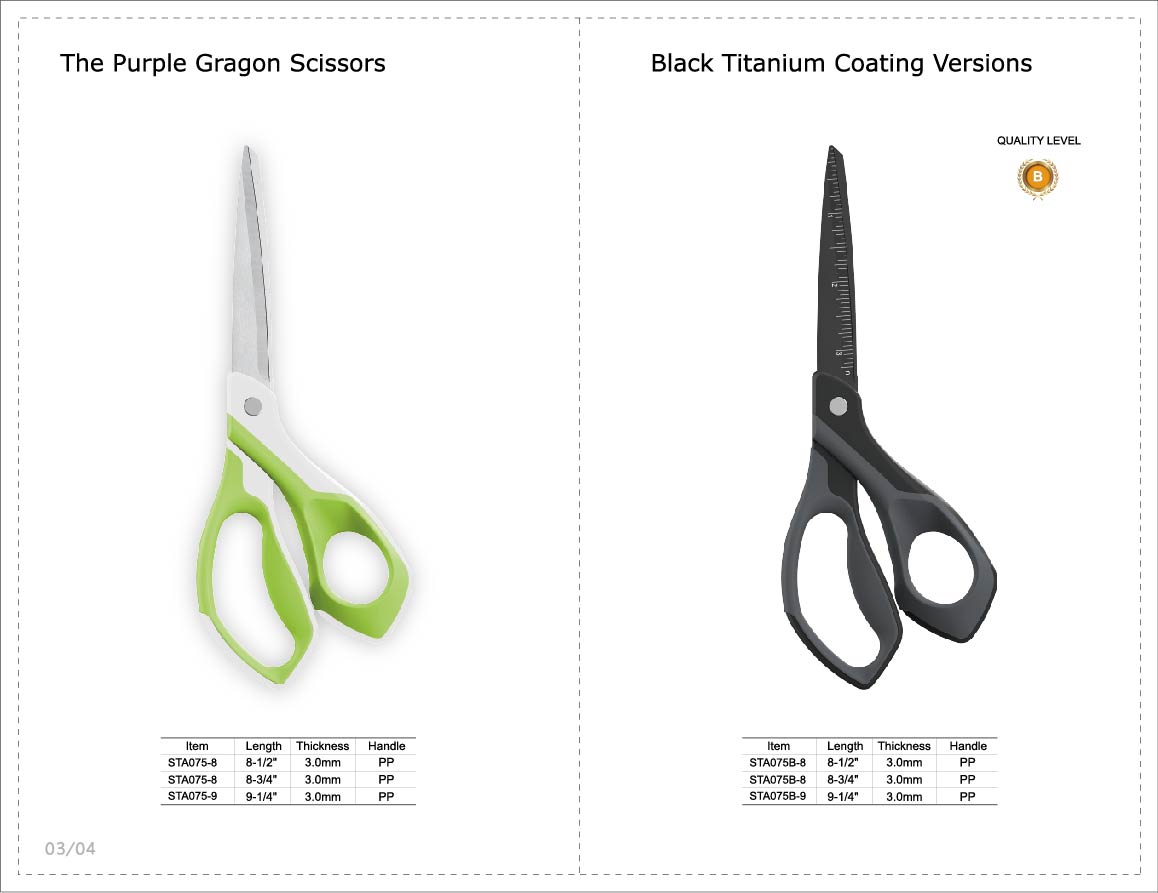
Dress scissors made in China are widely considered by sewing brands, craft distributors, tailoring supply wholesalers, and private-label houseware buyers because the category can cover both everyday fabric cutting and more specialized dressmaking use. For B2B buyers, the goal is not simply to find a low unit price. The better question is whether a supplier can provide consistent cutting performance, appropriate handle comfort, stable finishing, reliable packaging, and clear communication before production begins.
The original product information for Bonet Houseware highlights dressmaking scissors options including a green and white PP handle model referred to as The Purple Gragon Scissors, blade cutting lengths from 8-1/2 to 9-1/4 inches, a 3.0 mm blade thickness, and black titanium coating versions with black PP handles. It also mentions quality level B. Those details are useful starting points, but serious wholesale sourcing should go further by confirming specifications, inspection methods, packing details, and the exact meaning of any internal quality grade.
Key Takeaways
- Confirm the blade length, blade thickness, handle material, coating, and packaging before approving an order.
- Ask the supplier to define any quality grade, including what “quality level B” means in measurable terms.
- Request samples and test them on the actual fabrics your customers use, not only on paper.
- For OEM or wholesale orders, align labeling, carton marks, barcode needs, and after-sales handling early.
What Buyers Should Look For in Dress Scissors
Dress scissors are expected to cut fabric cleanly without dragging, snagging, or forcing the user to apply excessive pressure. In a wholesale or retail assortment, they may be used by home sewers, alteration shops, fashion students, craft users, or professional dressmakers. Each group has different expectations, so the sourcing process should begin with the intended user and sales channel.
For entry-level craft use, comfort, safe packaging, and visual appeal may be important. For tailor and dressmaking channels, buyers should pay closer attention to blade alignment, edge sharpness, screw tension, cutting feel near the tip, and performance across woven fabric, light denim, lining, felt, or sample swatches relevant to the market. If the supplier offers multiple blade lengths, request a comparison sample set rather than approving the first size shown in a catalog.
Product Details Preserved from the Original Listing
The existing Bonet article mentions a green and white handle made from PP material, described as lightweight with a firm hold. It also states that the scissors have cutting lengths from 8-1/2 to 9-1/4 inches and a 3.0 mm blade thickness. These are meaningful details for buyers because they affect balance, cutting reach, shipping weight, and how the product is positioned on a retail shelf.
The article also describes black titanium coating versions with black PP handles. A coated blade can support a different product appearance and may be positioned separately from a standard finish, but buyers should still ask how the coating is applied, whether it affects cutting smoothness, and how the surface holds up under normal handling. If corrosion resistance is important for your market, request the supplier’s available test method or inspection standard rather than relying on appearance alone.
Comparison Checklist for Sourcing Options
| Item to Check | Why It Matters | Questions to Ask the Supplier |
|---|---|---|
| Blade length | Affects cutting reach and user control | Are 8-1/2 inch and 9-1/4 inch options available, and how is length measured? |
| Blade thickness | Influences rigidity and cutting feel | Is the stated 3.0 mm thickness consistent across production batches? |
| Handle material | Impacts grip, comfort, and perceived value | Is the PP handle color customizable for OEM orders? |
| Coating or finish | Changes appearance and may affect durability | What coating options are available, and what inspection is performed? |
| Quality grade | Internal grades can vary by factory | What does quality level B include, and what defects are acceptable or rejected? |
| Packaging | Protects the blade and supports retail presentation | Can the supplier provide packaging samples, barcode placement, and carton details? |
How to Evaluate Samples Before Bulk Purchase
Sample testing should be practical and repeatable. Begin by checking whether both blades meet cleanly from pivot to tip. Open and close the scissors several times to feel for roughness, looseness, or uneven tension. Then cut several materials that represent your customers’ likely use. For dressmaking scissors, this may include cotton fabric, synthetic lining, light canvas, interfacing, felt, or layered fabric scraps.
- Inspect the handle for burrs, sharp plastic edges, color inconsistency, or visible molding defects.
- Check blade alignment by making slow cuts near the base, middle, and tip.
- Test comfort during repeated cutting, especially for users with different hand sizes.
- Review packaging safety so the blade tips cannot puncture retail packaging during transport.
- Record sample results in writing and share photos or videos with the supplier before ordering.
If you plan to sell under your own brand, do not skip the packaging review. A good pair of scissors can still create customer complaints if the retail card bends, the blade is not secured, or the product information is unclear.
OEM and Wholesale Questions to Ask
For OEM dress scissors sourcing, buyers should avoid vague requests such as “best quality” or “standard packing.” Instead, provide a specification sheet and ask the supplier to confirm what they can and cannot do. Useful questions include whether handle colors can be matched to a Pantone reference, whether logo placement is available, what packaging formats can be quoted, how samples are approved, and how changes are controlled after approval.
Commercial details such as MOQ, lead time, payment terms, inspection costs, and replacement policy should be requested directly from the supplier because they can change by order size, packaging complexity, and destination market. Buyers should also ask whether third-party inspection is allowed before shipment and what documents can be provided with the goods. Avoid assuming certifications, compliance status, or test results unless the supplier provides current documentation for the exact product.
Quality Control Points for Dressmaking Scissors
A reliable inspection plan should include both appearance and function. Appearance checks may cover handle color, logo position, coating finish, blade surface marks, packaging print, and carton labeling. Functional checks should include cutting performance, opening and closing action, pivot stability, tip closure, and whether the scissors can cut the intended materials cleanly.
Because the original listing mentions quality level B, buyers should clarify whether this is a factory grade, an internal assortment level, or a customer-specific standard. Ask for a defect list with examples of critical, major, and minor defects. This helps prevent disputes when products are delivered. If you are importing into a regulated market, discuss product labeling, material declarations, and any market-specific requirements with qualified compliance support.
Practical FAQ
Are dress scissors made in China suitable for professional tailoring channels?
They can be, but suitability depends on the exact model, blade finishing, tension control, and quality inspection. Buyers should test samples on real fabric and confirm production standards before bulk ordering.
What is the difference between standard and black titanium coating versions?
The original article describes black titanium coating versions with black PP handles. Buyers should treat the coating as a specification to verify, including appearance, consistency, cutting feel, and any available durability checks.
Can I request custom colors or private-label packaging?
Possibly, but customization depends on the supplier’s capabilities and order requirements. Ask about handle color matching, logo method, packaging artwork, sample approval, and any additional tooling or setup needs.
What should I confirm before placing a wholesale order?
Confirm final specifications, sample approval, packaging, carton details, inspection criteria, commercial terms, delivery schedule, and after-sales handling. Keep written confirmation for every approved detail.
How should I compare suppliers?
Compare more than quoted price. Review sample quality, response speed, ability to answer technical questions, packaging support, inspection openness, documentation, and consistency between sample and mass production.
